Replacing a battery in a garage door opener takes only a few minutes and requires nothing more than the correct replacement battery and a basic screwdriver. A dead or weakening battery is the most common reason a garage door opener remote or backup unit stops responding, and fixing it does not require a service call.
A residential garage door opener depends on a working battery to maintain the signal connection between the remote, the keypad, and the motor unit. Knowing which battery type to use, how to install it correctly, and what to check after the replacement makes the entire process straightforward from start to finish.
When Does a Garage Door Opener Battery Need Replacing?
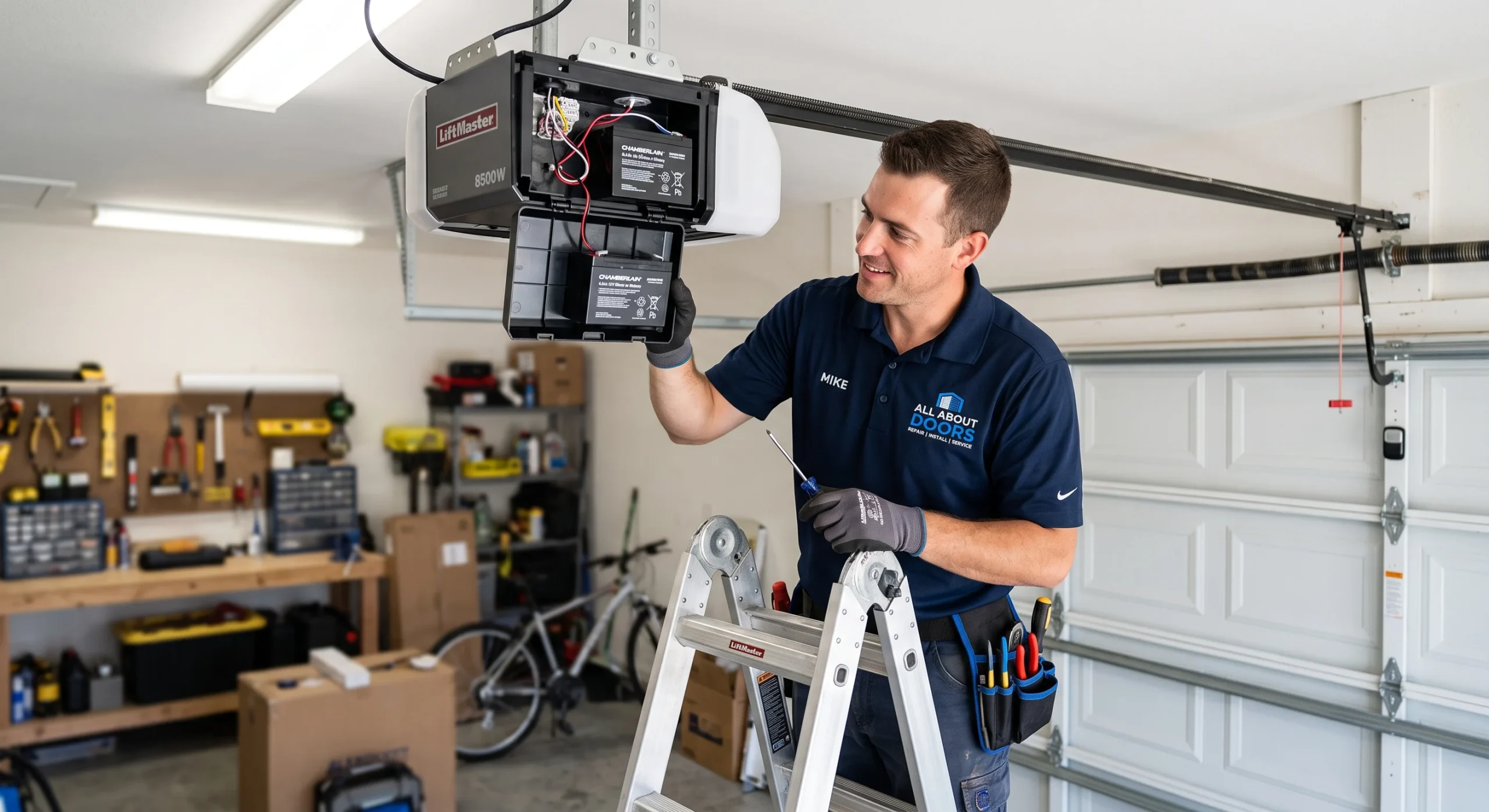
A garage door opener battery weakens gradually before it fails completely, and catching the warning signs early prevents an unexpected lockout that disrupts the entire household routine.
Common signs the battery needs replacing include:
- Remote response slows down and requires multiple presses before the door reacts
- Signal strength drops, and the opener stops responding from a normal distance
- The operation becomes inconsistent, with no clear pattern between working and failing
- Keypad and remote produce zero response, even with the correct code
- The wall button still works, but every programmed remote fails at the same time
To understand how a well-functioning opener connects to the overall investment in a black garage door, read our guide on Why Black Garage Doors on a White House Are Trending, which covers every factor homeowners consider before upgrading.
What Type of Battery Does a Garage Door Opener Use?
Garage door opener systems use different battery types depending on the component, and using the correct one keeps the system performing at its best.
| Component | Battery Type | Why |
| Handheld remote | 9V, AA, AAA, or CR2032 coin-cell | Powers the signal transmission between the remote and the motor unit |
| Slim keychain remote | 3V lithium coin-cell | Fits compact casing while delivering consistent low-drain power |
| Wireless keypad | AA or AAA | Provides stable power for frequent outdoor keypad use |
| Motor unit backup system | 12V lead-acid | Delivers enough power to operate the full opener during an outage |
| Smart Wi-Fi remote accessories | 3V lithium or AA | Supports continuous connectivity for smart home integration |
Check the battery compartment or the opener’s manual to confirm the correct battery type before purchasing a replacement.
What to Do Before Replacing the Battery
Having everything ready before starting the replacement prevents interruptions and protects the opener components from accidental damage.
Key steps to take before replacing the battery include:
- Check the manual or battery compartment for the correct battery type and voltage
- Purchase the exact replacement battery before starting the process
- Gather a flathead screwdriver, a Phillips-head screwdriver, and a coin for the remote casing
- Unplug the motor unit from the ceiling outlet before touching any internal components
- Wipe the battery compartment contacts with a clean, dry cloth before installing
To keep the full garage door system in top working order, read our guide on How To Adjust Garage Door: Easy Steps (Guide), which walks through the key adjustments that protect every component over time.
How to Replace a Garage Door Opener Battery
Replacing a Garage Door Remote Battery
Most handheld remotes use a coin-cell or 9V battery, and swapping it out takes only a few minutes with basic tools.
Steps to replace a garage door remote battery:
- Use a coin or flathead screwdriver to split the remote casing apart at the side notch
- Note the battery orientation before removing it to match the polarity markings inside
- Pop the old battery out and insert the new one in the same direction
- Snap the casing shut and reseat any buttons that shifted during the process
- Test the remote from the driveway to confirm the opener responds normally
A fresh battery in the remote restores full signal strength and puts the opener back in reliable daily operation.
Replacing a Motor Unit Backup Battery
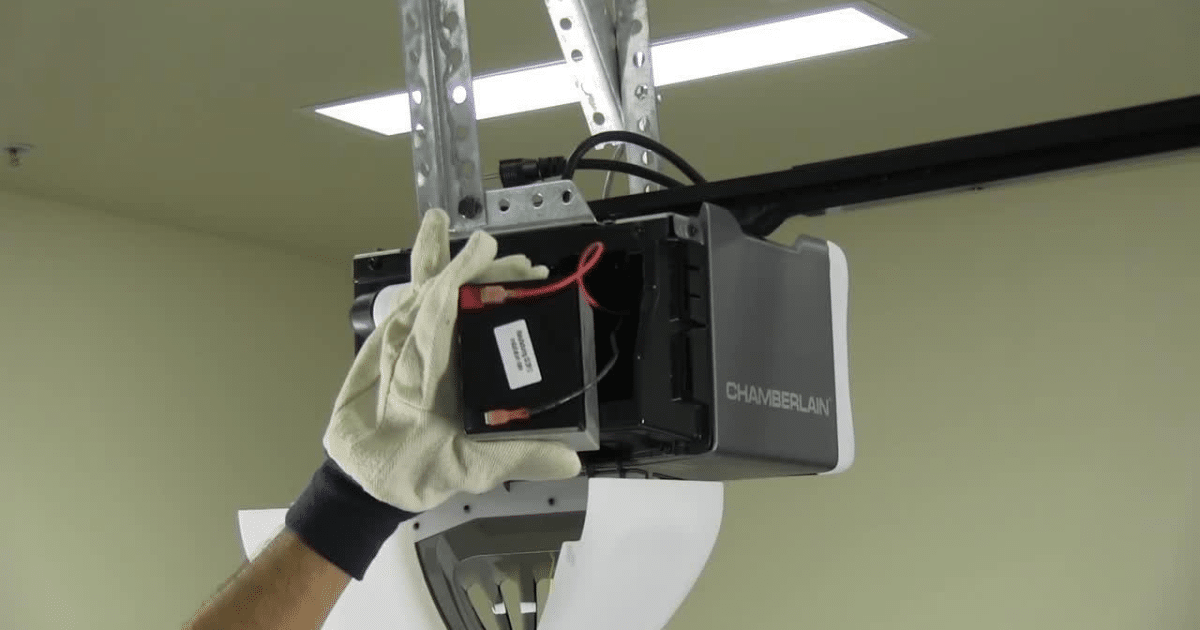
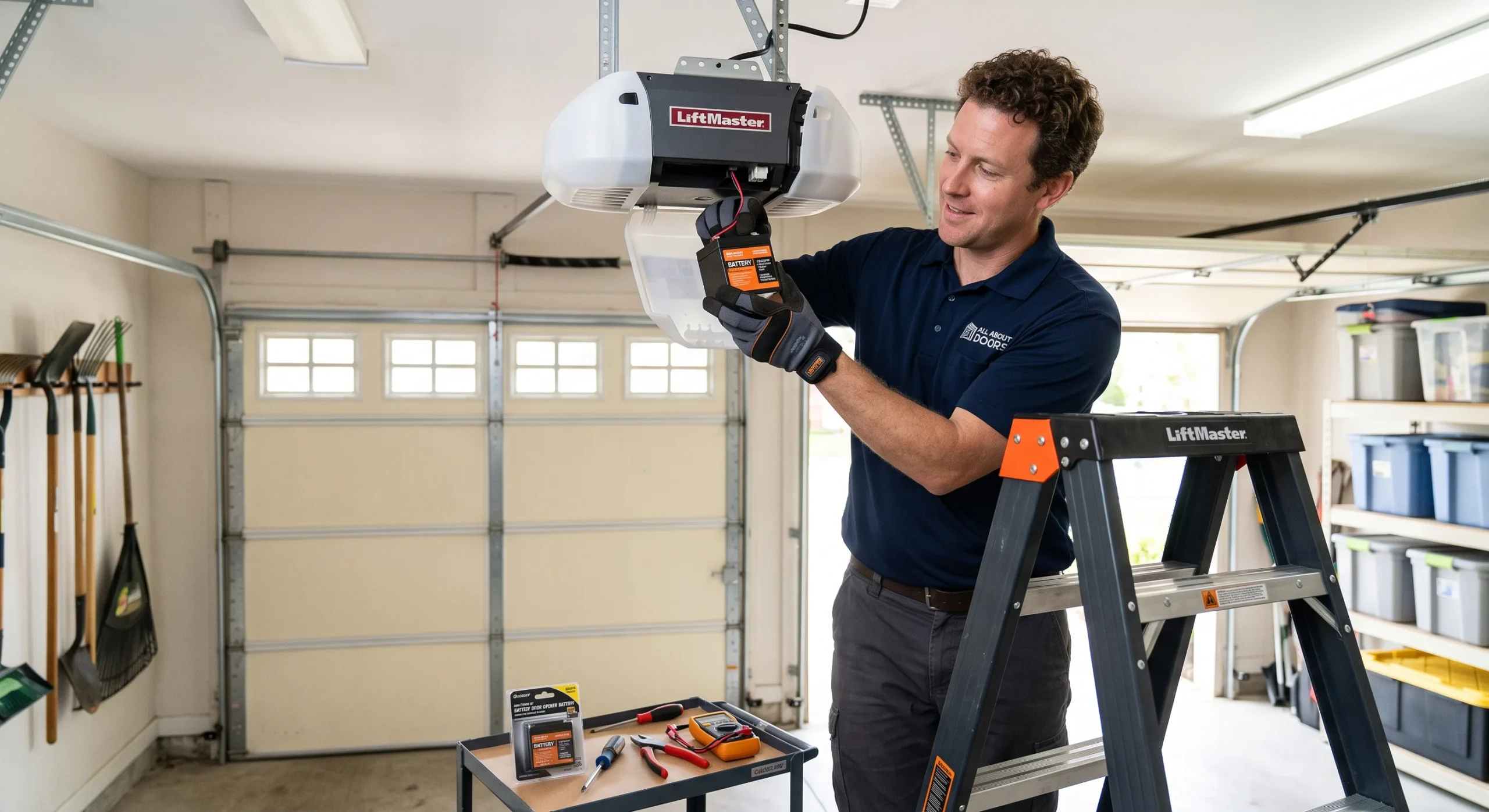
Motor unit backup batteries power the opener during outages, and replacing one requires a few extra steps compared to a remote swap.
Steps to replace a motor unit backup battery:
- Unplug the opener from the ceiling outlet before touching internal components
- Remove the motor unit cover panel with a Phillips-head screwdriver
- Disconnect the red wire first, then the black wire, and slide the old battery out
- Insert the new 12V battery and reconnect red to positive and black to negative
- Reattach the cover, plug the opener back in, and let the unit initialize before testing
Installing the wiring in the correct order protects the motor unit, and a backup battery that still fails to initialize points to a need for garage door repair beyond a simple swap.
How to Test a Garage Door Opener After a Battery Change
Testing the opener after a battery change confirms the replacement was successful and the entire system is fully operational.
Key things to check after replacing the battery include:
- Press the remote from the driveway and confirm the door responds without hesitation
- Enter the keypad code and verify the door reacts on the first attempt
- Press the wall button to confirm it operates independently from the remote
- Unplug the opener briefly and press the remote to confirm backup battery power
- Check that the motor unit light activates during operation
Passing all five checks means the battery replacement was completed correctly and the opener is performing at full capacity.
When to Call a Professional for Garage Door Opener Issues
Garage door opener problems that persist after a battery swap point to a deeper issue that requires professional attention.
Signs it is time to call a professional include:
- Opener remains unresponsive after a confirmed correct battery installation
- Visible damage, such as burnt smells, scorch marks, or cracked housing on the motor unit
- The door moves unevenly or stops mid-cycle after the battery change
- Backup battery drains within hours of a fresh installation
- Opener loses remote and keypad programming repeatedly without explanation
To get the keypad working again after a battery change, read our guide on Reset the LiftMaster Garage Door Opener Keypad in a Few Simple Steps!, which walks through every step needed to restore full keypad functionality.
How to Avoid Frequent Battery Replacements
A few simple habits after every battery change extend the life of the replacement and reduce how often the process needs to be repeated.
Key practices that help avoid frequent battery replacements include:
- Store remotes indoors to protect the battery from extreme temperature swings
- Clean battery contacts regularly to prevent corrosion from reducing conductivity
- Avoid pressing the remote repeatedly when out of range
- Replace all remote batteries at the same time to prevent staggered failures
- Check the motor unit antenna for damage to maintain a strong signal connection
Following these habits extends battery life and keeps the opener system performing consistently between replacements.
Replace Your Garage Door Opener Battery With Confidence
Knowing how to replace a battery in garage door opener systems correctly removes the guesswork and gets the door back in operation without unnecessary delays. Black garage doors make a lasting impression and increase home value, and a fully functioning opener is what keeps that investment working every single day.
All About Doors is the trusted garage door opener battery-replacement expert serving homeowners in Glen Burnie, MD, who need fast, accurate diagnostics and dependable service. Contact us or give us a call today, and let our team handle everything from a remote battery swap to a full opener system check.
Frequently Asked Questions
Can a garage door opener remote be damaged by leaving old batteries inside too long?
Yes, leaving a dead battery inside the remote for an extended period can cause corrosion on the contacts that affects the performance of the next replacement battery. Removing old batteries promptly and wiping the contacts clean before installing a new one keeps the remote in good working condition.
Does the type of garage door affect how often the opener battery needs replacing?
Yes, heavier doors require the opener motor to work harder, which increases the frequency of remote and backup battery use over time. Modern black garage doors made from steel doors and other durable materials are designed to balance weight and performance to reduce strain on the opener system.
Is a black garage door a good idea for homes that already have an older opener system?
Yes, a black garage door is a good idea for homes with older opener systems as long as the opener is still rated for the door's weight and size. Pairing a new black garage door with an aging opener may require a system upgrade to maintain quiet operation and consistent performance across a variety of styles.
What is the difference between a remote battery and a backup battery in a garage door opener?
A remote battery powers the handheld transmitter that sends signals to the motor unit, while a backup battery keeps the motor unit running during a power interruption. Both serve different functions and require separate replacement schedules to keep the full opener system operational.
How do black garage doors with windows affect the opener system over time?
Black garage doors with windows add natural light to the garage space and create a striking contrast against lighter colors on the home's exterior, but the added glass panels slightly increase the overall door weight. A heavier door places more demand on the opener motor, which can increase how often the backup battery needs attention.
Are black garage doors more expensive to maintain than other garage door colors?
No, black garage doors are not more expensive to maintain than other colors in terms of opener and battery upkeep. The overall cost depends more on the garage door materials and style chosen than the color itself, and routine battery replacement costs remain the same regardless of door color.
Does regular cleaning of the opener affect battery life?
Yes, regular cleaning of the remote and motor unit contacts directly extends battery life by reducing resistance on the connection. Low maintenance habits like periodic contact cleaning prevent buildup that shortens battery performance over time.
Can the location of the motor unit affect how long the opener battery lasts?
Yes, a motor unit installed in a poorly ventilated area experiences more strain, which shortens the backup battery's lifespan. Keeping the opener away from direct sunlight and ensuring proper airflow helps maintain consistent performance and protects black finishes from heat absorption.
What makes a glass garage door battery replacement different from a standard door opener?
A glass garage door is heavier than a standard panel door, which places more load on the opener motor and backup battery during every cycle. Replacing the backup battery more frequently in openers paired with a glass garage door maintains consistent performance and preserves the contemporary look that makes it a popular choice.