Garage door replacement involves a structured process that professionals follow from start to finish, including careful disassembly, precise track alignment, spring calibration, and a full safety test before the job is considered done. Most people assume the process is simple until they see what actually happens behind the scenes.
That assumption overlooks the training, tools, and precision needed to make a proper installation work the way it truly should. This breakdown covers exactly how pros handle garage door replacement, from the very first step of the process to the final check before full completion.
What Are the Signs a Garage Door Needs Replacement?
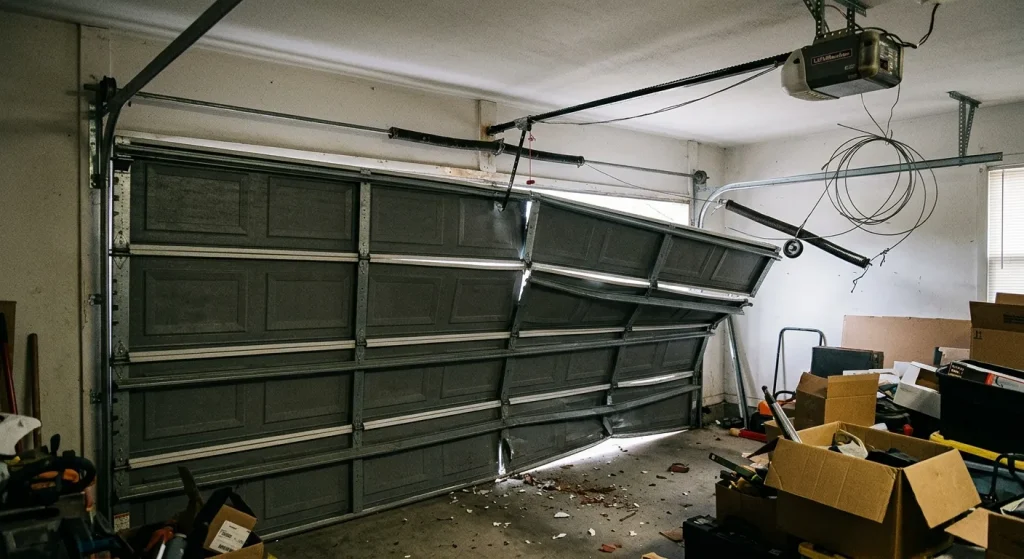
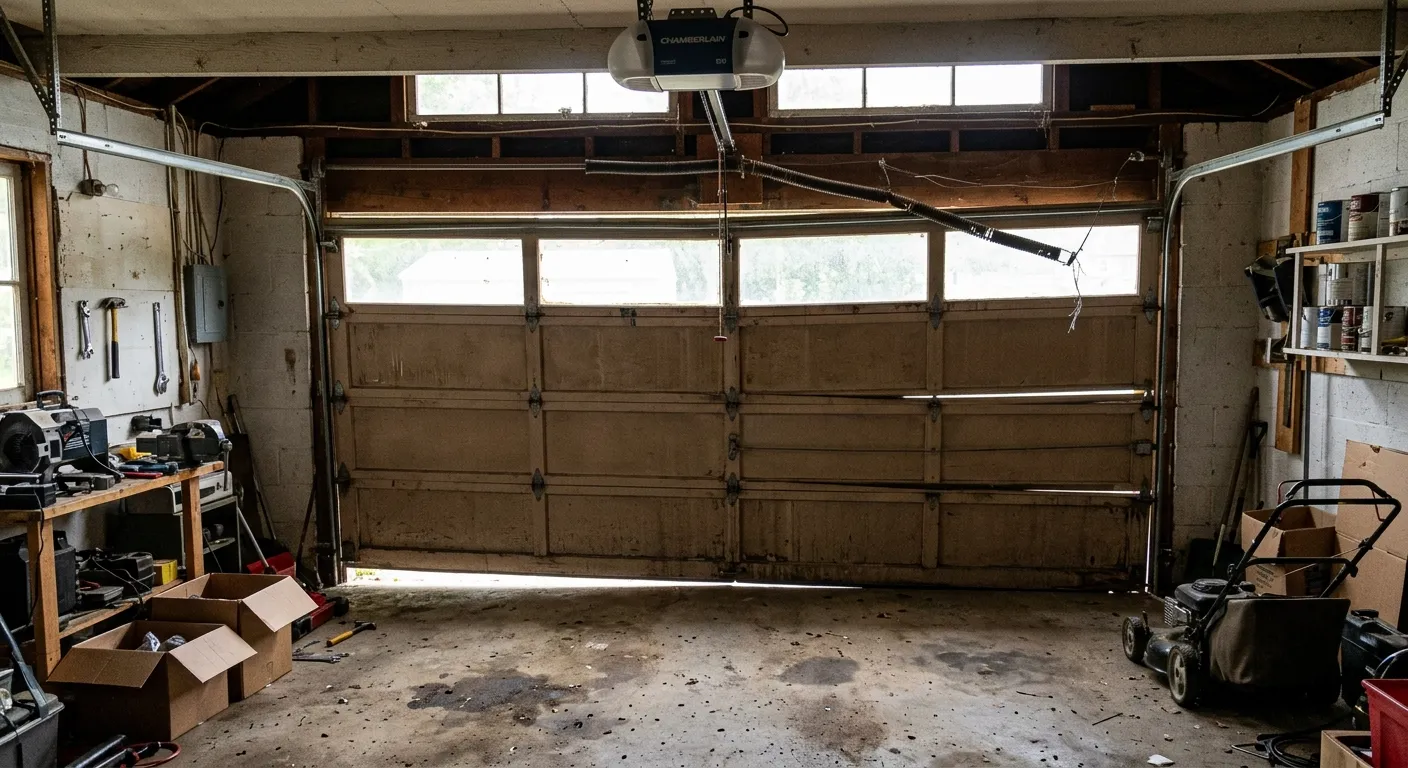
A garage door rarely fails without warning, as small changes in sound, balance, speed, or appearance usually surface well before the entire system reaches a full, costly, and often dangerous breakdown.
Signs a garage door may need replacement include:
- The door hesitates, jerks, or stalls partway through opening or closing
- Panels show visible dents, cracks, or warping along the surface
- Rust spots appear near the bottom panel or along the hinges
- Gaps form along the bottom or sides when the door is fully closed
- The garage door opener struggles to lift the door or reverses unexpectedly
To understand how these warning signs connect to the bigger decision of replacing a door entirely, read our guide on When to Replace Garage Door: Signs It’s Time for an Upgrade, which explains how each sign points to a specific underlying cause.
Common Causes Behind Garage Door Replacement
Most garage door problems trace back to a small number of root causes, which explains why some doors need full replacement sooner than others.
Common causes behind the need for garage door replacement include:
- Age-related wear breaks down panels, hinges, and rollers over time
- Moisture exposure leads to warping, swelling, or rust along the frame
- Cracked or bent tracks throw off the door’s alignment and movement
- Worn-out springs lose the strength needed to support the door’s weight
- Motor or opener failure makes ongoing repair impractical or unreliable
To explore how these mechanical issues develop into the warning signs homeowners notice first, read our guide on Common Causes of Garage Door Replacement, which breaks down each cause in more detail.
Why Garage Door Replacement Should Always Be Left to Professionals
Garage door replacement carries real safety risks and technical demands that make professional installation the better choice over any DIY attempt.
Reasons to leave garage door replacement to professionals:
- Torsion springs store enough tension to cause serious injury if mishandled
- Improper installation can damage the opener or void warranty coverage
- Professionals carry the tools needed for proper alignment and calibration
- A licensed installer can spot hidden issues an untrained eye would miss
- Professional installation helps preserve manufacturer warranty coverage on parts
These risks make it clear why garage door replacement is a job best handled by trained professionals rather than attempted without the right experience or tools.
Step by Step Process Professionals Follow for Garage Door Replacement
Securing and Demolition
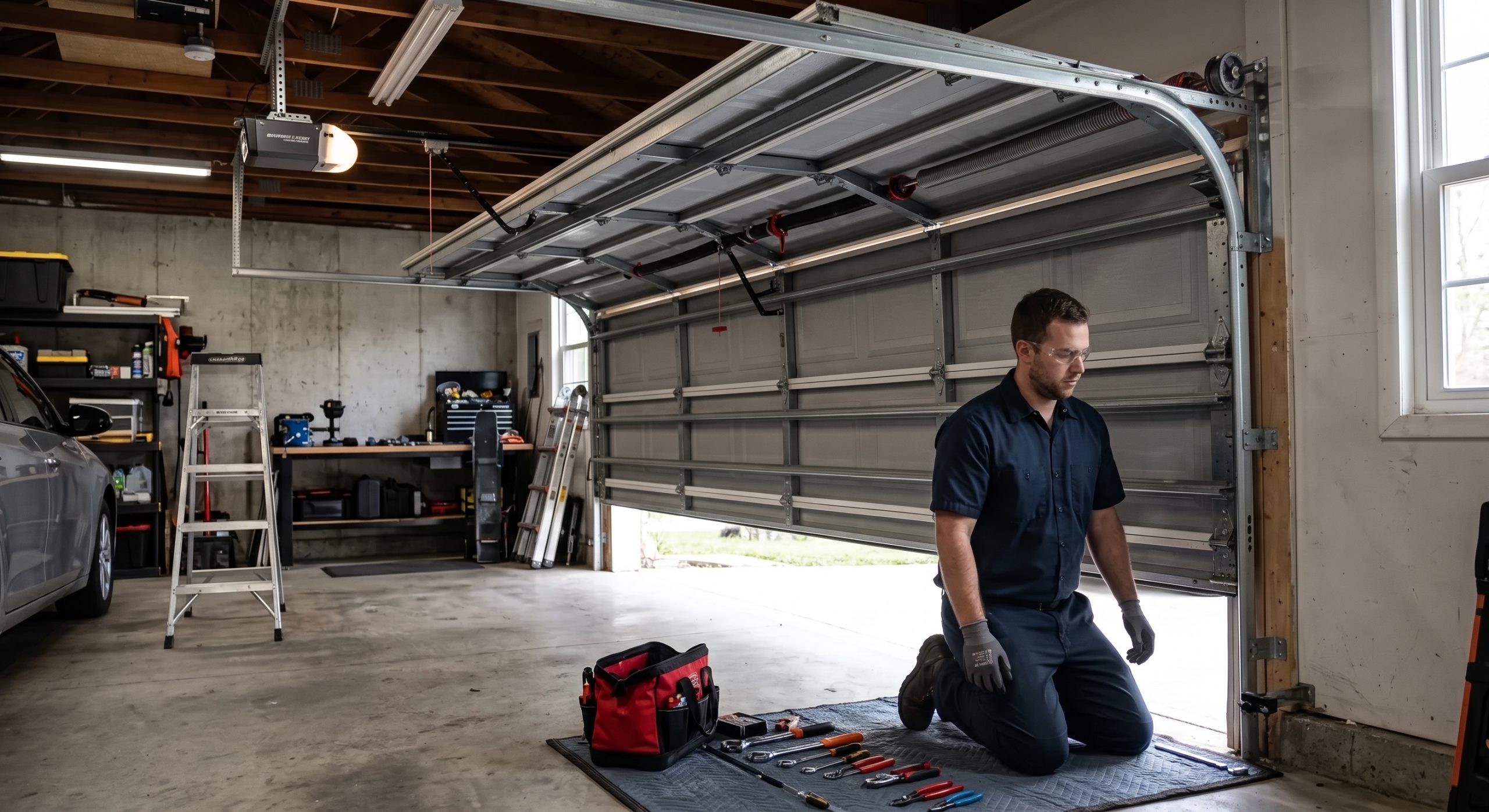
Removing an old garage door starts with heavy-duty clamps, a slow spring release, and a careful teardown of every part in proper sequence.
Steps professionals take during this stage:
- Heavy-duty clamps lock onto the existing tracks to prevent the door from shifting
- Winding bars slowly release spring tension to avoid any sudden force
- Lift cables disconnect only after tension has been fully neutralized
- Panels, hinges, and tracks come apart in order from top to bottom
- Leftover hardware and debris get cleared from the work area
Clearing each part in the proper order keeps the workspace organized and fully ready for the next stage of installation.
Track and Panel Installation
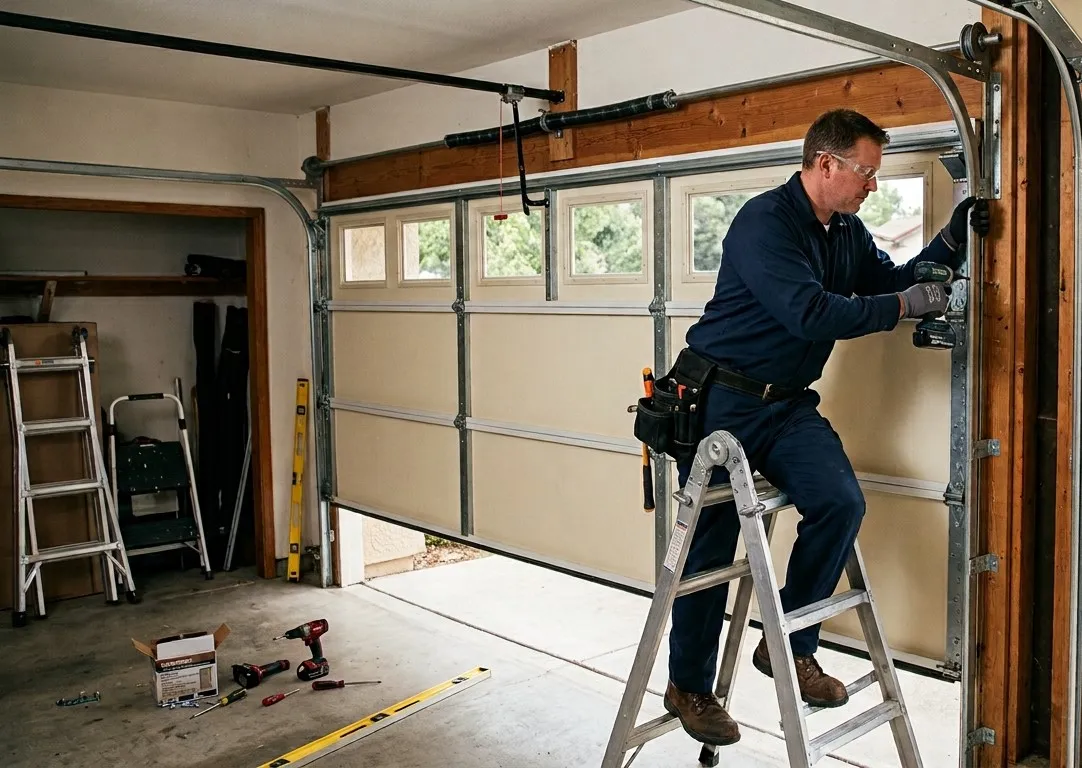
Building the new door starts from the ground up, with each panel and track fitted according to precise measurements throughout.
Steps involved in this stage:
- Base leveling ensures the very first bottom panel sits flawlessly even
- New panels stack upward from the bottom, one section at a time
- Rollers, hinges, and brackets secure using impact drivers and self-tapping screws
- Tracks mount with bolts left slightly loose to allow for adjustment
- Track alignment gets fine-tuned so the door rolls without binding or grinding
Precise measurements applied at each step keep the finished door rolling smoothly along both tracks for years.
Spring and Hardware Calibration
Balancing the new system depends on exact spring tension and evenly distributed cable weight applied on both sides.
Steps professionals complete during calibration:
- Torsion bars and bearing plates get mounted before the new springs go in
- Springs wind to the exact number of turns the manufacturer specifies
- Lift cables thread onto the drums on each side of the door
- Equal cable tension gets applied on both sides to prevent the door from skewing
- Every hardware connection gets checked for tightness before moving forward
Matching tension on both sides keeps the door level and prevents unnecessary strain on either track.
Motor Reconnection and Testing
Final testing confirms the motor, sensors, and opener all work together properly before the entire job wraps up.
Steps taken during this final stage:
- The trolley and motor unit reconnect to the center of the top panel
- A balance test involves disconnecting the motor and lifting the door by hand
- Auto-reverse safety sensors get tested to confirm they respond correctly
- Open and close limit switches get adjusted during a full test cycle
- The workspace gets cleared before walking through the finished installation
Running each system through a full cycle confirms the door performs exactly the way it should from day one.
Post-Service Checks Professionals Perform After Replacement
Once installation wraps up, professionals run through a short series of checks to catch any issue before calling the job fully complete.
Post-service checks typically include:
- Listening for unusual noise during a full open and close cycle
- Confirming the door stays level and balanced at every point
- Testing the garage door opener’s remote and wall controls
- Checking that safety sensors respond correctly to obstructions
- Reviewing warranty coverage and paperwork with the homeowner
These final checks give homeowners real confidence in the new door before the technician even leaves the property.
What to Do If Something Goes Wrong After Garage Door Replacement
Even after proper installation, homeowners sometimes notice something unusual in the days following a replacement.
Helpful actions to take if something feels off include:
- Documenting the issue with photos or a short video
- Noting when the problem happens, such as during opening or closing
- Avoiding the temptation to adjust springs or cables without training
- Contacting the installer promptly to request garage door repair
- Reviewing the original service agreement for coverage details
Reaching out early gives the installer the best chance to resolve the issue quickly and correctly the first time.
How to Maintain a Garage Door After Replacement
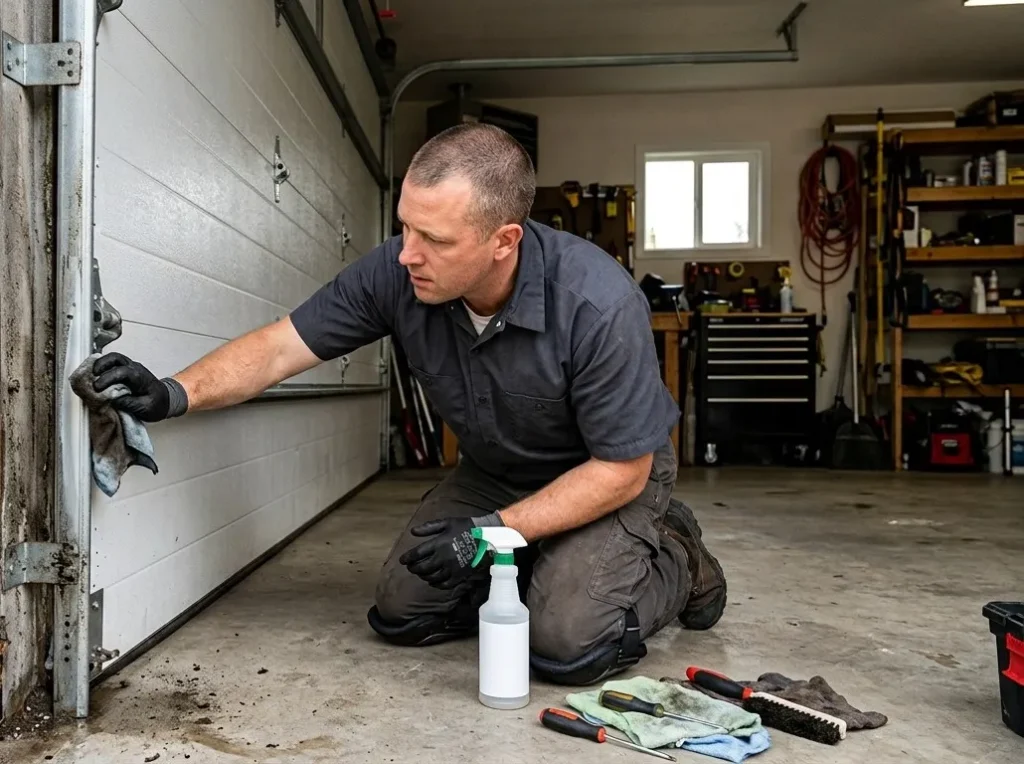
A few consistent habits after garage door replacement help homeowners get the most life out of the new system.
Helpful maintenance habits include:
- Lubricating hinges and rollers every few months
- Wiping down tracks to remove dust, debris, and moisture buildup
- Testing the auto-reverse safety feature on a regular basis
- Checking weatherstripping for gaps that reduce energy efficiency
- Scheduling periodic professional inspections to catch small issues early
To explore the specific upkeep steps that keep a new door running smoothly for years, read our guide on Garage Door Replacement Maintenance Tips, which breaks down a full maintenance routine homeowners can follow.
Always Trust the Pros With Garage Door Replacement
Garage door replacement demands the training, precision, and specialized tools that only a certified professional team can bring to every stage of the process. Each individual step matters, from the careful teardown of the old system to the final safety test that confirms the new door performs exactly as intended.
All About Doors brings that same level of skill and attention to every garage door replacement completed for homeowners across Glen Burnie and the wider Maryland area. Contact us or give us a call today to schedule a full inspection and get expert guidance on choosing the right door for the home.
Frequently Asked Questions
What size options are available when choosing a new garage door?
Standard single and double door sizes cover most homes, though custom dimensions exist for unique openings. A professional installer typically measures the space first to confirm which garage door replacement size fits properly before ordering.
Can a garage door be replaced without removing the frame?
Yes, most replacements involve only the door itself, while the surrounding frame stays in place. This keeps the job faster and less invasive unless the frame shows damage that affects how the new door fits.
Do professionals recommend upgrading hardware during a replacement?
Yes, many professionals suggest upgrading rollers, hinges, and cables at the same time as a new door. Old hardware often wears out around the same time signs you need a new garage door start appearing, so replacing both together saves a return trip.
What happens to the old garage door after it gets removed?
Most installers haul away the old door as part of the service unless the homeowner requests otherwise. This saves homeowners the hassle of disposal once the garage door replacement work wraps up.
Are steel doors heavier than other garage door materials?
Yes, steel doors tend to weigh more than aluminum or vinyl options, which affects spring and opener requirements. Installers account for this weight difference when calibrating the system during setup.
Can homeowners request specific colors or finishes for a new door?
Yes, most garage door companies offer a range of factory finishes and customization options. Choosing a finish that matches the home's exterior is often part of deciding when should you replace your garage door with a full style update in mind.
Does garage door replacement come with any long-term performance benefits?
Yes, a properly installed door improves functionality and reduces strain on the opener over the long run. Homeowners often notice smoother operation once garage door replacement addresses issues an older system could no longer handle.
How many workers are usually needed for a standard installation?
Most installations involve a team of two technicians working together to handle heavy panels and hardware safely. Larger or custom doors sometimes require an additional worker, depending on the door's weight and design.
Can a homeowner keep decorative hardware from the old door?
Yes, decorative hardware like handles or hinges can sometimes transfer to the new door if compatible. It helps to mention this to the installer before the old door gets removed, so the pieces get saved properly.