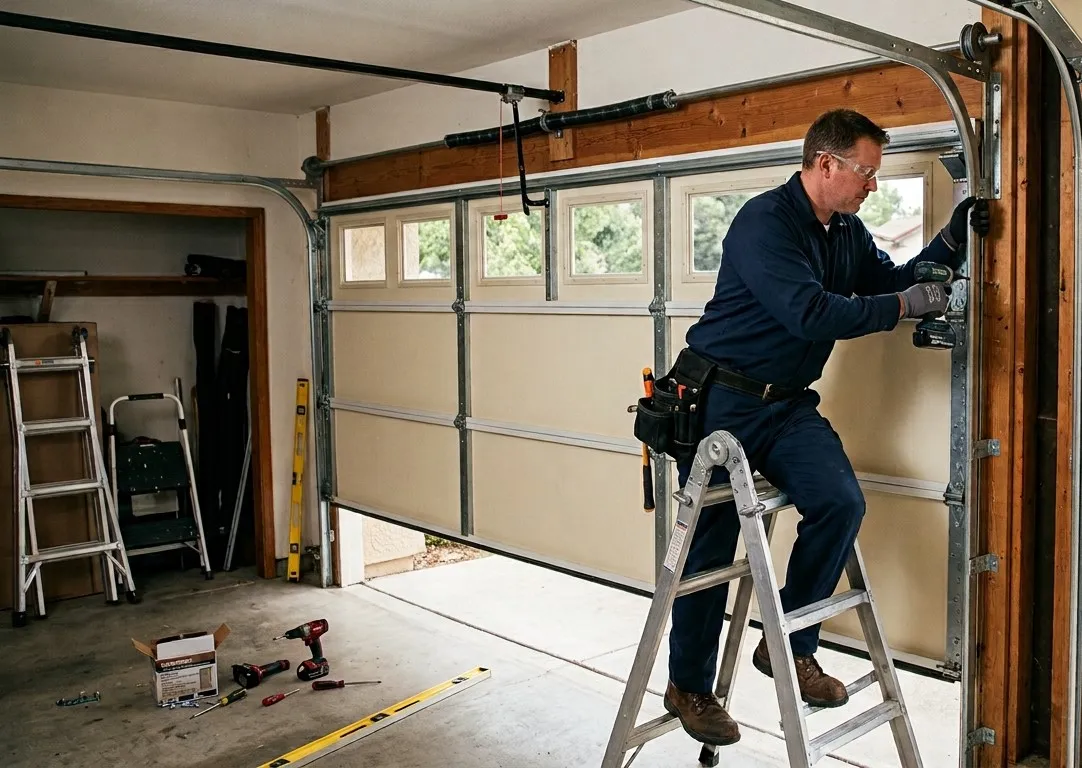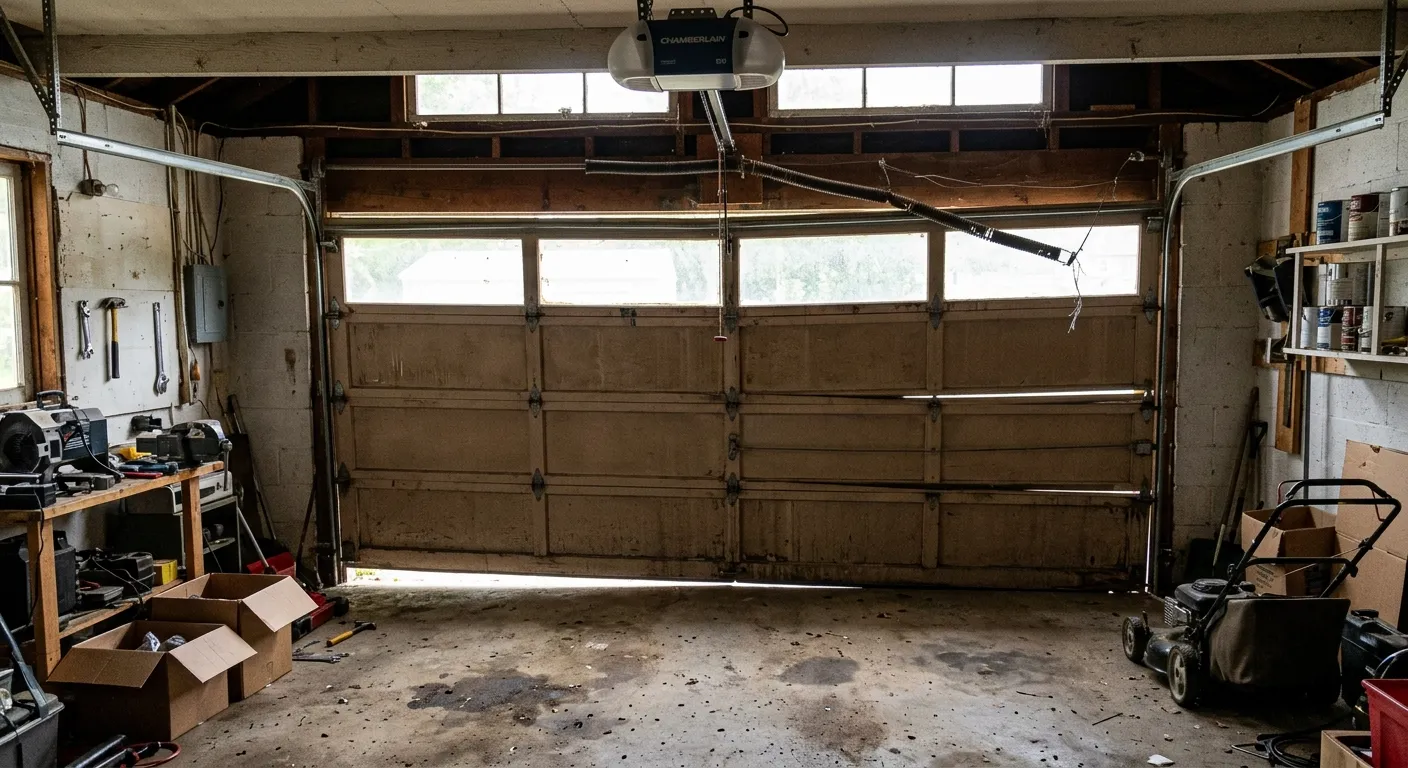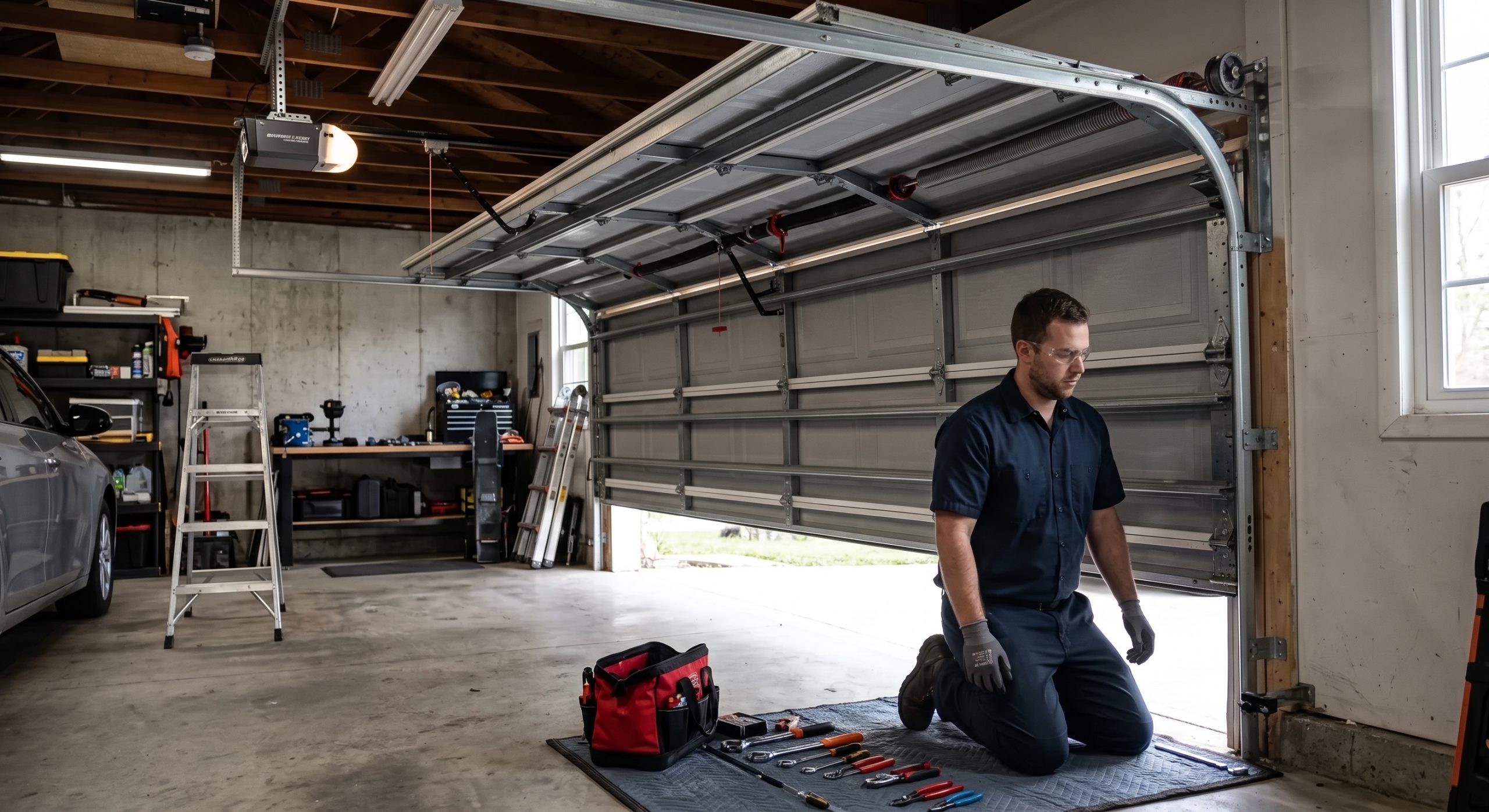
Garage door replacement maintenance tips center on lubrication, track cleaning, balance checks, and knowing when a professional should step in during the months after installation. Following these steps consistently determines whether a new door lasts for decades or starts showing problems earlier than expected.
Consistent upkeep protects that investment and reduces the chances of early repairs or a premature full replacement. This guide covers the key maintenance tasks, proper timing, and warning signs homeowners should know, along with when professional help makes the biggest difference.
Why Does Garage Door Maintenance Matter After a Replacement?
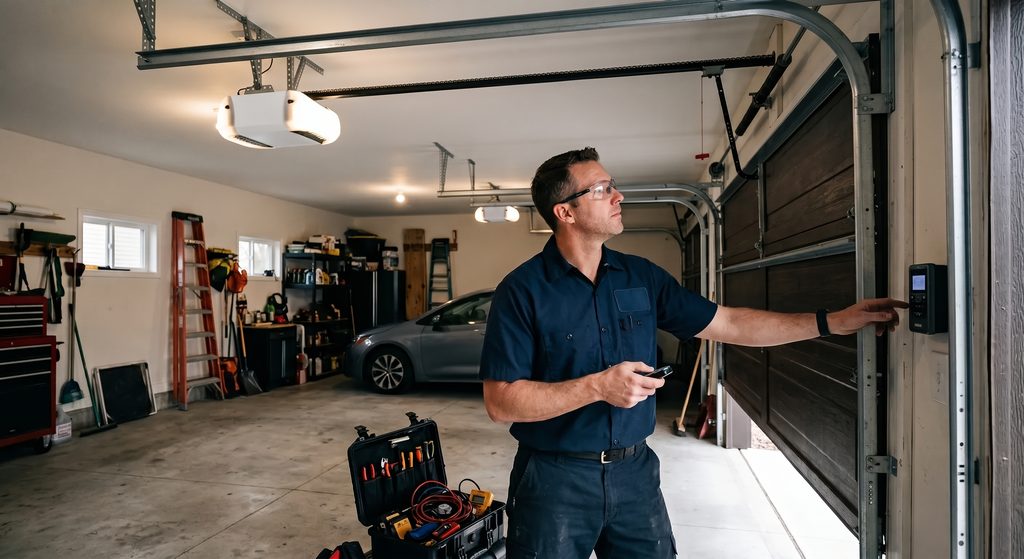
A new garage door rarely runs into trouble without warning, since small shifts in balance, sound, or resistance usually build gradually over several months before turning into a costly and inconvenient problem.
Reasons maintenance matters so much after a replacement include:
- Springs and cables are calibrated for the new door’s exact weight and untested through a full season.
- Hinges and rollers have not built up the wear pattern that comes with regular use.
- Weather stripping and seals have not faced changing temperatures or moisture yet.
- The automatic opener is still adjusting to the door’s weight and resistance.
- Hardware and fasteners can shift slightly as everything settles into place.
To understand how these early adjustment issues connect to deeper causes of damage, read our guide on Common Causes of Garage Door Replacement, which explains what tends to wear down a garage door long before homeowners notice it.
Key Maintenance Tasks to Perform After a Replacement
Lubricating Moving Parts
Smooth operation on a new garage door depends on how well its hinges, rollers, and springs stay lubricated during the first few months.
Tasks that keep parts moving properly:
- Silicone-based lubricant works better than household degreasers
- Hinges and rollers benefit from a light coating every few months
- Torsion springs need occasional attention with a lighter product
- Squeaking or grinding sounds point to a part needing attention
- Excess buildup should be wiped away before reapplying lubricant
Well-lubricated parts move quietly and place far less strain on the opener motor as the door settles into regular use.
Cleaning and Inspecting the Tracks
Vertical and horizontal tracks guide every movement the door makes, so keeping them clear supports even operation.
Habits that keep tracks functioning well:
- Debris and dust buildup often cause the door to shift unevenly
- A damp microfiber cloth removes grime without leaving residue
- Tracks should never be lubricated, since this causes rollers to slip
- Bent or misaligned sections usually need professional adjustment
- Loose track brackets should be tightened as soon as they’re noticed
Clear, aligned tracks keep rollers, hinges, and the opener working together with noticeably less strain on each part.
Checking the Auto-Reverse Safety Feature
Safety features built into modern garage door openers rely on sensors that need occasional testing to confirm proper function.
Checks worth running on a regular basis:
- Placing an object in the door’s path should trigger an immediate reverse
- Continued closing despite an obstruction signals a sensor problem
- Sensor lenses often need a quick wipe to clear dust or webs
- Misalignment between sensors is a common cause of inconsistent reversing
- Testing should happen with a solid object rather than something soft or lightweight
Reliable auto-reverse function protects everyone who uses the garage regularly and confirms the opener is responding as it should.
Inspecting Weather Stripping and Seals
Rubber seals along the bottom and sides of the door block moisture and outside air, making them an easy component to check.
Signs worth watching for during inspection:
- Cracked or torn seals let drafts and pests inside
- Bottom seals slide out of their retainers fairly easily when needed
- Side stripping often wears faster in homes exposed to direct sun
- Gaps along the seal reduce overall energy efficiency
- Stiff or brittle rubber usually means the seal is due for replacement
Small cracks are easier to fix early, well before moisture and drafts have a chance to work their way further in.
Monitoring Door Balance
Balance testing offers one of the clearest indicators of how well a garage door replacement was installed.
Steps for checking balance properly:
- Disconnecting the opener and lifting the door manually reveals its balance
- A door that falls or shoots upward signals a spring tension issue
- Balanced doors place far less strain on the opener motor
- Testing every few months helps catch tension issues early
- Any resistance felt while lifting manually is worth noting for a technician
Spring tension shifts gradually over time, and regular checks catch that shift while it’s still minor and easy to correct.
Checking Hardware and Fasteners
Bolts, brackets, and screws often loosen slightly as a new door adjusts to daily use.
Quick habits worth building into a routine:
- Rattling noises during operation often trace back to loose fasteners
- Bracket bolts near the tracks deserve particular attention
- Minor tightening can often be done without specialized tools
- Loose hardware left unaddressed can affect track alignment
- Fasteners near the opener rail are worth checking during every inspection
Fasteners rarely cause dramatic problems on their own, but small vibrations add up in ways that affect the whole system over time.
Reviewing Sensor Alignment
Photo-eye sensors near the base of the door track play a central role in detecting obstructions.
Details worth checking on a regular basis:
- Sensors sitting slightly out of alignment cause inconsistent reversing
- A blinking indicator light often signals misalignment between sensors
- Dust or spider webs on the lens interfere with detection
- Both sensors should sit at the same height for reliable performance
- Bracket mounts should be checked for movement during routine inspections
A quick visual check every few months keeps sensors working the way they were designed to and supports the door’s overall safety features.
How Often Should Each Maintenance Task Be Performed
The first year after a garage door replacement calls for closer attention while hardware, springs, and seals adjust to regular use.
| Maintenance Task | Recommended Frequency | Why It Matters |
| Lubrication | Monthly during the first year | Keeps hinges, rollers, and springs moving without added friction |
| Auto-reverse testing | Monthly during the first year | Confirms sensors are responding correctly as the door settles |
| Balance checks | Monthly during the first year | Catches early spring tension issues before they worsen |
| Weather stripping and seals | Each season | Protects against moisture and temperature shifts throughout the year |
| Hardware and fasteners | Every few months | Prevents loose bolts and brackets from affecting alignment |
| Sensor alignment | Seasonal review | Maintains consistent detection as the system settles into use |
A consistent schedule early on makes it much easier to notice small changes before they turn into a pattern worth addressing.
What Happens When Maintenance Doesn’t Work
Persistent issues despite regular upkeep usually point to something beyond normal wear, especially on a door replaced fairly recently.
Signs maintenance alone will not resolve the issue:
- The door continues sticking or dragging after lubrication and adjustment
- Unusual noises return within days of being addressed
- Balance problems reappear shortly after a manual check
- The auto-reverse feature keeps malfunctioning despite sensor cleaning
- Hardware keeps loosening even after tightening
To recognize when these recurring issues signal it’s time for a bigger decision, read our guide on When to Replace Garage Door: Signs It’s Time for an Upgrade, which walks through the signs that point toward a full replacement instead of another repair.
When Replacement Maintenance Needs a Professional Touch
A handful of issues call for a trained technician instead of routine homeowner upkeep, especially when warranty coverage is involved.
Situations that call for professional attention:
- Spring tension problems that go beyond a simple balance check
- Cable wear or fraying near the drum or bottom bracket
- Opener malfunctions that don’t respond to basic troubleshooting
- Warranty terms that require professional service to stay valid
- Recurring issues that return despite consistent maintenance
To walk through how trained technicians approach these exact situations, read our guide on How Pros Handle Garage Door Replacement, which breaks down what a professional evaluation typically involves.
Is Professional Maintenance Worth Choosing Instead?
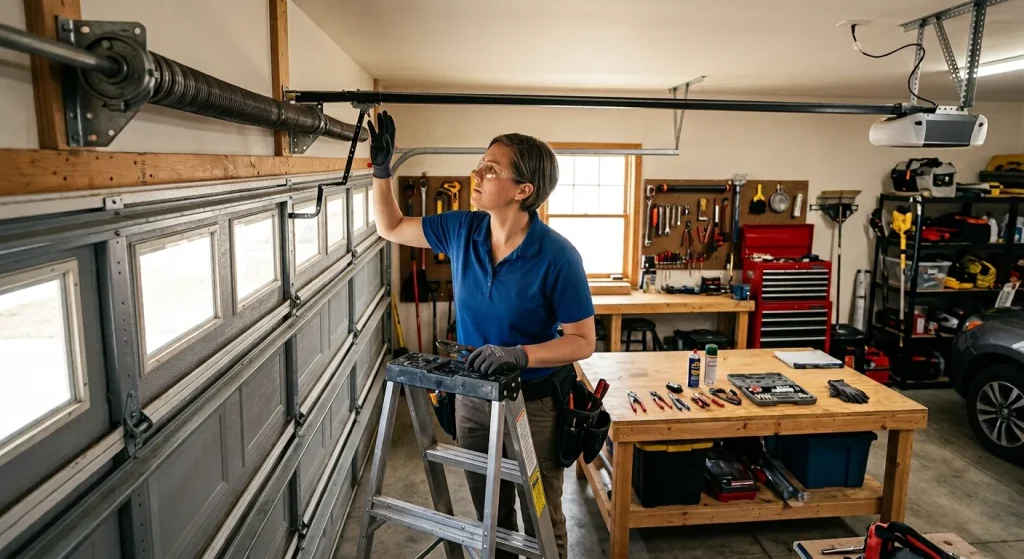
Ongoing professional maintenance shifts routine upkeep and garage door repair to a technician on a consistent, scheduled basis.
Reasons homeowners choose professional maintenance plans:
- Scheduled visits cover lubrication, balance, and hardware in one appointment
- Technicians spot early wear that’s easy to miss during a casual check
- A set schedule removes the guesswork of timing each task correctly
- Consistent care supports a longer lifespan for the door and its components
- Professional oversight helps protect warranty coverage on newer installations
A structured maintenance plan offers steady peace of mind for homeowners who would rather not track every task themselves.
Keep Garage Door Replacement Maintenance a Top Priority
Every garage door replacement depends on consistent upkeep to reach its full lifespan, and understanding what to check helps homeowners make better decisions along the way. Knowing when to handle small tasks and when to call a professional keeps the entire system performing the way it was designed to for years to come.
All About Doors handles thorough inspections, accurate diagnostics, and dependable maintenance for every garage door replacement across Glen Burnie and the surrounding Maryland area. Contact us or give us a call today, and let our team assess exactly what the system needs to perform at its best for years ahead.
Frequently Asked Questions
Can dust and debris shorten the life of a garage door?
Yes, buildup on tracks and moving parts can create unnecessary friction and put extra strain on the opener over time. Regular cleaning helps prevent this buildup and supports smoother, quieter operation for a replaced garage door.
How can homeowners tell if maintenance is being done correctly?
Consistent, quiet operation and even movement throughout the full cycle are good indicators that maintenance is on track. Unusual sounds, hesitation, or uneven motion often mean a task was missed or a component needs closer attention from professional installers.
Does routine maintenance delay the need to replace garage door components?
Yes, consistent upkeep often extends the life of individual parts well before a full replacement becomes necessary. Staying attentive to small issues as they appear is one of the more effective ways to avoid additional cost from early wear on a newer system.
What tools are typically used during professional maintenance visits?
Technicians often use specialized wrenches, tension gauges, and lubricants suited specifically for garage door hardware, including garage door springs and other moving parts. These tools help identify issues that aren't always visible or obvious during a basic homeowner inspection.
Can improper maintenance void a manufacturer's service agreement?
Yes, certain manufacturers require documented maintenance records to keep specific service agreements valid. Homeowners planning a garage door replacement should ask about these requirements directly during garage door installation.
Do garage door maintenance needs vary by home layout?
Yes, factors like garage size, door type, and daily usage patterns can all influence how often maintenance is needed. A home with heavier daily use may require more frequent attention than one where the door is used only occasionally.
What are early signs you need a new garage door despite regular maintenance?
Persistent misalignment, recurring noise, or repeated part failure despite consistent upkeep can point toward bigger underlying issues. These signs are worth noting and addressing even when a door is still relatively new, since ignoring them can affect home security over time.
Is it common for homeowners to replace garage door parts individually instead of the whole unit?
Yes, many issues can be resolved by replacing individual components, such as door panels or hardware, rather than the entire door at once. A professional evaluation helps determine when should you replace your garage door entirely versus repairing one specific part.
Does professional maintenance include a written summary of findings?
Many technicians provide a written summary outlining what was inspected and any recommendations moving forward. This documentation gives homeowners a useful record for tracking a door's condition over the long run.