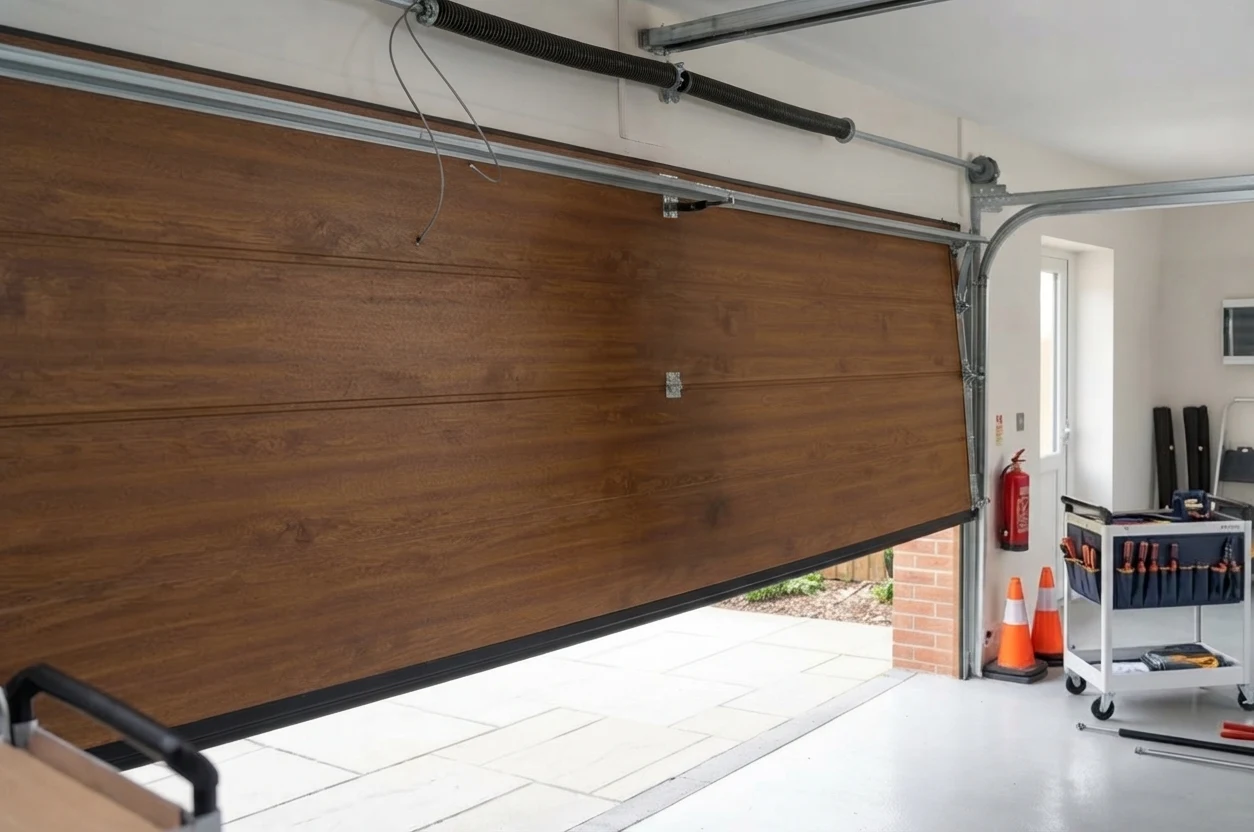
If your garage door won’t open, a broken spring is one of the most common causes, especially if the opener runs but the door barely moves, or the door feels extremely heavy when lifted by hand. Other signs include a visible gap in the coil, a loud bang right before it stopped working, or the door hanging crooked. Don’t keep running the opener; disconnect it and call a pro for garage door repair.
Key Takeaways
- An opener that runs (motor sounds normal) but the door doesn’t move is a strong sign the spring, not the opener, is the problem.
- A door that feels far heavier than usual when lifted by hand points to a lost counterbalance from a broken spring.
- If you heard a loud bang right before the door stopped working, a snapped spring is the most likely explanation.
- A visible gap in the coil above the door confirms a torsion spring has failed.
- Continuing to run the opener against a broken spring risks damaging the motor and gears, not just the spring itself.
Signs at a Glance: Cause and Urgency
| Sign | What It Usually Means | Urgency |
| Opener runs, but door doesn’t move | Motor is fighting the door’s full weight; spring likely broken | Emergency, stop running the opener |
| Door extremely heavy to lift by hand | Counterbalance lost, spring likely broken | Emergency, disconnect opener |
| Heard a bang right before it stopped opening | Spring snapped under tension | Emergency, inspect before use |
| Visible gap in the coil | Torsion spring has fully separated | Emergency, call a pro |
| Door opens partway then stops or reverses | Opener sensing excess resistance from a failed spring | Emergency, don’t force it |
| Door hangs crooked when partially open | One spring broke on a two-spring system | Emergency, leave door as-is |
1. The Opener Runs, but the Door Doesn’t Move
Symptom: You hit the remote or wall button, the motor sounds like it’s working, but the door doesn’t lift, or only lifts an inch or two before stopping.
Most likely cause: The opener is designed to move a counterbalanced door, not lift its full weight. Without a working spring, the motor doesn’t have the mechanical advantage to move the door.
Fix steps: Stop pressing the button repeatedly. Disconnect the opener using the manual release cord so the motor isn’t continuing to strain.
Call a pro if: The motor runs normally, but the door won’t lift. This is one of the clearest signs of a spring failure.
How to Fix a Garage Door Opener That Won’t Lift the Door
Pull the manual release cord to disconnect the door from the opener, then try lifting it by hand (carefully) to gauge how heavy it feels. If it’s dramatically heavier than normal, that confirms the spring, not the opener, is the issue. Keeping up with routine garage door maintenance can help you spot a weakening spring before the opener starts straining against it.
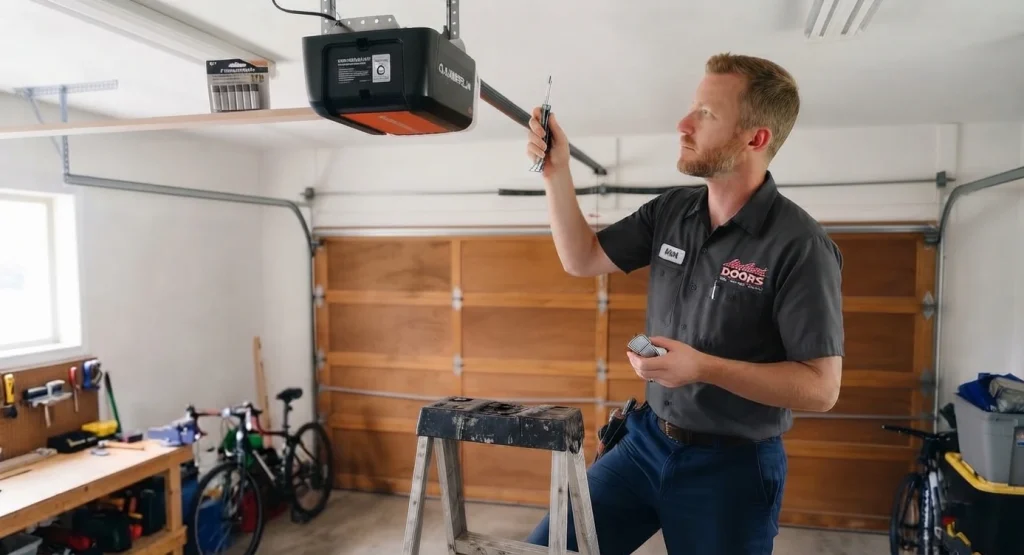
2. The Door Feels Extremely Heavy When Lifted by Hand
Symptom: With the opener disconnected, manually lifting the door feels like lifting dead weight, sometimes too heavy to raise past waist height.
Most likely cause: The spring normally offsets most of the door’s weight (often 130-400 lbs for a standard double door). Without it, that full weight is unsupported.
Fix steps: Don’t force it upward. If you can’t lift it safely, leave it where it is.
Call a pro if: The weight difference is dramatic. This is one of the most reliable ways to confirm a spring failure without seeing a visible gap.
Why Does a Garage Door Feel So Heavy When It Won’t Open
The spring’s job is to counterbalance the door so lifting it, by hand or by opener, only takes a small fraction of its actual weight. A broken spring removes that counterbalance entirely, which is why the difference is so noticeable.
3. You Heard a Loud Bang Right Before It Stopped Working
Symptom: A sudden bang from the garage, and the door hasn’t opened properly since.
Most likely cause: A torsion or extension spring snapping under tension. The timing (bang, then door won’t open) is one of the clearest patterns pointing to a spring cause.
Fix steps: Avoid repeated attempts to open the door. Note the timing for the technician; it helps confirm the diagnosis quickly.
Call a pro if: The bang and the door not working happened close together.
If you heard a bang right before this happened, read our guide, Why Did My Garage Door Make a Loud Bang? 5 Causes of a Snapped Spring, for the full list of causes.
How to Confirm a Loud Bang Was a Spring Breaking
Look at the spring above the door for a visible gap, or check the side tracks if your door uses extension springs. If you see a separation, that confirms the spring as the cause of both the bang and the door not opening.
4. There’s a Visible Gap in the Coil
Symptom: Looking at the torsion spring above the door, you see a clear break or separation in the coil.
Most likely cause: The spring has fully snapped from metal fatigue.
Fix steps: Note which side the gap is on. Don’t attempt to touch or adjust the spring.
Call a pro if: You see any gap. This is direct visual confirmation, and the door shouldn’t be operated until it’s replaced.
What a Broken Garage Door Spring Looks Like Up Close
A healthy spring is one continuous, evenly wound coil. A broken one shows a clear separation point, sometimes with the ends curled slightly outward.
If you want to see every visual sign beyond this one, read our full guide, What Does a Broken Garage Door Spring Look Like? 7 Warning Signs to Check.
5. The Door Opens Partway, Then Stops or Reverses
Symptom: The door starts to lift, gets partway up, then stalls or reverses back down on its own.
Most likely cause: Most openers have a force sensor that stops the motor if it senses too much resistance, which happens when a broken spring leaves the door too heavy to lift normally.
As outlined in DASMA’s garage door opener safety guidance, this force-sensing feature is a built-in safety measure designed to stop the motor exactly in situations like this one.
Fix steps: Don’t repeatedly try to force it past this point; you risk triggering repeated strain on the motor or gears.
Call a pro if: This happens more than once. It’s the opener protecting itself from a mechanical problem it can’t fix on its own.
Why Does My Garage Door Reverse Before Fully Opening
This is often mistaken for a sensor or opener issue, but if it’s paired with any of the other signs on this list, especially a door that feels heavy or a recent bang, the underlying cause is usually the spring, not the opener’s electronics.
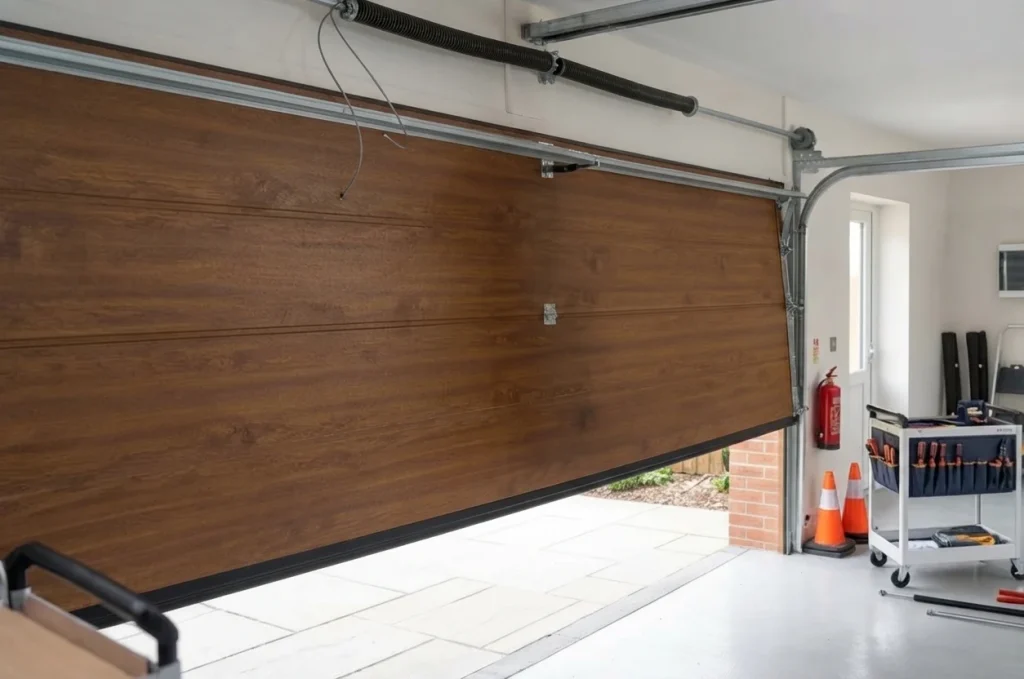
6. The Door Hangs Crooked When Partially Open
Symptom: If you do get the door partway open, one side sits visibly higher than the other.
Most likely cause: On a two-spring system, one spring has broken while the other is still working, pulling the door unevenly.
Fix steps: Stop trying to open it further. An uneven pull can bind the door in the tracks or bend the rails.
Call a pro if: The door looks tilted at all.
If your door is also hanging crooked, read our guide, Why Is My Garage Door Crooked or Uneven? 4 Reasons a Spring Is to Blame, for more on this specific sign.
Why Is My Garage Door Uneven When It Won’t Open
A two-spring system needs both springs sharing the lift evenly. When one fails, the working spring takes over unevenly, causing the door to rack or bind, which can make it look stuck even when the actual cause is one broken spring on one side.
Door Won’t Open? Here’s What to Do Next
If your garage door won’t open and you’re seeing any of the six signs above, especially an opener that runs without lifting the door, or a door that feels unusually heavy, a broken spring is the most likely cause. Stop trying to force it and don’t keep testing the opener.
All About Doors offers same-day diagnosis and spring replacement for homeowners in the Glen Burnie, MD area. Contact us or give us a call to get your door working again safely.
Frequently Asked Questions
Often, yes. The opener’s electronics (lights, remote) can work fine even when the mechanical lift is compromised by a broken spring.
We’d recommend against forcing it. If the spring is broken, the door can be extremely heavy and drop suddenly once released.
Disconnect the opener with the manual release cord and try lifting the door by hand. If it feels dramatically heavier than normal, that points to the spring rather than the opener.
No. Repeated attempts can strain or burn out the opener motor when it’s fighting a broken spring’s dead weight.
Cold can stiffen lubricant and slow a door down, but in our experience a door that fully won’t open (versus just moving slowly) is more often a spring or cable issue. For a broader look at non-spring causes, The Spruce’s guide to troubleshooting common garage door problems covers issues like track misalignment and sensor obstructions that can also stop a door from opening.
Most spring replacements are same-day or next-day jobs once the technician confirms the cause and has the right part on hand.
Not always, but if the opener was run repeatedly against a broken spring before it was caught, the motor or gears can suffer damage. We check the opener during every spring call for this reason.
Only if both doors share a spring system, which is uncommon. Usually each door has its own spring or spring pair, so one broken spring typically affects only its own door.
We see both; it usually depends on how much the opener’s force sensors intervene. Either pattern is consistent with a spring failure.
Stop pressing the remote repeatedly, disconnect the opener with the manual release if needed, and check for the other signs in this guide (heaviness, a recent bang, a visible gap) before calling for service.