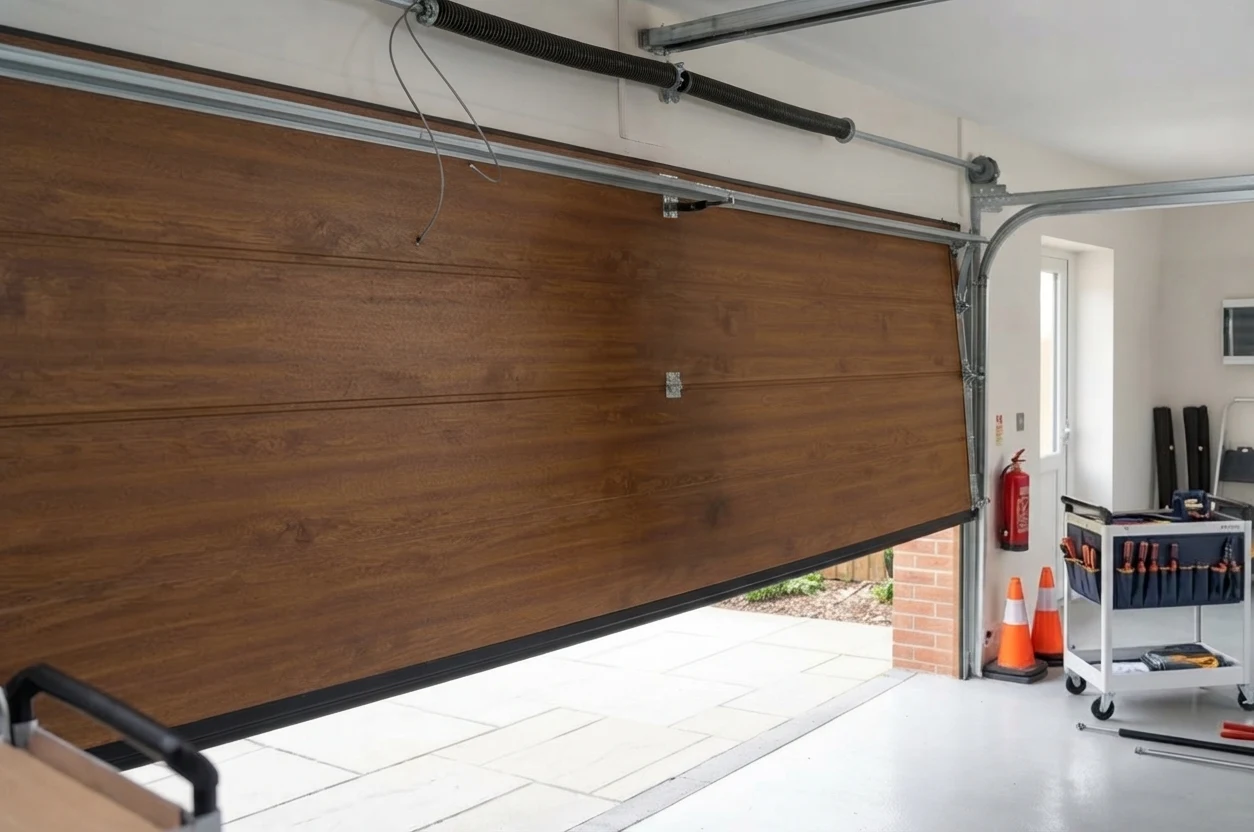
A loud bang from your garage is almost always a torsion or extension spring snapping under tension; the sudden release of stored energy makes a sound like a gunshot or a car backfiring. Other, less common causes include a snapped cable, a broken roller, or a door hitting a jammed track. Stop using the door and inspect the spring visually from a safe distance before calling a pro for garage door repair.
Key Takeaways
- A torsion spring snapping is the single most common cause of a loud bang in a garage, accounting for the vast majority of calls we get about this.
- The bang happens because the spring is under constant high tension; when it breaks, that tension releases instantly.
- A snapped cable can make a similar (though usually sharper, whip-like) sound.
- After any loud bang, stop operating the door until it’s been inspected; continuing to use it risks more damage or injury.
- This is different from routine squeaking or grinding noises; a bang is sudden, loud, and usually a one-time event tied to a component failure.
Signs at a Glance: Cause and Urgency
| Cause | What It Sounds Like | Urgency |
| Torsion spring snapped | Loud bang or gunshot-like sound from above the door | Emergency, stop using the door |
| Extension spring snapped | Similar bang, usually from the side tracks near the top | Emergency, stop using the door |
| Cable snapped | Sharp, whip-like crack, sometimes with a rattle after | Emergency, don’t operate the door |
| Roller shattered or broke | Sharper, shorter bang, often followed by grinding | Schedule soon; door may still be usable briefly |
| Door struck a jammed track or obstruction | Duller thud rather than a sharp bang | Inspect track before next use |
1. A Torsion Spring Snapped
Symptom: A loud, sudden bang from directly above the garage door, where the torsion spring and shaft are mounted.
Most likely cause: Metal fatigue after thousands of open-close cycles causes the coil to fully separate. Torsion springs are the most common spring type on modern residential doors, and by far the most common source of this exact sound.
Fix steps: Look up at the spring (without standing directly beneath it) for a visible gap in the coil. Don’t attempt the repair yourself; torsion springs are wound under extreme tension.
Call a pro if: You confirm a visible gap, or even if you’re not sure, since a torsion spring is the most likely explanation for a bang like this.
If your door also hangs crooked after the bang, read our guide, Why Is My Garage Door Crooked or Uneven? 4 Reasons a Spring Is to Blame, since that’s a common pairing on two-spring systems.
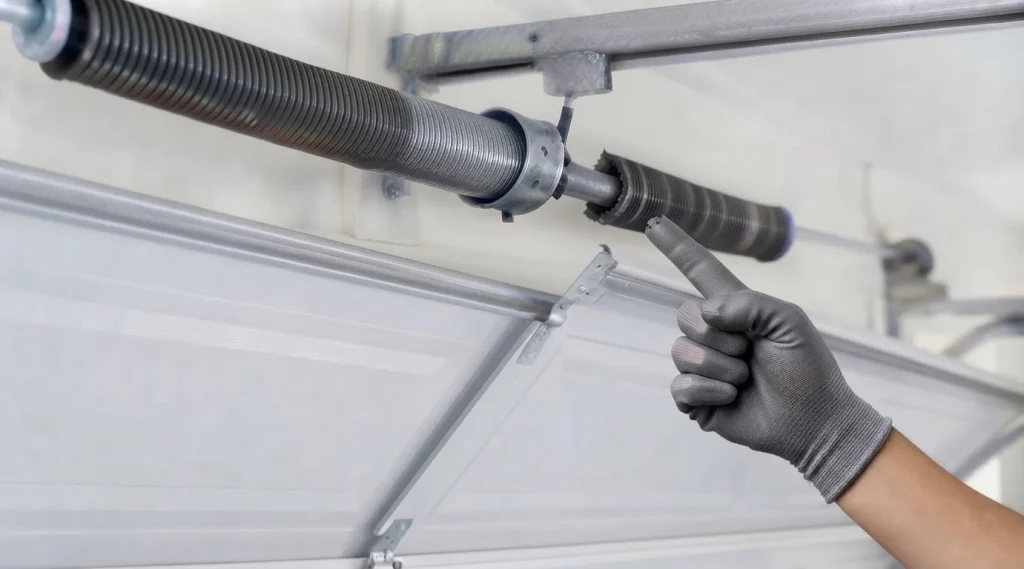
How to Fix a Garage Door After a Torsion Spring Snaps
Disconnect the opener’s manual release if the door is stuck, then schedule a spring replacement.
If you want the full breakdown of every visual sign a torsion spring has failed, read our guide, What Does a Broken Garage Door Spring Look Like? 7 Warning Signs to Check.
2. An Extension Spring Snapped
Symptom: A similar bang, but coming from the sides of the door near the top of the tracks rather than from directly overhead.
Most likely cause: Extension springs, found on older or lighter residential doors, stretch and contract along the horizontal tracks. They fail the same way torsion springs do, through fatigue, but the sound source is positioned differently.
Fix steps: Check both side tracks near the top for a spring that looks stretched, disconnected, or dangling. Leave the door alone until it’s inspected.
Call a pro if: You see a stretched or dangling spring on either side. Extension springs should have safety cables running through them; if a spring lets go without one, it can become a projectile.
If the door won’t move at all after this, read our guide, Why Won’t My Garage Door Open? 6 Signs It’s a Broken Spring, to confirm the cause.
Why Does an Extension Spring Make a Loud Bang When It Breaks
Like torsion springs, extension springs hold constant tension to counterbalance the door. When the coil fatigues and separates, that stored energy releases all at once, producing the same kind of sharp bang, just from a different location on the door system.
3. A Cable Snapped
Symptom: A sharp, whip-like crack rather than a deep bang, sometimes followed by a rattling sound as the cable falls loose.
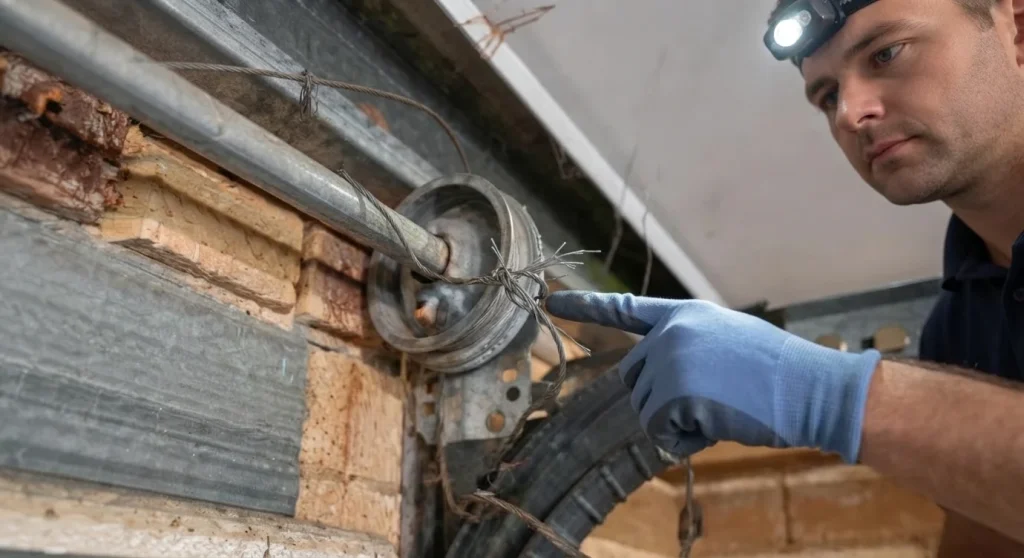
Most likely cause: Cables work alongside the springs to lift the door evenly. They can snap from fraying, rust, or after a spring failure puts abnormal stress on them.
Fix steps: Don’t touch a loose or dangling cable; it may still be under partial tension. Leave the door in its current position.
Call a pro if: You see a cable hanging loose or notice the door sitting unevenly after the sound. Cables are often replaced alongside springs in the same visit.
How to Tell if a Garage Door Cable Snapped vs. a Spring
A snapped cable tends to produce a sharper, quicker sound and is often followed by the door sagging to one side immediately. A snapped spring produces a deeper bang and the door may still look level right after, only becoming heavy or hard to lift when you try to use it.
4. A Roller Shattered
Symptom: A shorter, sharper bang, sometimes followed by a grinding or scraping sound as the door continues to move on a broken roller.
Most likely cause: Nylon rollers can crack or shatter with age, especially in extreme temperatures, and the sudden failure can produce a bang as the roller drops out of the track.
Fix steps: If the door is mid-cycle when this happens, stop the opener and check the tracks for a dropped or fragmented roller.
Call a pro if: You hear grinding after the bang, or the door visibly struggles to move smoothly on one side.
How to Fix a Garage Door With a Broken Roller
A single broken roller can sometimes let the door continue operating roughly, but it’s putting extra strain on the neighboring rollers and the track. Replace it before it causes the door to bind or come off the track entirely. Regular garage door maintenance, including roller inspection and lubrication, can help catch a cracking roller before it fails.
5. The Door Struck a Jammed Track or Obstruction
Symptom: A duller thud rather than a sharp bang, usually happening while the door is actively moving.
Most likely cause: Debris in the track, a bent rail, or an obstruction the door’s safety sensors didn’t catch.
Fix steps: Stop the door immediately and check both tracks for visible obstructions, dents, or misalignment.
Call a pro if: The track looks bent or the door continues to struggle even after clearing any visible debris.
Why Is My Garage Door Making a Thud Instead of a Smooth Motion
A thud (as opposed to a sharp bang) usually points to a mechanical obstruction rather than a sudden component failure. It’s worth checking the track before assuming it’s a spring, since the fix is often much simpler.
Heard the Bang? Here’s What to Do Right Now
If you heard a loud bang from your garage, the most likely explanation is a snapped spring, but don’t assume; a quick visual check (from a safe distance) can usually confirm which of the five causes above you’re dealing with. Automatic garage door components, including springs, are built to safety standards overseen by organizations like UL Standards & Engagement, which is part of why a sudden failure like this should always be treated as a professional repair rather than a DIY fix. Don’t force the opener or try to operate the door repeatedly.
All About Doors offers same-day inspection for garage door bangs and noises in the Glen Burnie, MD area. Contact us or give us a call if you’re not sure what caused the sound.
Frequently Asked Questions
Not always, but in our experience it’s the spring in the large majority of cases. Cables, rollers, and obstructions account for the rest. As Angi’s guide on what to do when a garage door spring breaks explains, a snapped spring is by far the most common cause of a sudden loud noise from a garage door system.
We’d recommend against it until it’s inspected. If the bang was a spring or cable, forcing the door can cause it to drop suddenly or damage the opener.
If it was a spring or cable, no, that specific component has already failed and won’t make the sound again, but the door also won’t work safely until it’s replaced.
Treat it as urgent. Even if the door still seems to move, one of our most common follow-up calls is from homeowners who kept using the door after a bang and ended up with opener damage too.
Yes, a shattered roller or an obstruction in the track can also cause a sudden loud noise, though these are less common than a spring failure.
Extension springs without a properly installed safety cable can become projectiles when they fail, which is part of why we always check for that cable during inspection.
In our experience, yes. A door that “still works” after a spring or cable failure is often relying on the opener to do work it wasn’t designed for, which shortens the opener’s lifespan.
It depends on the cause; a spring, cable, or roller replacement all have different costs. A technician can typically diagnose the exact cause on-site and quote it the same visit.
You can look at it visually from a safe distance (never stand directly underneath it), but don’t touch or attempt to adjust it. Springs under tension can cause serious injury.
We offer same-day inspection for bangs and sudden noises in the Glen Burnie, MD area in most cases, since we treat these as urgent calls.