Your garage door is the largest moving feature in your home, and its smooth operation plays a key role in everyday safety and convenience. When it stops working properly, the issue goes beyond simple frustration and can quickly disrupt your routine. Many homeowners in Glen Burnie experience minor garage door problems that gradually develop into more serious concerns when left unaddressed.
Recognizing the early warning signs that signal the need for immediate garage door repair can help prevent further damage and unnecessary stress. This guide outlines the most common indicators to watch for and explains when professional residential garage door service becomes necessary. By understanding these signs, you can take timely action to keep your home secure and ensure everything continues to operate as it should.
Signs That Indicate the Need for Immediate Garage Door Repair
When a garage door begins to show signs of trouble, addressing the issue early can prevent it from turning into a larger disruption. Problems such as damaged panels or unfamiliar sounds often point to underlying mechanical concerns that tend to worsen over time. Because your garage door plays an important role in home security and daily access, ignoring these warning signs can lead to more extensive damage and added inconvenience. Evaluating the condition of the door, along with its age and overall performance, can help determine whether repair is sufficient or if broader action may be needed.
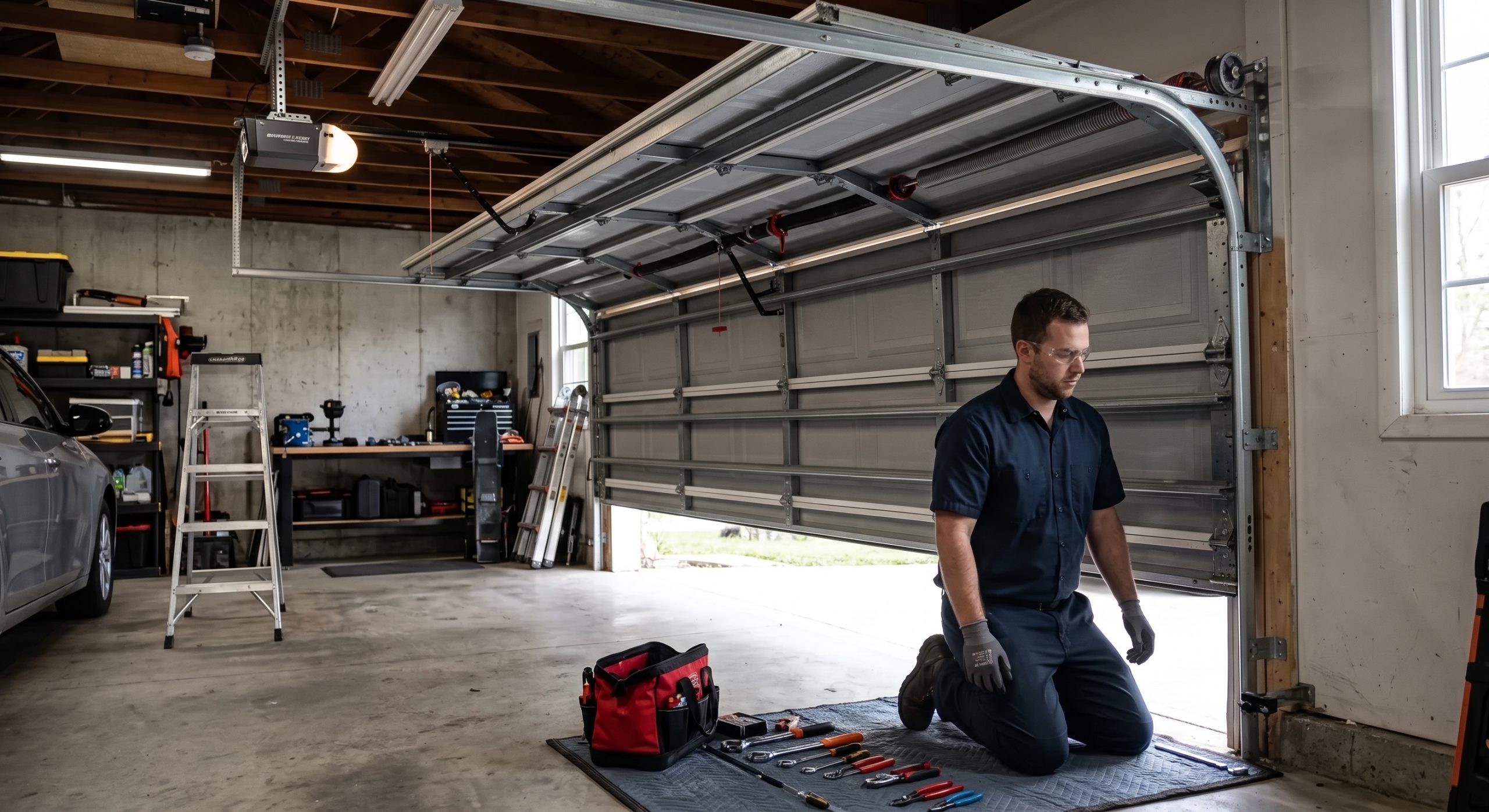
Having a professional inspect the system is the most reliable way to understand what is happening beneath the surface. A thorough evaluation typically includes the springs, cables, panels, and opener to identify any components that are no longer functioning as they should. Once the inspection is complete, you gain clarity on what is required to restore smooth operation. Working with a service provider that communicates clearly makes the process far less stressful, as they help you understand the condition of the door and the steps needed to move forward.
For a deeper look at timing and warning signs, explore our related blog, “When Should You Schedule Garage Door Repair?”
Unusual Noises or Sudden Changes in Garage Door Operation
A well-functioning garage door should move smoothly with minimal sound, so new or unexpected noises are often an early sign of trouble. Grinding, squeaking, or popping sounds usually indicate that internal components are wearing down or no longer moving correctly. These noises can be caused by aging rollers, lack of lubrication, or tension issues within the system. When left unchecked, what begins as a minor sound can progress into a complete operational failure.
Sudden changes in how the door moves can be just as concerning. Doors that hesitate, slow down, or stop entirely are often affected by worn components or obstructions in the tracks. In some cases, the issue may be related to the opener rather than the door itself. A detailed inspection is necessary to determine whether the problem is isolated or part of a larger mechanical concern. Common sounds that often signal trouble include:
- Grinding or scraping noises, which may indicate issues within the tracks
- Loud popping sounds are often associated with tension problems in the springs
- Squealing or groaning, which can point to worn rollers or movement resistance
These changes are often the system’s way of signaling that professional attention is needed before the problem escalates further.
Garage Door Fails to Open or Close Properly
A garage door that refuses to open or close properly creates an immediate and practical problem, especially for homeowners who rely on residential garage doors for daily access and security. It can prevent access to your vehicle and leave your home vulnerable, particularly when the door becomes stuck in one position. These issues are commonly tied to the opener, safety sensors, or control mechanisms, and they tend to interrupt daily routines without warning. When a door becomes completely unresponsive, fast action is often necessary to restore normal use.
Determining whether the issue involves a simple adjustment or a more serious mechanical failure is not always obvious. Misaligned sensors, electrical interruptions, or internal opener problems can all produce similar symptoms. In some cases, the system may be too worn to function reliably, making replacement a consideration. A professional assessment helps identify the exact cause and avoids unnecessary guesswork. Common reasons a garage door may fail to operate include:
- Loss of power to the opener
- Blocked or misaligned safety sensors
- Malfunctioning wall controls or remote systems
Regardless of the cause, a garage door that will not open or close properly should never be ignored. Prompt evaluation ensures the issue is resolved efficiently and helps restore safe, reliable access to your home.
Mechanical Problems Often Linked to Garage Door Springs and Cables
Garage door springs and cables handle much of the system’s workload, working together to lift and lower a heavy door in a controlled and balanced way. When either component begins to fail, the door can lose stability, become difficult to operate, or pose a safety concern. Issues involving springs and cables are among the most common reasons homeowners seek professional assistance, as these components are critical to safe operation and tend to deteriorate under constant tension.
Because springs and cables are under significant pressure, attempting to address these problems without proper training can be dangerous. A snapped spring or tangled cable can cause sudden movement or loss of control, increasing the risk of injury or property damage. An experienced technician has the tools and knowledge to correct these issues safely, restoring proper balance and function without placing anyone at risk.
To learn more about early warning sounds and what they indicate, read our related blog, “Can Noise Mean You Need Garage Door Repair?”
Doors That Feel Heavy or Drop Suddenly During Operation
A garage door that suddenly feels much heavier than usual is often a sign that one or more springs are no longer doing their job. Springs are designed to counterbalance the weight of the door, making it manageable for both manual lifting and the opener system. When that balance is lost, the door becomes difficult to raise and places excessive strain on the opener, which can lead to further mechanical failure if the issue continues.
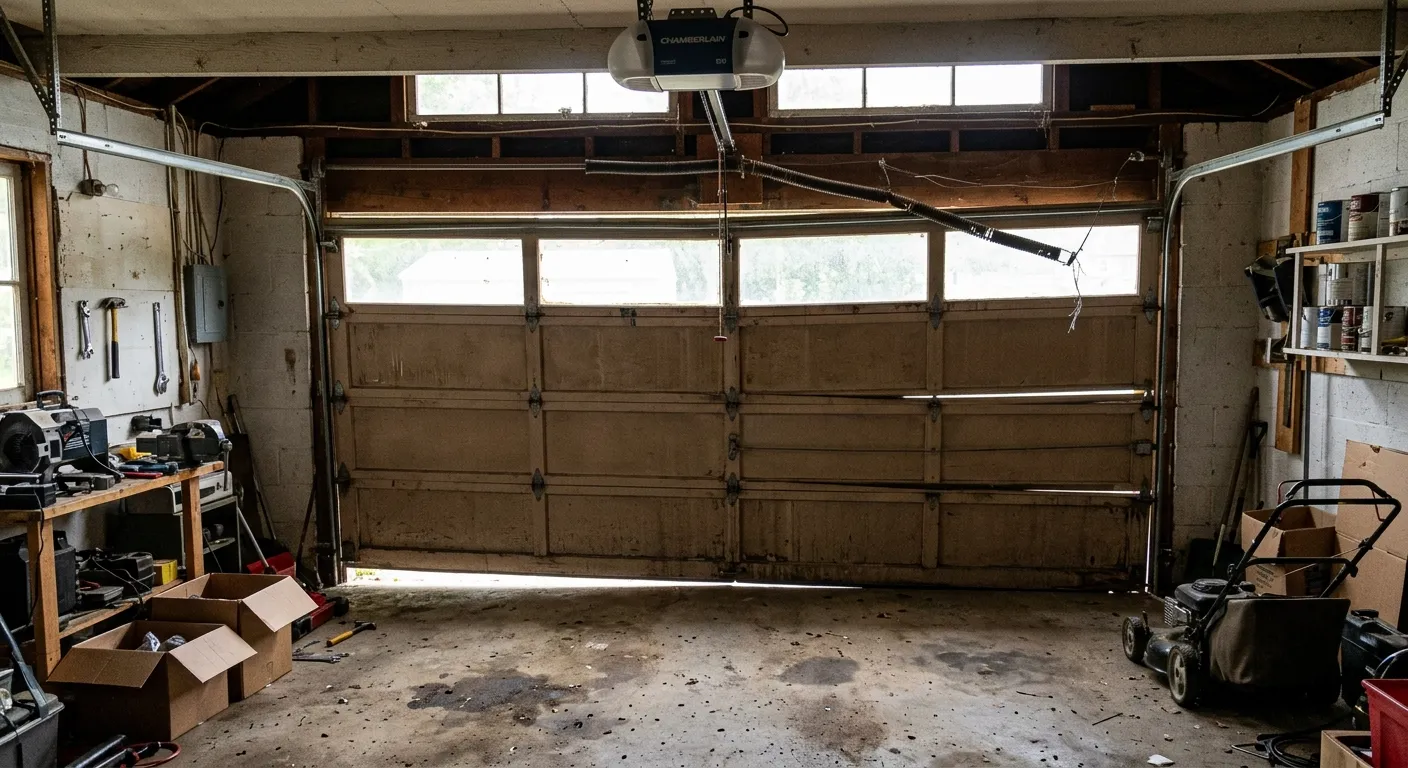
Sudden dropping or slamming is an even clearer warning that a spring has failed. Without proper tension, the full weight of the door is no longer supported, creating a serious safety hazard. Spring problems often develop from long-term wear, corrosion, or improper installation. When failure occurs, professional handling is essential to ensure the repair is completed safely and accurately.
Common signs of a broken garage door spring include:
- A loud bang is coming from the garage
- A door that appears crooked during operation
- A visible gap in the torsion spring above the door
Ignoring these warning signs increases the risk of sudden door failure, which can cause injury or damage. Professional repair ensures the system is restored safely and correctly.
Uneven Door Movement Caused by Worn or Loose Cables
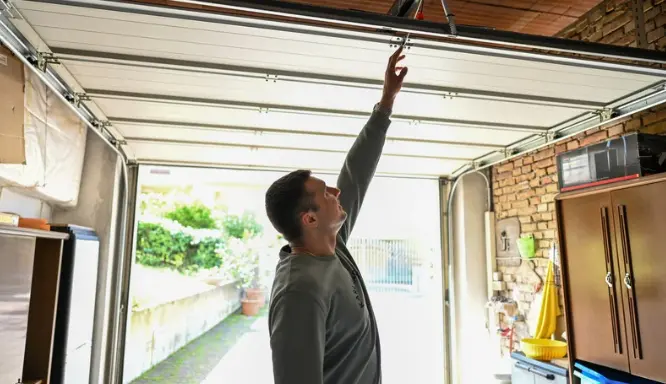
Cables play a crucial role in keeping the garage door level as it moves. Running from the bottom of the door to the drum near the spring system, these heavy-duty cables support even lifting on both sides. When a cable becomes worn, loose, or damaged, the door may begin to rise unevenly, causing one side to lift higher than the other. This imbalance often leads to tilting, binding, or the door becoming stuck in the tracks.
If a cable fails completely, the door can lose support on one side and slip off the tracks entirely, a situation that affects both residential systems and commercial garage doors used in high-traffic environments. This type of failure makes the door inoperable and creates an immediate safety concern. Cable-related issues are commonly addressed by professional service teams because of the precision required to restore proper alignment and tension.
Signs that may indicate cable trouble include:
- A garage door that appears tilted when opening or closing
- Frayed or visibly worn cable strands
- Jerky movement or resistance during operation
At the first sign of cable damage, continued use should stop. Addressing cable problems early helps prevent additional strain on other components, such as the tracks, panels, and opener, keeping the entire system functioning safely and reliably.
Operational Issues Involving Garage Door Openers and Tracks
While springs and cables handle the weight of the door, the opener and tracks control how smoothly and accurately it moves. When either of these components begins to fail, the door may hesitate, move unevenly, or stop altogether. Issues involving the opener or track system often require professional attention, as proper alignment and mechanical precision are essential for safe operation.
Common warning signs usually appear during everyday use. A door that reverses direction after touching the floor, or one that produces motor noise without moving, often points to an opener-related issue. Shaking, resistance, or difficulty traveling along the tracks can signal bent rails or worn rollers. These problems go beyond simple adjustments and call for a careful evaluation to restore proper movement and prevent further strain on the system.
For more insight into this issue, take a moment to read our related blog, “Does Slow Movement Require Garage Door Repair?”
Delayed, Inconsistent, or Unresponsive Door Controls
Garage door controls are designed to respond immediately, so any delay or inconsistency is a clear indication that something is wrong, particularly in settings where industrial railings and other safety features depend on controlled access points. When the door reacts slowly, works intermittently, or fails to respond altogether, the issue may involve the control signal, internal wiring, or the opener itself. These disruptions can be frustrating and quickly become a security concern, especially if the door cannot close as expected.
A nonresponsive door can leave you locked in or out of the garage, turning a routine problem into a more urgent situation. Identifying whether the issue is a minor control failure or a larger opener malfunction requires a detailed inspection. A trained professional can evaluate the system, determine the source of the breakdown, and recommend the appropriate corrective steps.
Common signs of garage door control problems include:
- The door responds to the wall switch but not the remote
- Multiple button presses are required before the door moves
- The door starts to open or close, then stops midway
These symptoms indicate a breakdown in communication between the controls and the opener. Addressing the issue promptly helps restore reliable operation and ensures the garage door functions safely and consistently.
Door Misalignment or Resistance Along the Tracks
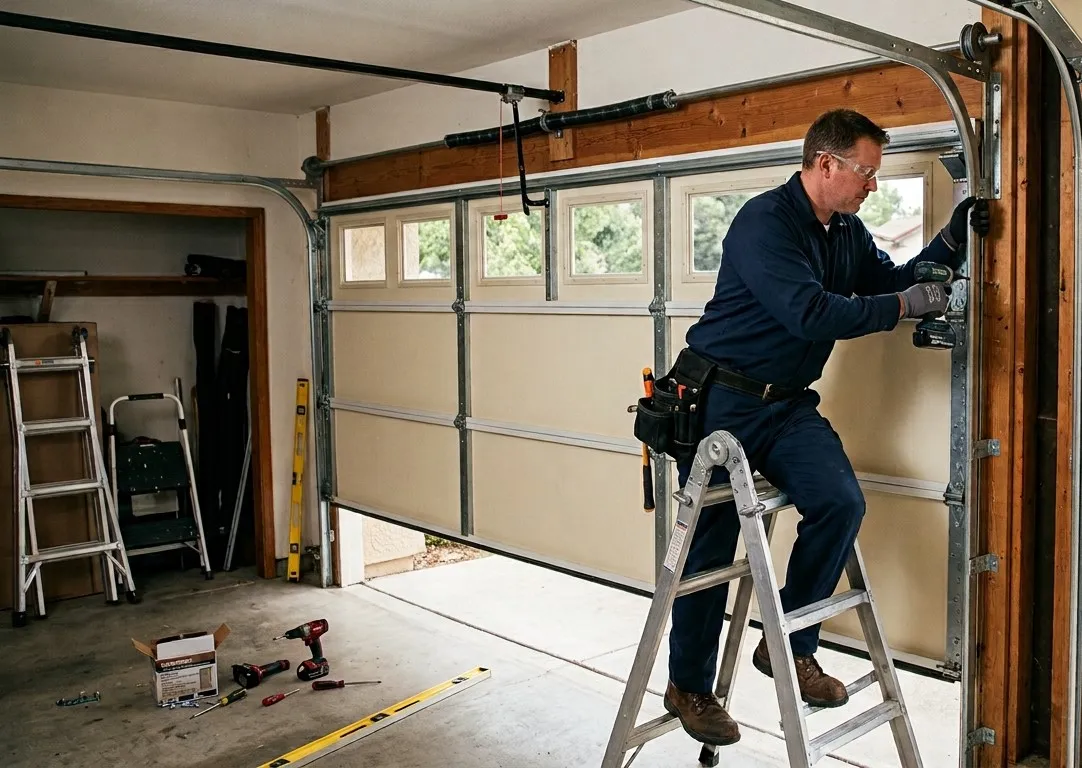
Garage door tracks play a critical role in guiding the door through smooth and controlled movement, but when they become bent or misaligned, the door may begin to resist motion, shake during operation, or come off the tracks altogether. This type of failure creates a serious safety concern, often leaving the door unusable while placing added strain on panels, rollers, and other connected components. Because of the door’s weight and the precision required to restore alignment, attempting to correct an off-track condition without proper training is not recommended. A professional installer has the experience and tools to realign the tracks, replace damaged sections, and correct the underlying cause so the system operates smoothly again. In cases where track damage or panel wear is extensive, replacement may be the most effective way to restore proper function. Track-related problems are sometimes mistaken for other issues, but clear indicators include visible gaps between the door and frame, scraping or grinding noises caused by worn rollers or debris, jerky movement, bent metal rails, rollers slipping out of place, or the door stopping midway through its cycle. Addressing these warning signs promptly helps prevent further damage and ensures safe, reliable operation.
Every homeowner benefits from understanding the warning signs that indicate a garage door needs prompt attention. Unusual noises, delayed responses, or controls that stop working often signal deeper mechanical or alignment issues that should not be ignored. Recognizing these signs early can help prevent more serious problems from developing and reduce the likelihood of costly repairs. While regular upkeep supports long-term performance, there are situations where professional service becomes necessary. Addressing concerns such as misalignment or mechanical failure as soon as they appear helps extend the life of the garage door and ensures dependable operation. Staying alert to these signals supports home safety, preserves daily convenience, and provides peace of mind when issues are handled without delay.
When professional support is needed, All About Doors offers reliable experience and a straightforward approach focused on safety, performance, and long-term results. Our team understands how disruptive garage door problems can be and works to restore smooth operation with clear communication at every step. If your garage door is showing signs of trouble, contact us today or give us a call to schedule an inspection and get your system back to working the way it should.