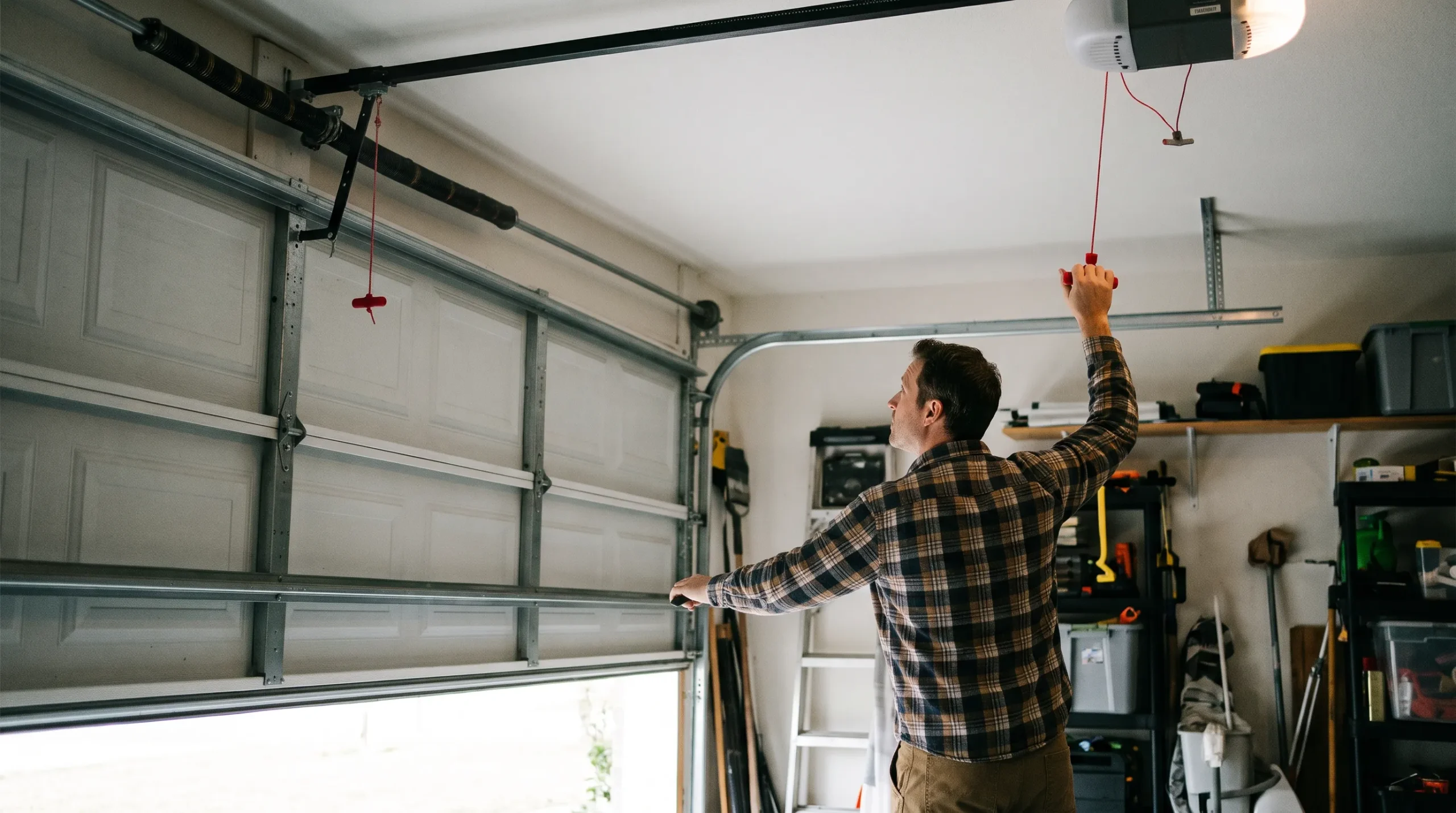
A garage door opener is built from a handful of core parts: the motor unit, the drive mechanism (chain, belt, or screw), the remote and wall switch, safety sensors, the trolley and rail system, springs and cables, and a backup battery. Each one has a specific job, and most opener problems trace back to just one or two of them, usually the safety sensors, the drive mechanism, or the remote. Knowing what each part does helps you describe the problem accurately when you call for residential garage door repair, and tells you which fixes are safe to try yourself.
Key Takeaways
- The motor, drive mechanism, sensors, trolley and rail, springs and cables, and backup battery are the core parts of any opener.
- Safety sensor and remote issues cause most “door won’t open or close” calls, not motor failure.
- Lubrication, sensor checks, and hardware tightening cover most of what routine maintenance actually requires.
- A single faulty part on an opener under 10 years old is usually worth repairing rather than replacing the whole unit.
- Buying parts that match your exact model number prevents the most common compatibility mistakes.
- Springs and cables are under high tension and should be inspected visually but not replaced without a professional.
Garage Door Opener Parts at a Glance
Seeing every part’s job and expected lifespan side by side makes it easier to spot which one is likely behind a specific problem.
How Long Each Part Typically Lasts
| Part | What It Does | Average Lifespan | Warning Sign |
| Motor unit | Powers the door up and down | 10 to 15 years | Slower response, grinding, or overheating |
| Drive mechanism | Transfers motor power to the door | 10 to 25 years (varies by type) | Noise, slipping, or visible wear |
| Remote & wall switch | Sends the signal to open or close | 5 to 10 years (battery-dependent) | Delayed response or no response |
| Safety sensors | Stop the door if something blocks the beam | 10+ years (rarely fail outright) | Door reverses without an obstruction |
| Trolley & rail | Guides the door’s movement | 10 to 15 years | Grinding, jerky motion, misalignment |
| Springs & cables | Balance and lift the door’s weight | 7 to 12 years | Visible fraying, stretching, or rust |
| Backup battery | Keeps the opener working in an outage | 2 to 5 years | Opener fails during a power outage |
Quick DIY vs. pro guide: Replacing remote batteries, cleaning sensors, and lubricating moving parts are fine to do yourself. Spring, cable, and motor work should go to a licensed technician.
Main Components of a Garage Door Opener
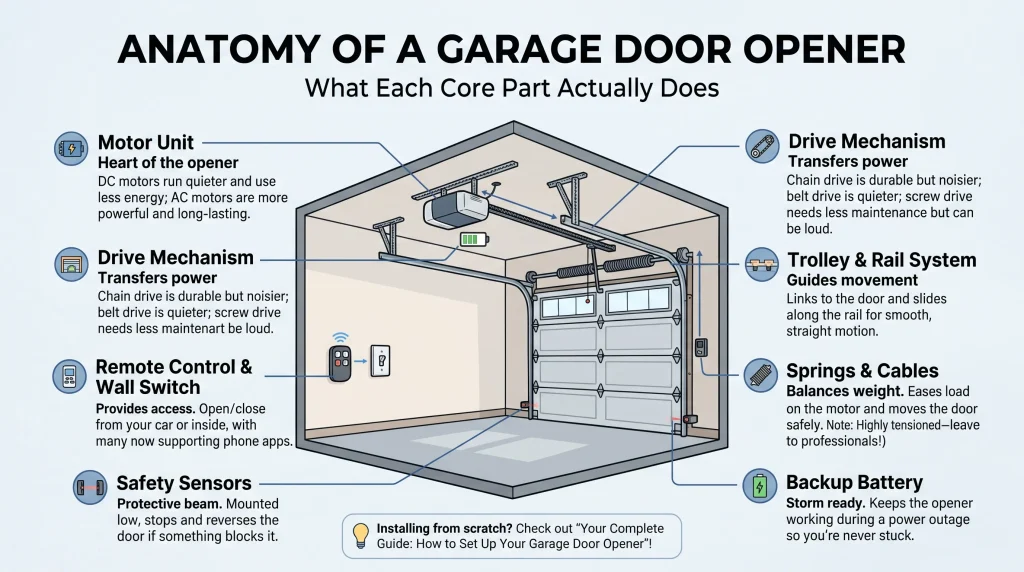
A garage door opener has several key parts that work together every time the door cycles. Here’s what each one does and why it matters.
What Each Core Part Actually Does
- Motor Unit: The heart of the opener, powering the door up and down. DC motors run quieter and use less energy; AC motors are more powerful and long-lasting.
- Drive Mechanism: Transfers power from the motor to the door. Chain drive is the most common and durable but noisier; belt drive is quieter, good for attached garages; screw drive needs less maintenance but can be louder than belt.
- Remote Control & Wall Switch: Lets you open or close the door from your car or from inside the garage, with many newer openers also supporting phone app control.
- Safety Sensors: Mounted low near the ground, sending a beam across the opening that stops and reverses the door if something blocks it.
- Trolley & Rail System: Links to the door and slides along the rail, guiding smooth, straight movement and preventing shaking or sticking.
- Springs & Cables: Balance the door’s weight and help it move safely, easing the load on the motor and extending the system’s life. As The Spruce’s guide to replacing garage door springs explains, springs are under enough tension that this is one part best left to a professional rather than a weekend project.
- Backup Battery: Keeps the opener working during a power outage, so you’re not stuck without garage access during a storm.
If you’re setting up a new opener from scratch rather than troubleshooting an existing one, our guide Your Complete Guide: How to Set Up Your Garage Door Opener walks through the full installation process part by part.
Troubleshooting Tips for Garage Door Opener Issues
Understanding these parts makes it much easier to diagnose what’s actually wrong when something stops working. Here are the most common symptoms and their likely causes.
Matching Your Symptom to the Right Part
- Door doesn’t open or close: Usually dead remote batteries, misaligned safety sensors, or motor failure. Replace batteries, realign sensors, or check the power supply.
- Noisy operation: Often a worn chain, loose hardware, or a lack of lubrication. Tighten bolts, lubricate moving parts, or replace the chain or belt if needed.
- Door reverses before closing: Typically an obstruction in the sensor’s path or a misalignment. Clean around the sensors and confirm they’re lined up correctly.
- Motor runs, but door doesn’t move: Points to a broken trolley, stripped gears, or a disconnected drive mechanism. Inspect for damage and replace as needed.
If your specific symptom is a door that won’t close at all even after checking sensors, our guide 5 Shocking Reasons Your LiftMaster Garage Door Won’t Close And How to Fix Them! covers that situation in more depth.
Garage Door Opener Maintenance Tips for Long-Lasting Use
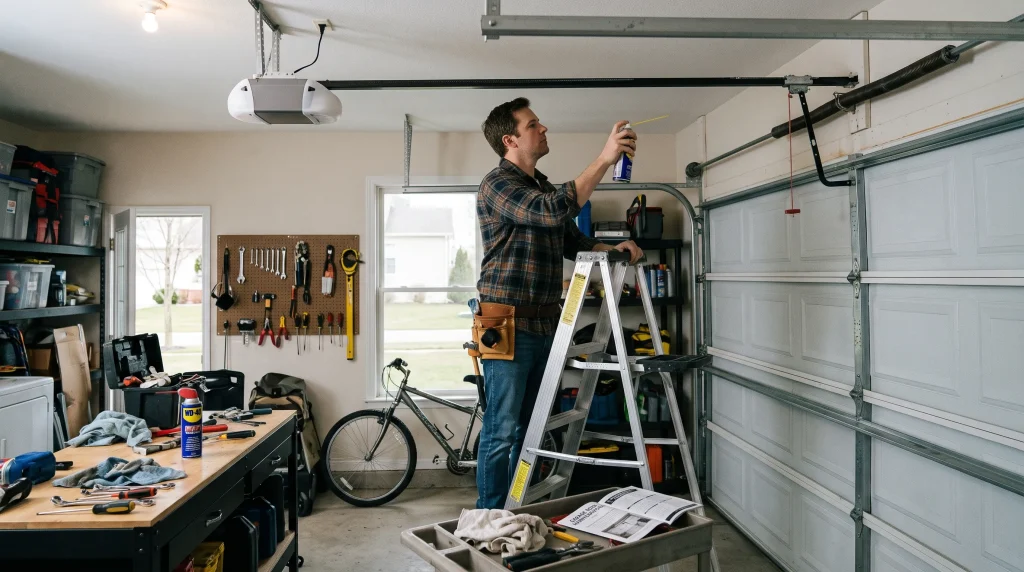
Routine care extends the life of every part covered above and helps you avoid expensive repairs down the line. These five habits cover most of what regular maintenance requires.
A Maintenance Routine That Covers Every Part
- Lubricate moving parts on the chain, rollers, and hinges every six months to reduce noise and prevent rust.
- Check safety sensors monthly, wiping the lenses clean and confirming each one shows a solid light.
- Inspect cables and springs regularly for fraying or stretching, and call a professional rather than replacing them yourself.
- Test the auto-reverse feature by placing an object under the door and closing it; the door should stop and reverse on contact.
- Tighten hardware every few months, since bolts and screws loosen gradually from daily vibration.
An unusual beeping sound during otherwise normal operation is one of the more common things a routine check turns up. If that’s happening to your opener, our guide Is Your Liftmaster Garage Door Opener Beeping? Here’s What It Means and How to Fix It Fast! explains what it usually means.
As Angi’s guide to inspecting and maintaining your garage door notes, a consistent monthly and seasonal routine catches most part failures while they’re still a simple fix rather than a full replacement.
When to Replace Parts for a Garage Door Opener vs. Replacing the Unit
Not every problem calls for a whole new opener, but sometimes replacing individual parts costs more in the long run than starting fresh. Here’s how to tell which situation you’re in.
How to Decide Between a Repair and a Full Replacement
Replace parts for a garage door opener if:
- Only one part is faulty, such as the remote, a sensor, or the belt.
- The opener is under 10 years old and otherwise in good condition.
- The motor works fine, with no issues lifting the door or running loudly.
Replace the whole garage door opener if:
- The opener is over 15 years old and outdated or inefficient.
- Multiple parts are failing at once, since repairs add up quickly.
- You want smart features like Wi-Fi and app control that an older unit can’t support.
Cost is naturally part of this decision too, and our guide Secrets to Reducing LiftMaster Garage Door Opener Costs Without Sacrificing Quality breaks down what a full replacement typically runs by model and drive type.
How to Choose the Right Parts for a Garage Door Opener
If you do need to replace a specific part, matching it correctly to your system matters more than price. These three steps cover the basics.
Getting the Right Part on the First Try
- Check the model number, usually on a sticker or metal plate on the motor unit, to find replacement parts that fit your exact opener.
- Buy from reputable brands like LiftMaster, Chamberlain, or Genie, since genuine parts tend to last longer and perform more reliably.
- Consult a professional if you’re unsure which part you need; a trained technician can identify the issue and the correct fix without guesswork.
Compatibility also depends on how your opener is mounted, not just the model number. If you’re considering a different mounting setup entirely, our guide Efficiency and Convenience: The Benefits of Having a Side-Mounted Garage Door Opener explains how that changes which parts and hardware you’ll need.
Recognizing Warning Signs Beyond a Broken Part
Not every issue is a straightforward broken part. Some symptoms point to something more specific that’s worth understanding on its own.
When a Light or Sound Is the Real Symptom
A continuously blinking light on the opener unit is a common example. It’s not always a sign that a part has failed, but it does mean the system is trying to tell you something specific.
Our guide Stop the Blink! How to Handle Your LiftMaster Garage Door Light Blinking Continuously explains how to read that pattern correctly instead of guessing at which part is at fault.
Keeping Every Part of Your Opener Working Together
A garage door opener is only as reliable as its least-maintained part, and most of the failures homeowners run into trace back to a sensor, a remote, or a bit of worn hardware rather than the motor itself. Knowing what each piece does turns a confusing “it just stopped working” into a specific, fixable problem.
All About Doors helps homeowners identify, source, and install the exact parts their opener needs, whether that’s a single sensor or a full system replacement. Our licensed technicians carry genuine parts from trusted brands and can tell you plainly whether a repair or a full replacement makes more sense for your situation. Contact us or give us a call for trusted parts and repair service you can count on.
Frequently Asked Questions
What does a garage door opener consist of?
At its core, an opener consists of a motor unit, a drive mechanism (chain, belt, or screw), a trolley and rail system, safety sensors, springs and cables, and the remotes or switches that control it.
How do I fix a garage door opener?
Start by matching the symptom to the likely part: dead batteries or misaligned sensors for a door that won’t respond, a worn chain or loose hardware for noise, or a blocked sensor for a door that reverses unexpectedly. If the fix isn’t obvious, a licensed technician can diagnose it quickly.
What do you call the thing that opens the garage door?
That’s the garage door opener, sometimes just called the opener or the motor unit, which houses the motor and drive mechanism that move the door.
Which component helps the garage door open?
The motor and drive mechanism do the actual work of opening the door, but the springs and cables are what make that job manageable by balancing the door’s weight.
How often should I inspect my garage door opener parts?
We recommend a full visual inspection monthly, checking sensors, hardware, and cables, with deeper lubrication and hardware tightening every few months.
Can I replace garage door opener parts myself?
Some parts, like remote batteries or a wall switch, are simple DIY jobs. Springs, cables, and motor components are under tension or carry electrical risk and are best left to a professional.
What’s the most commonly replaced garage door opener part?
In our experience, remotes and safety sensors are replaced most often, usually due to dead batteries or a knock-out of alignment rather than an actual defect.
How do I know if my opener’s motor is failing?
Our rule of thumb from the field: if the motor runs louder than usual, struggles to lift the door, or overheats after short use, that’s a sign it’s on its way out.
Are LiftMaster parts interchangeable with other brands?
Not usually. Opener parts are generally brand- and model-specific, which is why checking your exact model number before buying a replacement part matters so much.