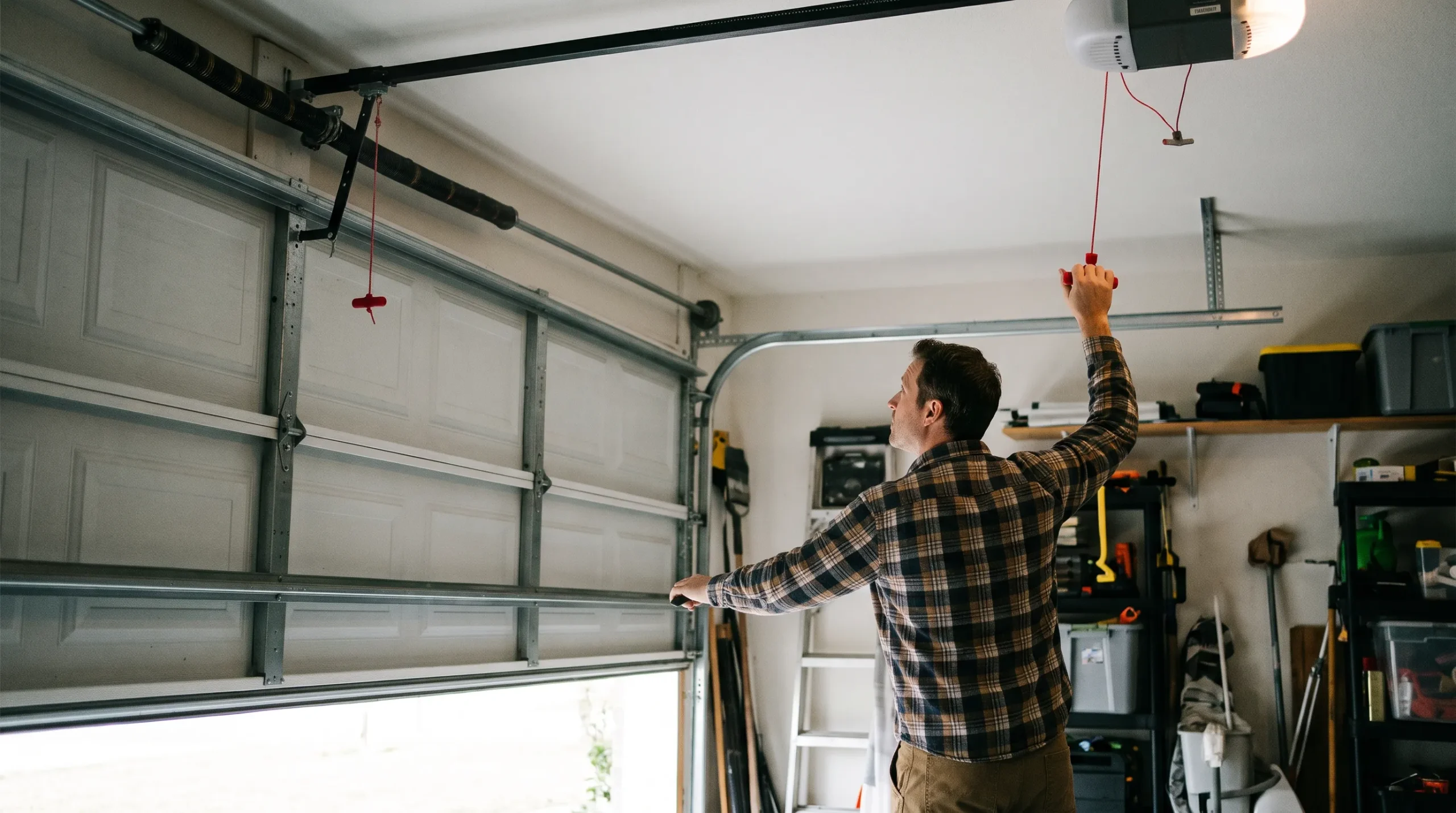
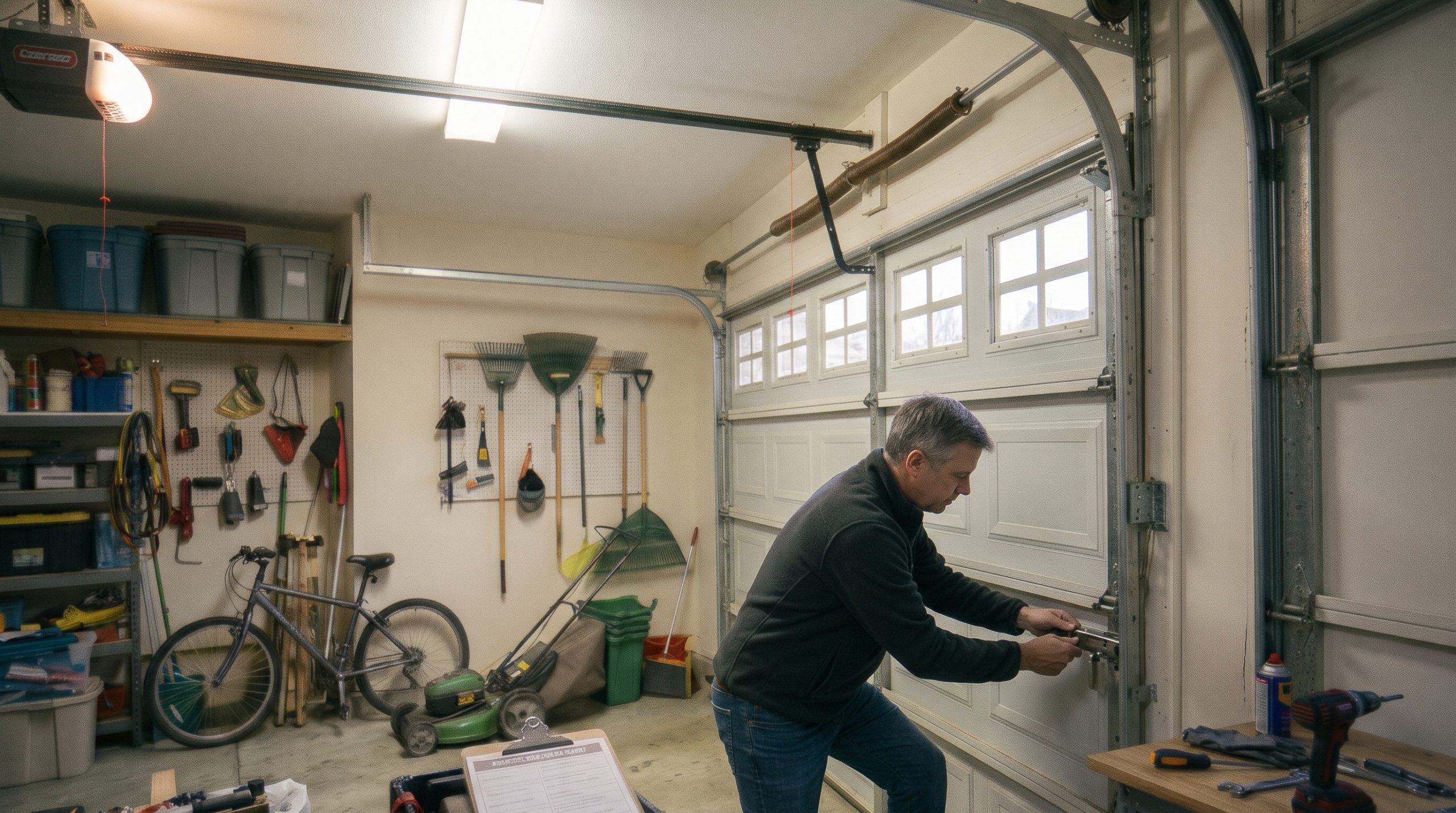
Wooden garage door panels are made from real wood, most commonly cedar, redwood, or mahogany, and offer a natural look that steel or aluminum can’t fully replicate. They cost more upfront than metal options but hold up well when properly sealed and maintained, and they can be customized in style, color, and finish to match almost any home. The tradeoff is more regular upkeep, including cleaning, resealing, and inspection, compared to lower-maintenance materials.
Key Takeaways
- Wooden garage door panels come in cedar, redwood, and mahogany, each suited to different climates and budgets.
- Raised panel, carriage house, flush panel, and glass-accented are the four most common style categories.
- Wood costs more upfront than steel or fiberglass but offers better insulation and a distinct, natural look.
- Professional installation protects the manufacturer’s warranty and ensures proper alignment on a heavier door.
- Regular cleaning, resealing every few years, and hardware lubrication keep wood panels looking good for the long term.
- A damaged single panel can often be replaced rather than requiring a full door replacement.
Wooden Garage Door Styles Compared
Seeing the four main style categories side by side makes it easier to picture which one actually fits your home’s architecture.
Which Style Fits Your Home’s Architecture
| Style | Best For | Key Feature |
| Raised Panel | Colonial, Craftsman homes | Classic, textured look |
| Carriage House | Farmhouse, country-style homes | Oversized handles, X or V hardware accents |
| Flush Panel | Modern, minimalist homes | Flat, smooth surface |
| Glass-Accented | Homes wanting natural light | Wood paired with clear or frosted glass panels |
Quick DIY vs. pro guide: Cleaning, inspecting, and lubricating hardware are fine for most homeowners. Installation and panel replacement should go to a licensed professional given the door’s weight and the springs involved.
Why Choose Wooden Garage Door Panels

Wood has been a preferred material for garage doors for decades, and it brings a warmth that steel or aluminum can’t fully match. Unlike manufactured materials, real wood has a rich, varied look that makes a garage door feel like a genuine architectural feature rather than just a functional panel.
What Makes Wood Panels Worth the Investment
- Unmatched Aesthetic Appeal: The natural wood grain gives a cozy, stylish feel that suits both older and newer home styles, with a richness that manufactured materials can’t fully replicate.
- Superior Durability: Strong woods like cedar or mahogany resist cracking and bending when properly cared for, and coatings help them stand up to rain, sun, and wind over time.
- Customization Options: You can choose the wood species, color, and design that fits your home, whether that’s a clean painted look or a natural finish.
- Insulation Properties: Wood helps keep garage temperatures steadier than metal doors, which matters if the garage is attached to living space or used for work and storage.
A well-chosen door pairs naturally with the rest of your home’s exterior details, including how the entry is lit at night. Our guide Exterior Garage Light Fixtures: Enhance Safety and Style with These Expert Tips covers fixture styles that complement a wood door’s natural warmth.
Popular Styles of Wooden Garage Door Panels
Several distinct style categories exist within wood doors, each suited to different architectural approaches.
Four Style Categories and Where Each Works Best
- Raised Panel Doors have square or rectangular shapes that pop out slightly, pairing well with Colonial or Craftsman homes for a classic, warm touch.
- Carriage House Style doors resemble old barn doors while working with modern openers, often featuring oversized handles and X or V-shaped accents, well suited to farmhouse-style homes.
- Flush Panel Doors are flat and smooth, a good fit for modern homes that favor clean, minimal lines without raised shapes.
- Glass-Accented Wood Doors combine real wood with clear or frosted glass, letting in light while maintaining privacy, and suit homes wanting a warm yet modern look.
As Family Handyman’s guide to types of garage doors explains, matching the style to your home’s existing architecture matters more for long-term satisfaction than choosing whichever style is currently most popular.
If you’re specifically drawn to a cleaner, more contemporary take on wood, our guide Best Modern Wood Garage Doors: Trusted Styles covers flush panels, horizontal slats, and other current styles in more depth.
The Cost Comparison: Wooden vs. Other Garage Door Materials
Choosing the right material means understanding both the upfront cost and the long-term value each option offers.
How Wood Stacks Up Against Steel and Fiberglass
Wood garage doors typically cost more upfront than steel or fiberglass, but they offer a level of natural beauty and insulation that manufactured materials struggle to match. Steel tends to be the most budget-friendly and lowest-maintenance option, while fiberglass sits in between, resisting dents better than wood but lacking the same natural texture. Over a door’s full lifespan, the gap between wood and cheaper materials narrows somewhat, since wood’s better insulation can meaningfully reduce heating and cooling costs for an attached garage.
As Bob Vila’s guide to choosing a garage door notes, the “best” material really depends on how much upkeep you’re willing to commit to versus how much you value the finished look, since there’s no single right answer across every home and budget.
How to Choose the Right Wooden Garage Door Panels for Your Home
Selecting the right wood door involves weighing climate, architecture, and your own maintenance tolerance.
Three Factors That Should Drive Your Decision
- Climate Considerations: In rainy climates, cedar or redwood holds up best; in drier regions, oak or mahogany performs well. Choosing wood suited to your local weather helps the door last longer.
- Architectural Harmony: Carriage-style doors suit older or country-style homes, while flat panels fit modern homes better, and matching the style to your house improves curb appeal.
- Budget & Maintenance: Wood costs more initially but looks great and lasts a long time; if upkeep isn’t something you want to commit to, engineered wood-look alternatives need less care while keeping a similar appearance.
Should You Install a Garage Door Yourself or Hire a Pro
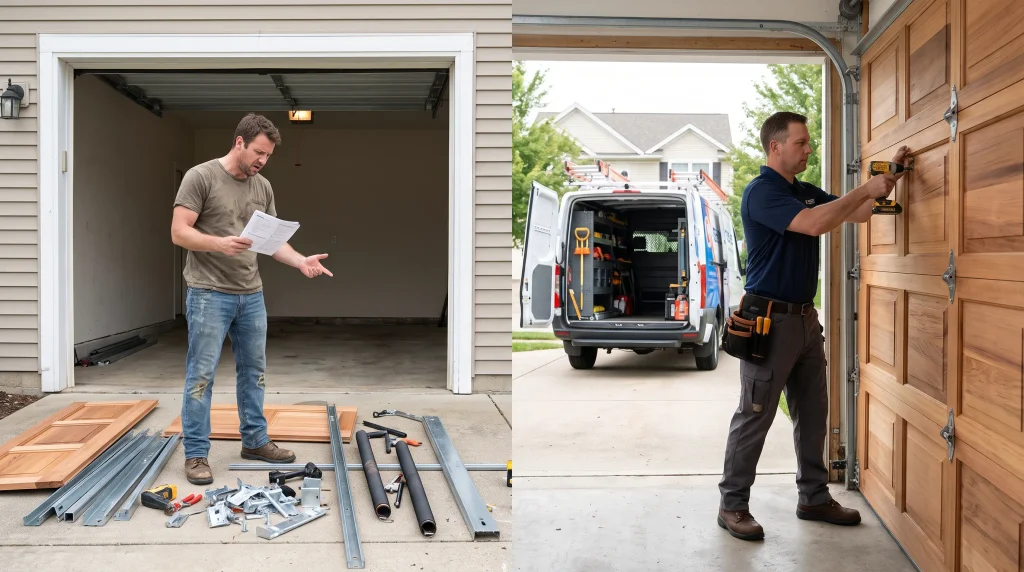
Installing wooden panels requires more consideration than a typical DIY project, given their weight and complexity. What looks like a straightforward panel swap on paper often turns out to be more involved once you’re actually working with a door this heavy.
Four Reasons Professional Installation Is Worth It
- Safety Concerns: Wood panels are heavy, and the springs involved carry real injury risk without proper training.
- Precision Requirements: Panels need precise alignment, and a professional installation helps the door move smoothly and last longer.
- Warranty Protection: Many wood doors only maintain their warranty with professional installation, and DIY work can void that coverage.
- Time Savings: A trained installer typically finishes in a few hours what could take a homeowner days to complete correctly.
Easy Maintenance Guide for Wood Garage Door Panels
Wood panels are durable, but they do need consistent upkeep to stay looking their best over the years. A little regular attention goes a long way toward avoiding the kind of neglect that leads to costlier repairs down the line.
Four Habits That Keep Wood Panels Looking Great
- Regular Cleaning with warm water and mild soap removes dirt without damaging the wood; avoid harsh cleaners that can strip the finish.
- Refinishing & Sealing every few years with fresh paint or stain protects the wood from rain and sun exposure.
- Inspecting for Damage periodically catches cracks, soft spots, or pest issues early, before they become costlier repairs.
- Lubricating Hardware on hinges, wheels, and tracks every few months keeps the door moving smoothly and prevents squeaks.
Are Wooden Garage Door Panels Right for You
Wood is a strong choice if you value a custom look, natural beauty, and long-term curb appeal, and are comfortable with the maintenance that comes with it.
Weighing the Tradeoffs Before You Decide
Wood works especially well in drier climates and for homeowners who don’t mind periodic resealing and inspection. If low maintenance matters more to you than the specific look of real wood, other materials may serve you better. Since proper fit and finish matter so much with a heavier door, professional installation remains the safer, more reliable route regardless of which wood species or style you choose, and it protects the manufacturer’s warranty from the very start.
Bringing Real Wood to Your Garage
Wooden garage door panels offer a look that manufactured materials simply can’t fully copy, and with the right wood species and a consistent maintenance routine, they hold up well for decades. The upfront cost and ongoing care are real tradeoffs, but for homeowners who value that natural warmth, they’re usually worth it, especially when weighed against how much a well-chosen wood door can add to a home’s overall curb appeal and resale value.
All About Doors installs and maintains wooden garage doors in a full range of styles, finishes, and wood species to match your home. Contact us or give us a call to schedule a consultation and get a quote for your project.
Frequently Asked Questions
Are wood garage doors a good idea?
For homeowners who want a natural, customizable look and don't mind regular upkeep, yes. If low maintenance is the priority, steel or fiberglass may be a better fit.
How much does one panel of a garage door cost?
Panel cost varies by material, size, and style, so getting a quote based on your specific door's brand and dimensions gives the most accurate number.
Can you fix a single garage door panel?
Yes, in many cases a single damaged panel can be repaired or replaced without affecting the rest of the door, provided the replacement matches the original.
Are all garage door panels the same size?
No. Panel sizes vary by door width, height, and manufacturer, which is why matching the brand and model matters when replacing just one panel.
How long do wooden garage door panels typically last?
With proper maintenance, wood panels can last 20 years or more, though the finish and seal need refreshing well before that to keep the wood protected.
What's the best wood species for a humid climate?
Cedar and redwood both resist moisture and rot better than many other species, making them strong choices for humid or rainy regions.
Can wooden garage door panels be painted a different color later?
Yes, wood panels can be repainted or restained, which is one of the advantages over some manufactured materials that offer more limited color-changing options.
Do wooden garage doors need more maintenance than steel?
Yes, generally. Wood needs periodic sealing and closer inspection for damage, while steel mainly needs occasional cleaning and rust checks.
Is it worth repairing a damaged wood panel or replacing the whole door?
If the damage is isolated to one or two panels and the rest of the door is in good shape, repair is usually more cost-effective than full replacement.