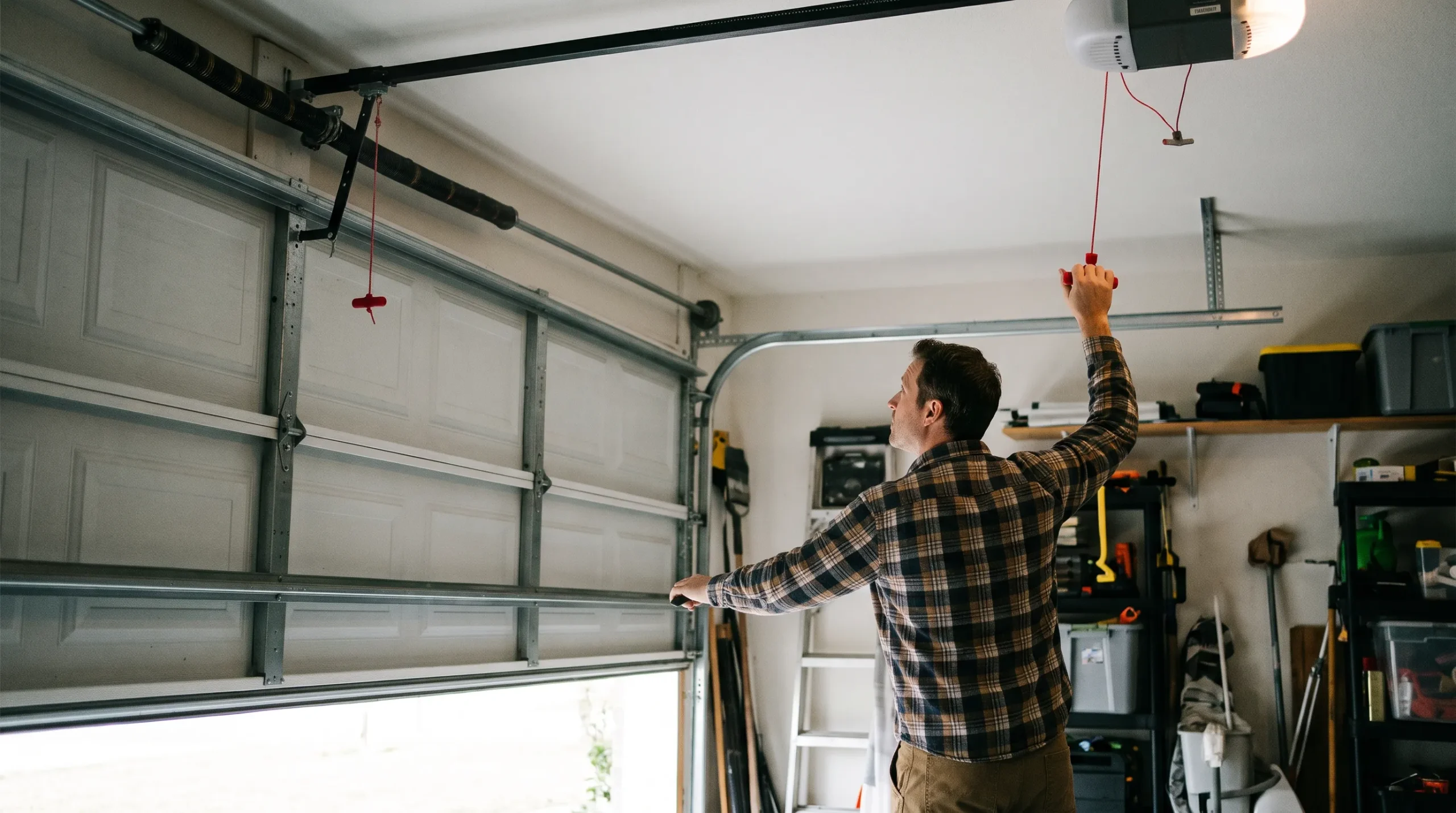
A side-mounted garage door opener installs beside the door instead of overhead, connecting to the torsion bar rather than a ceiling track. That frees up your entire ceiling for storage or lighting, runs quieter than most overhead models, and works especially well for garages with limited headroom or an obstructed ceiling. It’s not the right fit for every door, but for the right garage it solves a space problem overhead systems can’t.
Key Takeaways
- Side-mounted openers connect to the torsion bar beside the door instead of running along a ceiling track.
- The main benefit is reclaiming overhead space for storage, shelving, or lighting you couldn’t add with a ceiling-mounted system.
- They typically run quieter than chain-driven overhead models, since they use fewer moving parts and generate less vibration.
- Expect to need about 8 to 12 inches of clearance on the side of the door for the mounting bracket and hardware.
- Compatibility, power rating, and safety features all need checking before choosing a side-mounted opener for your specific door.
- Installation follows a similar process to overhead openers, just mounted differently, and benefits from a professional’s eye on alignment.
Side-Mounted vs. Overhead Garage Door Openers Compared
Seeing the two mounting styles side by side makes the tradeoff easier to weigh before you decide which one fits your garage.
How the Two Mounting Styles Actually Differ
| Feature | Side-Mounted | Overhead (Ceiling-Mount) |
| Ceiling space used | None | Full rail length |
| Typical noise level | Quieter | Varies by drive type |
| Clearance needed | 8 to 12 inches on the side | 12 to 18 inches above the door |
| Best for | Limited headroom, obstructed ceilings | Standard garages with open ceilings |
| Maintenance | Similar, fewer moving parts | Similar, more parts in the drive system |
Quick DIY vs. pro guide: Researching compatibility and comparing features is fine to do yourself. Mounting the bracket, connecting to the torsion bar, and wiring the control unit should go to a licensed technician.
How Side-Mounted Garage Door Openers Work
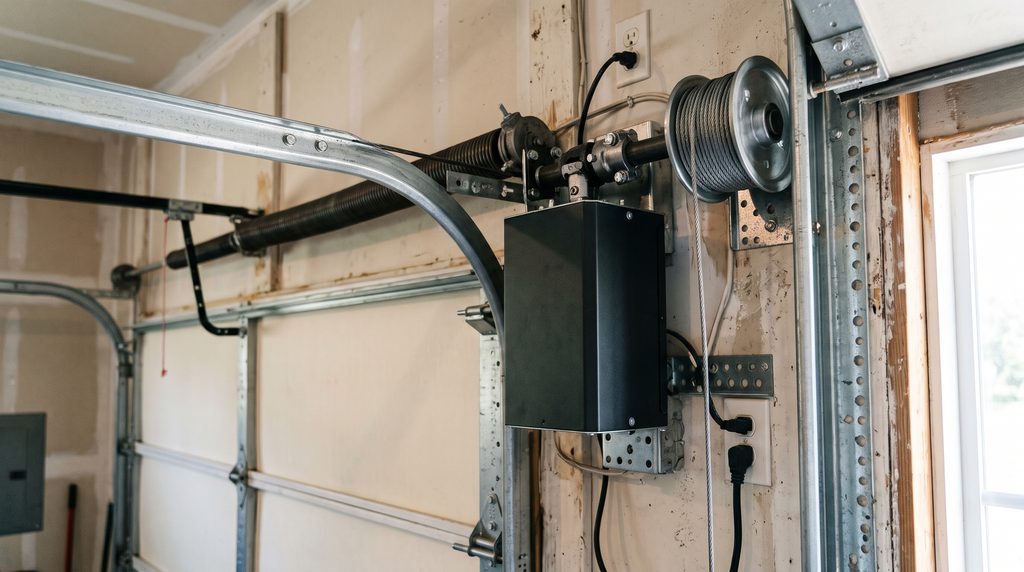
Side-mounted openers install on the side of the garage door rather than overhead, which changes how the whole system is laid out. Here’s what that setup actually involves.
What Makes a Side-Mounted Opener Different From an Overhead One
Side-mounted garage door openers are designed to be installed on the side of the garage door, rather than the traditional overhead placement, positioning the motor and drive mechanism alongside the door instead of directly above it. The key components include:
- Motor: The electric motor that powers the opening and closing of the garage door.
- Drive Mechanism: The system that translates the motor’s rotational movement into the linear motion needed to move the door.
- Control Unit: The electronic brain that manages the opener’s operation, including safety features and remote functionality.
- Mounting Bracket: The sturdy frame that secures the opener to the wall or side of the garage.
By positioning the opener on the side of the door, this configuration frees up valuable overhead space for more efficient use of the garage interior.
If you want a closer look at how these same components work in a standard ceiling-mounted setup, our guide Your Complete Guide: How to Set Up Your Garage Door Opener covers that installation process step by step.
Benefits of Side-Mounted Garage Door Openers
Beyond the space savings, side-mounted systems offer a couple of specific advantages worth understanding before you decide.
Where Side-Mounted Openers Actually Outperform Overhead Models
Increased Efficiency: By placing the motor and drive mechanism on the side of the door, these systems optimize the use of available garage space, which is especially useful for homeowners with limited overhead clearance or who want to maximize storage or workspace. Side-mounted openers also tend to have a more compact design than traditional overhead models, further improving space efficiency.
Convenience: Positioning the controls and access points on the side of the door lets you reach and operate the opener without navigating around or under the door itself, which helps anyone with physical limitations or frequent garage access. The design also tends to look less visually obtrusive than a traditional overhead unit, which can improve the garage’s overall appearance.
Knowing exactly which parts make up this system helps if something ever needs replacing down the line. Our guide Garage Door Opener Parts: Comprehensive Guide for Homeowners breaks down what each component does and how to identify a failing one.
Factors to Consider When Choosing a Side-Mounted Garage Door Opener
Not every side-mounted opener fits every garage, so a few specifics are worth checking before you commit to one.
What to Verify Before Buying a Side-Mounted Opener
- Compatibility: Confirm the opener works with your specific garage door’s size, weight, and configuration.
- Power and Strength: Choose an opener with enough torque to operate your door smoothly and reliably.
- Safety Features: Look for auto-reverse and photo-eye sensors to protect against entrapment.
- Noise Level: Some models run quieter than others, which matters for garages near living space.
- Smart Home Integration: Consider a model with remote connectivity if you want to control and monitor the door away from home.
As Bob Vila’s guide to choosing a garage door points out, matching an opener to your actual door and how you use the garage matters more than chasing the highest horsepower rating or the longest features list.
Budget is part of this decision too, and our guide Secrets to Reducing LiftMaster Garage Door Opener Costs Without Sacrificing Quality covers where opener costs actually come from across drive types.
Installation Process of Side-Mounted Garage Door Openers
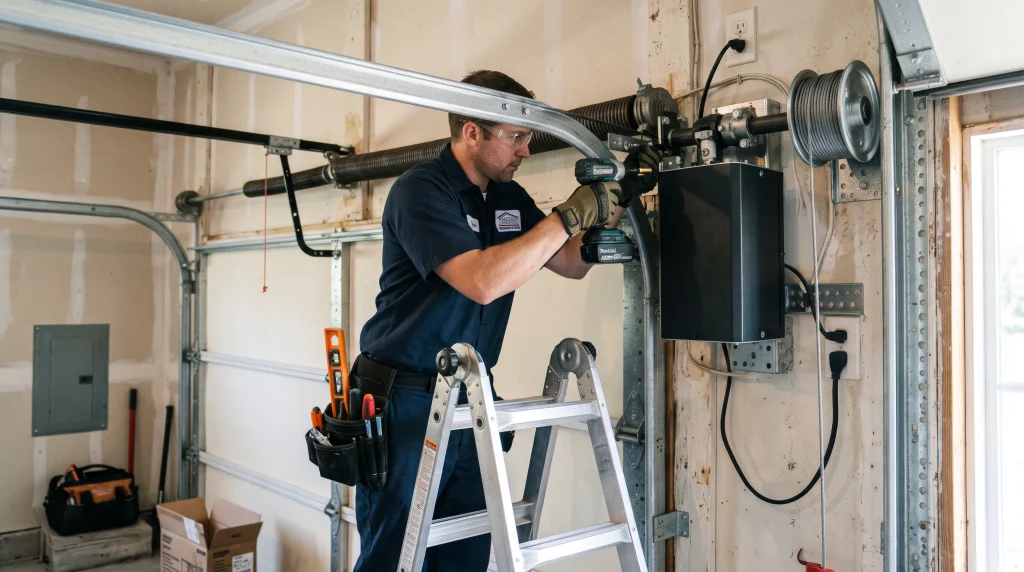
The installation follows a clear sequence, though it looks a little different from a standard overhead setup given where everything mounts.
The Six Steps to Installing a Side-Mounted Opener
- Prepare the Garage: Clear the area where the opener will be installed, leaving enough space for the mounting bracket and the door’s movement.
- Mount the Bracket: Securely attach the mounting bracket to the side of the garage wall, keeping it level and properly aligned.
- Install the Motor and Drive Mechanism: Attach these to the mounting bracket following the manufacturer’s instructions.
- Connect the Garage Door: Attach the opener’s drive arm to the door, ensuring a secure connection.
- Install the Control Unit: Mount it in a convenient spot near the garage entry and connect it to the motor and power source.
- Test and Adjust: Run a full test of the opener’s operation, making any adjustments needed for smooth performance.
The exact process can vary by model and manufacturer, so following the specific instructions provided or consulting a professional installer helps ensure a safe result.
If something goes wrong with wiring or programming during setup, a beeping sound is often the first sign, and our guide Is Your Liftmaster Garage Door Opener Beeping? Here’s What It Means and How to Fix It Fast! explains what that usually means.
Maintenance Tips for Side-Mounted Garage Door Openers
Keeping a side-mounted system running well doesn’t take much time, but skipping it entirely shortens the opener’s life. These six habits cover the basics.
A Maintenance Checklist for Long-Term Reliability
- Regular Inspection: Check the motor, drive mechanism, and mounting bracket for signs of wear or damage.
- Lubrication: Use a silicone-based lubricant on moving parts per the manufacturer’s recommendations.
- Cleaning: Keep the opener and surrounding area clean, free of debris, and well-ventilated.
- Battery Replacement: Swap remote or keypad batteries regularly for reliable operation.
- Safety Feature Checks: Test auto-reverse and photo-eye sensors to confirm they’re working correctly.
- Professional Servicing: Have a technician perform a full inspection about once a year.
Per the International Door Association’s care and maintenance guidance, a consistent inspection schedule is one of the most reliable ways to catch a developing problem before it turns into a full repair.
A blinking status light during one of these checks is a common finding, and if that happens on your system, our guide Stop the Blink! How to Handle Your LiftMaster Garage Door Light Blinking Continuously explains what the pattern means.
Is a Side-Mounted Opener Right for Your Garage?
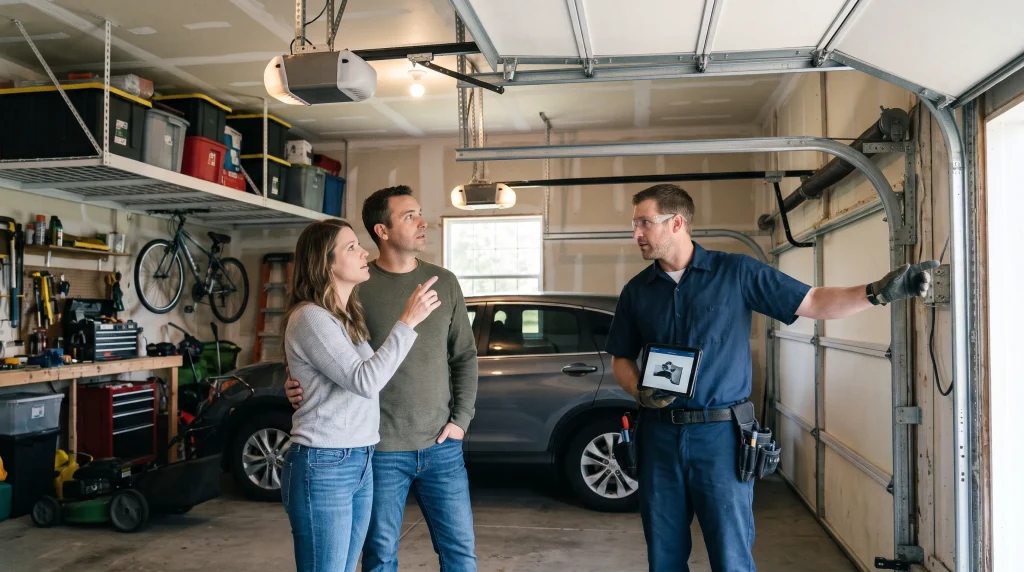
Weighing the benefits above against your specific garage helps settle whether this is worth the switch. A couple of practical checks make that decision easier.
When a Side-Mounted System Solves a Real Problem vs. When It Doesn’t
Side-mounted openers make the most sense for garages with low or obstructed ceilings, or for homeowners who specifically want the overhead space back for storage or lighting. If your ceiling already has plenty of clear room and noise isn’t a concern, a standard overhead system may be the simpler, more cost-effective choice.
Mounting style also isn’t the fix for every symptom; if your door won’t close properly regardless of which opener type you have, our guide 5 Shocking Reasons Your LiftMaster Garage Door Won’t Close And How to Fix Them! covers causes that apply to both configurations.
Making the Switch to a Side-Mounted Opener
A side-mounted opener isn’t an upgrade every garage needs, but for the ones with low headroom, an obstructed ceiling, or a homeowner who simply wants that overhead space back, it solves a problem an overhead system can’t. The tradeoff is a slightly different installation and a torsion-bar connection that’s worth having a professional verify.
All About Doors installs and services side-mounted openers alongside every standard overhead option, and our licensed technicians can tell you honestly whether your specific door and garage are a good fit before you buy anything. We handle the mounting, torsion bar connection, and safety testing that make this installation different from a standard overhead setup. Contact us or give us a call to talk through whether a side-mounted opener makes sense for your garage.
Frequently Asked Questions
What are the benefits of a side mount garage door opener?
Side-mount openers free up overhead space for storage or lighting and tend to run quieter than traditional ceiling-mounted openers. They also reduce vibration and are less visually intrusive, which suits attached garages or garages with obstructed ceilings.
What is the door on the side of the garage called?
That’s usually called a pedestrian door or access door. It allows entry and exit without opening the main garage door, which improves everyday accessibility and convenience.
How much clearance does a side mount garage door opener need?
Plan for roughly 8 to 12 inches of clearance on the side of the door, plus adequate wall space for the mounting bracket. Proper clearance is essential for smooth operation and to avoid interference with the door’s movement.
Are side mount garage door openers quieter?
Yes, generally. They operate with fewer moving parts and generate less vibration than most overhead models, making them a common choice for attached garages or ones near living space.
Can you put a door in the side of a garage?
Yes, a pedestrian or access door can be added to the side of a garage as an additional entry point. It improves everyday convenience and can also serve as an emergency exit if the main door becomes inoperable.
Is a side-mounted opener more expensive than an overhead one?
It varies by model and features, but side-mounted openers are often priced comparably to mid-range overhead belt-drive models rather than being a dramatically pricier category on their own.
Can any garage door be converted to a side-mounted opener?
Not always. The door needs a torsion spring system for a side-mounted opener to connect to, so doors using only extension springs typically need modification first.
Do side-mounted openers work with all door materials?
Generally yes, since the opener connects to the torsion bar rather than the door panel itself, but it’s still worth confirming compatibility with your door’s weight rating before installing.
How long does a side-mounted opener installation take?
Our rule of thumb from the field: a straightforward installation on a compatible door typically takes a few hours for a professional crew, longer if the torsion system needs adjustment first.