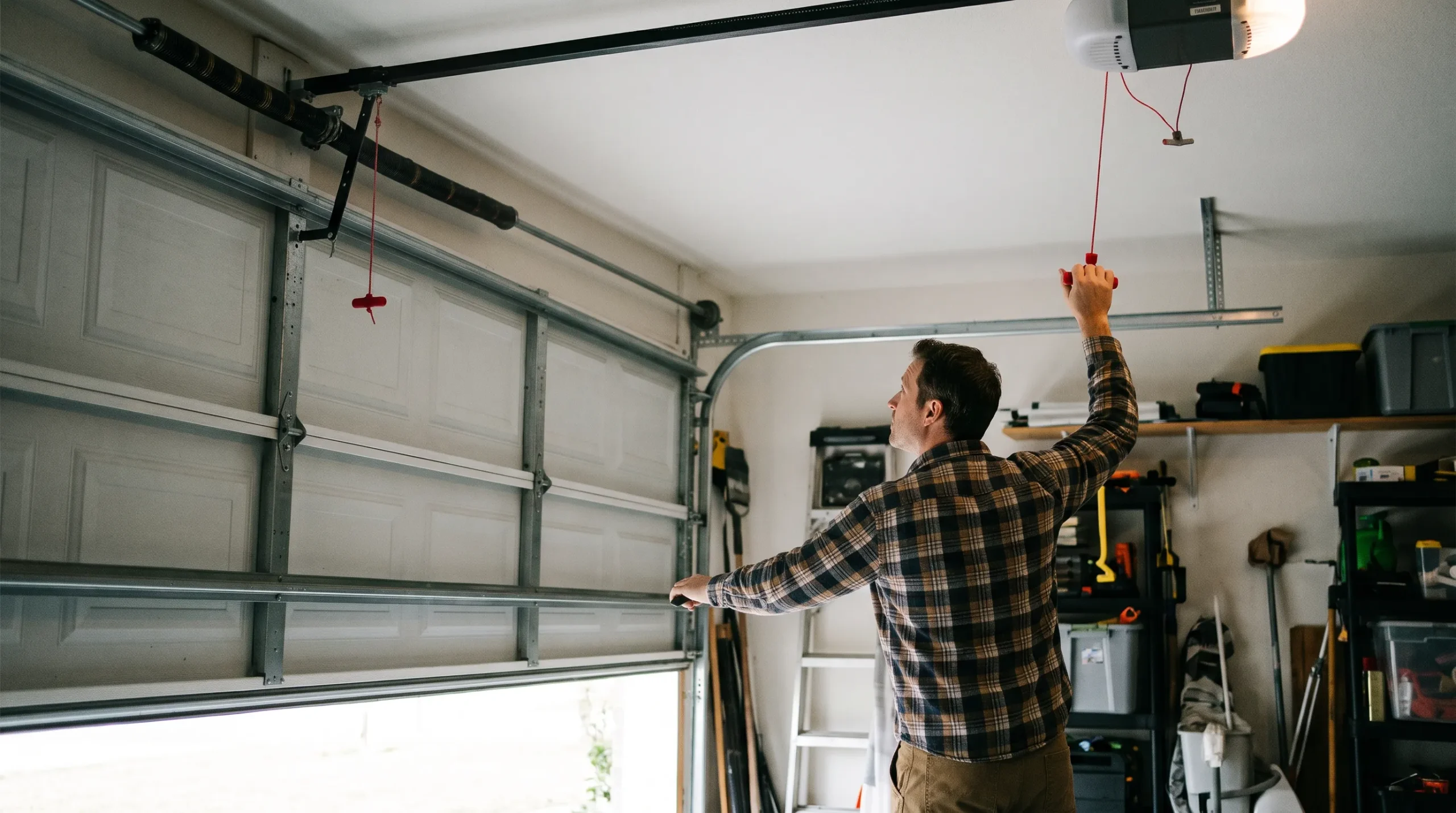
The best garage door width depends on your vehicle, garage size, and intended use, but single-car doors typically run 8 to 10 feet wide and double-car doors run 16 to 18 feet wide. Getting the width wrong causes scraped vehicles, doors that rub or jam, and long-term wear on springs and tracks, often leading to garage door repair that a correct measurement would have prevented. Measuring the opening accurately and matching it to your actual vehicle size, not just what’s already installed, is the single biggest factor in avoiding a costly mistake.
Key Takeaways
- Single-car doors: 8 to 10 feet wide (9 feet is most common). Double-car doors: 16 to 18 feet wide.
- Oversized doors (20 to 24+ feet) exist for trucks, RVs, and specialty storage but need added structural reinforcement.
- The rough opening should run 2 to 4 inches wider than the door itself to allow for the frame.
- Local building codes can set minimum or maximum widths, so check before ordering a custom size.
- A door that’s the wrong width leads to rubbing, jamming, reduced security, and faster wear on springs and tracks.
- Re-measuring before a replacement matters, since framing can shift slightly over the years even in a home that hasn’t been renovated.
Garage Door Width by Garage Type
| Garage Type | Standard Width | Best For | Structural Notes |
| Single-car | 8 to 10 feet | One vehicle, compact to mid-size SUVs/trucks | Standard framing, no reinforcement needed |
| Double-car | 16 to 18 feet | Two vehicles side by side | Standard framing; 18 feet needs slightly more header support |
| Oversized/specialty | 20 to 24+ feet | RVs, work trucks, multi-bay storage | Requires additional framing and structural reinforcement |
Rough openings run 2 to 4 inches wider than the door itself at every size above to allow for the frame, so measure the opening, not just the door you’re replacing.
Quick DIY vs. pro guide: Measuring the opening, comparing standard width options, and checking local building codes are fine to do yourself. Ordering an oversized or custom door, structural framing changes, and upgrading springs or tracks for added width should go to a licensed contractor.
Why Is Garage Door Width Important
The width of a garage door is crucial for a seamless experience, affecting both functionality and appearance. Whether you’re building a new garage door or addressing a repair, understanding width is essential before you commit to a size.
How the Wrong Garage Door Width Leads to Repairs
Door width determines how easily vehicles maneuver in and out. A narrow door makes it hard for larger vehicles to navigate, risking damage to both car and door with every use. An overly wide door wastes space and can raise energy costs from inefficient insulation, since more surface area means more potential heat loss. Width also affects storage capacity if the garage doubles as a workshop, and it influences curb appeal and resale value in ways many homeowners underestimate until they’re trying to sell.
How Driveway and Lot Layout Affect Width Decisions
Beyond the vehicle and the opening itself, the approach angle from your driveway matters more than most homeowners expect. A narrow or curved driveway can make even a generously sized door feel tight if the approach angle forces drivers to turn sharply right before entering. If your driveway has a tight turn radius, sizing up slightly or angling the door opening during a remodel can make daily parking noticeably easier.
Glen Burnie homeowners weighing a specific size can see real numbers in our 9×8 Garage Door Buying Guide in Glen Burnie, MD: Everything You Need to Know.
Standard Garage Door Widths
What Are the Standard Widths for Single vs. Double Garage Doors
- Single-car garage doors: Usually 8 to 10 feet wide, with 8 and 9 feet most common across older and newer homes alike.
- Double-car garage doors: Typically 16 to 18 feet wide, with 16 and 18 feet most popular for side-by-side parking.
For a full sizing walkthrough by vehicle type, read our Single Garage Door Width Guide: Find the Right Fit for Your Home.
How to Choose the Perfect Garage Door Width
Which Factors Actually Determine the Right Garage Door Width
- Vehicle dimensions: Make sure the door is wide enough for comfortable clearance on both sides, not just a tight squeeze.
- Garage size: The interior dimensions cap the maximum practical door width you can realistically install.
- Intended use: Workshops or storage setups may call for a wider door than parking alone would require.
- Architectural style: Width should match your home’s overall design so the door doesn’t look out of proportion.
- Local building codes: Some areas set minimum or maximum widths; check before ordering a custom size.
Why Checking Codes Before Ordering Saves Time and Money
Skipping this step is one of the more expensive mistakes we see. A custom door ordered before confirming local code compliance can mean reordering, which adds weeks to a project and, in some cases, a restocking fee on the original order. A quick call to your local permitting office, or letting your installer handle that check, avoids the problem entirely. If you’re pricing out a specific double-door size, our breakdown of How Much is a 16×7 Garage Door Installed covers real cost ranges.
How to Measure Your Garage for an Ideal Fit
How Much Extra Space a Rough Opening Needs Over the Door Size
- Measure the opening width from one side jamb to the other at the narrowest point, at multiple heights to catch any variation, since older framing can bow slightly over the years.
- Determine the rough opening width, about 2 to 4 inches wider than the door size to allow for the frame and shims.
- Consider clearance on both sides for smooth operation without contact, and check that nothing, like a downspout or utility box, intrudes into that space.
- Account for added features like insulation or weather seals, which affect overall dimensions slightly and can matter on a tight opening.
- Consult with professionals if your layout is unusual or you’re unsure of your measurements, since a wrong measurement is one of the more common causes of a delayed installation day.
Per ULSE’s overview of automatic garage door safety standards, accurate sizing and proper installation are directly tied to how well a door’s built-in safety systems perform over time, not just how it looks on day one. Height is worth checking alongside width, and our guide What’s the Standard Garage Door Height covers that measurement separately.
Garage Door Width Options: Pros and Cons
Which Width Is the Better Value for a Single vs. Double Garage
Single-car garages:
- 8 feet wide: Cost-effective and energy-efficient, but may be too narrow for larger vehicles.
- 9 feet wide: Accommodates most standard vehicles with ample clearance and extra storage space, at a slightly higher cost.
Double-car garages:
- 16 feet wide: Allows side-by-side parking cost-effectively, though clearance for opening vehicle doors can feel tight.
- 18 feet wide: More room for larger vehicles and easier entry and exit, at a higher price and possibly added framing.
Oversized options: 20 to 24+ feet, suited to larger vehicles or specialty storage, but typically require additional framing and structural reinforcement that adds to both cost and installation time.
Weighing these options usually comes down to a simple trade-off: narrower and standard-sized doors cost less and install faster, while wider and oversized doors cost more but remove daily friction for larger vehicles or specialty use. There’s rarely a wrong answer here as long as the choice matches how the garage is actually used day to day, rather than how it might theoretically be used someday. The Spruce’s troubleshooting guide for common garage door problems covers several of the same rubbing and jamming issues tied back to incorrect width.
If you’re weighing a taller option too, our Guide For The Best 16×8 Garage Door covers that tradeoff directly.
How to Choose the Best Contractor for a Width Upgrade
Beyond checking licensing and insurance, ask specifically how the contractor handles rough opening adjustments, since not every installer does structural framing work in-house. A contractor who subcontracts framing out may add time and coordination overhead to your project, so it’s worth asking upfront how the whole job, not just the door itself, will be managed from start to finish. It’s also reasonable to ask for references from recent width-related jobs specifically, since a contractor who mostly does straightforward replacements may have less hands-on experience with the framing side of a true width upgrade.
For a full look at what’s behind the panel on any door, our Garage Door Anatomy: A Complete Guide for Homeowners covers every part in detail.
Get the Width Right the First Time
Sizing mistakes are some of the most avoidable, and most expensive, decisions homeowners make with a garage door. A careful measurement, an honest look at how the garage actually gets used, and a quick check of local codes cover almost every scenario that leads to regret later. None of that requires guesswork once you know what to check.
All About Doors has measured and installed garage doors of every standard and custom width across the area. Our licensed technicians handle the framing side of a width upgrade in-house, so you’re not coordinating between multiple contractors for one job. We back every installation with a clear warranty on both the door and the labor. Contact us or give us a call to get an accurate measurement and a straight answer on the right width for your garage.
Frequently Asked Questions
What are standard garage door widths?
Standard widths run 8 to 9 feet for a single-car garage and around 16 feet for a double-car garage.
What is the most expansive garage door available?
For residential use, doors can reach up to about 20 feet, suited to oversized garages or larger vehicles like trucks.
What is the average garage size?
A one-car garage typically runs about 12 feet wide by 20 feet deep; a two-car garage runs roughly 20 feet wide by 20 to 24 feet deep.
How many meters is a garage door?
Standard garage doors run roughly 2.4 to 4.9 meters wide, depending on single or double, with a height around 2.1 meters.
What is a standard entry door size?
Most home entry doors run about 80 inches tall and 36 inches wide, while interior doors are narrower, typically 30 to 32 inches.
How much does getting the width wrong actually cost long-term?
In our experience, it shows up gradually: extra wear on rollers and tracks, more frequent adjustments, and eventually a spring or opener replacement sooner than it should have needed.
Can I convert a single-car opening into a double-car opening?
Yes, but it's a structural project involving header and framing work, not something to attempt without a licensed contractor.
Do wider doors need different springs?
Yes. Wider, heavier doors need springs and hardware rated for the added weight; using standard-size springs on an oversized door is a safety risk.
What's the biggest sizing mistake you see homeowners make?
Our rule of thumb from the field: ordering based on the old door's size without re-measuring, which misses shifts in framing that happen over time.
How do I know if my current garage door width is actually a problem, not just cosmetic?
If the door rubs, drags, closes unevenly, or you're regularly easing in slowly to avoid contact, that's a functional width issue, not just an aesthetic one.