A visible gap under a commercial overhead door may seem minor at first. However, even a small opening can lead to serious problems for businesses in Glen Burnie, MD. Moisture from coastal storms, humidity from the Chesapeake Bay region, and frequent temperature changes can all make the issue worse, especially for high-cycle commercial garage doors used in warehouses and industrial facilities.
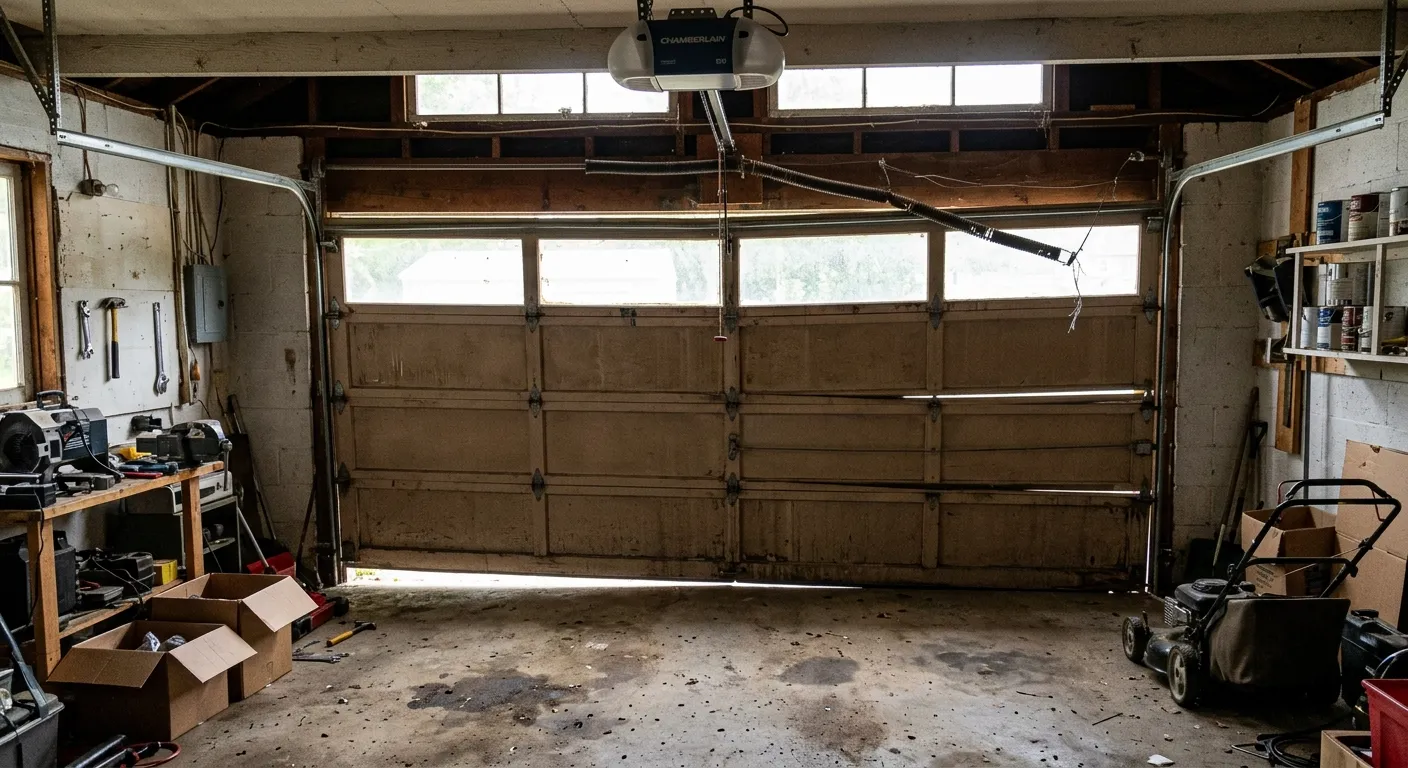
A properly functioning commercial garage door should sit flush against the floor when closed. If light is visible underneath, something is wrong. The cause may be simple, like a worn weather seal, or more complex, such as spring imbalance, track misalignment, or structural settlement affecting commercial garage doors.
This guide explains the most common causes, what to check safely, and how to prevent the problemwithout exposing anyone to dangerous do-it-yourself repairs.
Why a Small Gap Is a Big Problem for Commercial Properties
A gap under a commercial overhead door can lead to:
- Water intrusion during heavy Maryland rainstorms
- Rodents and pest entry
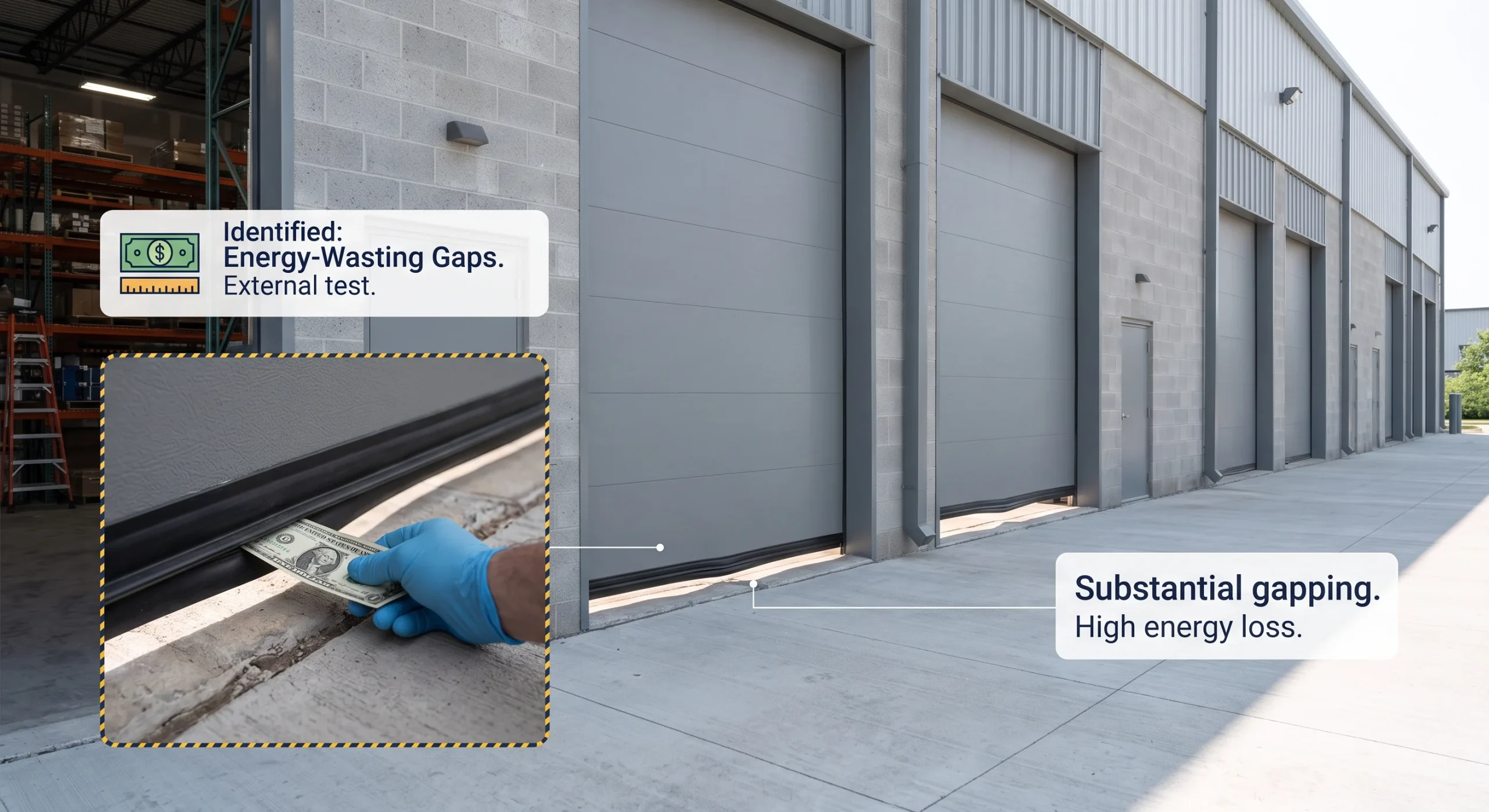
- Higher heating and cooling costs
- Security vulnerabilities
- Premature wear on door components
- Inventory damage in warehouses
For facilities near Ritchie Highway, the BWI industrial corridor, or warehouse zones around Glen Burnie, high daily traffic increases wear on commercial garage doors. Ignoring a small issue often leads to larger mechanical failures.
For a deeper breakdown of the root causes and prevention strategies, read “What Causes Gaps Under a Commercial Overhead Door?” to better understand how to protect your property.
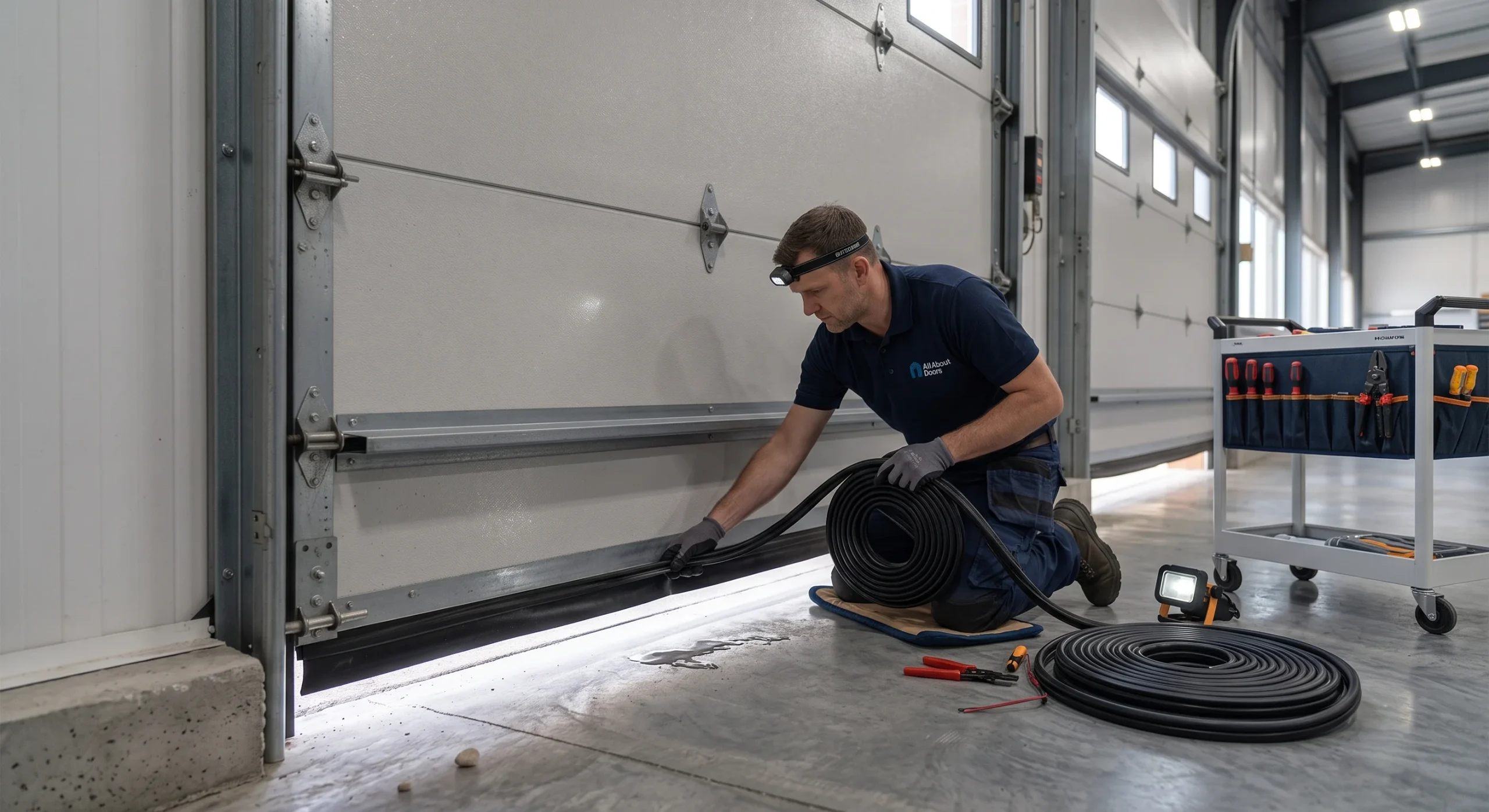
Worn or Damaged Bottom Seal (Weather Stripping)
The most common reason for a gap under a commercial overhead door is a worn bottom seal, also called a weather seal or astragal.
Why It Happens
- Rubber shrinks during cold winters
- UV exposure dries out the material
- Forklifts tear or crush the seal
- Age causes brittleness
Glen Burnie’s humid summers and freezing winters accelerate rubber deterioration.
What to Check
- Cracks or splits in the rubber
- Flattened or compressed areas
- Missing sections
- Hard, brittle texture
If the seal no longer compresses against the floor, it cannot form a proper barrier.
Prevention Tip
Schedule annual commercial garage door maintenance before winter. Replacing weather stripping early prevents water damage and improves insulation.
Average repair range: Low to moderate investment, depending on door size.
For more insight into seal-related issues, read “Can Weather Seals Fail on a Commercial Overhead Door?” to better understand how environmental exposure impacts performance over time.
Uneven or Settling Concrete Floors
Concrete floors in commercial buildings can shift over time. Soil movement, heavy truck traffic, and freeze-thaw cycles contribute to uneven slabs.
Signs of Floor Issues
- The gap appears larger on one side
- Visible cracks in concrete
- Floor slopes toward loading docks
- Water is pooling near the entrance
Lowering the door to compensate for uneven concrete can strain torsion springs and cables.
What to Check
- Use a level to inspect the floor surface
- Look for dips or raised areas
- Observe whether the gap is consistent across the width
If the slab is uneven, the issue may be structural rather than mechanical.
For a deeper explanation of structural movement and long-term building impact, read “How Does Floor Settlement Affect a Commercial Overhead Door?” to better understand how shifting foundations influence door performance.
Track Misalignment
Commercial overhead doors rely on heavy-duty vertical and horizontal tracks. If tracks shift, the door may not close evenly.
Causes of Track Problems
- Forklift impact
- Loose mounting brackets
- Building vibration
- Worn fasteners
Warning Signs
- Crooked door while closing
- Grinding or scraping noises
- One side touches the floor before the other
Track misalignment can eventually lead to a door going off track, which is a serious safety hazard.
Prevention Tip
Routine commercial overhead door service should include track inspection and tightening of hardware.
Average repair range: Moderate investment.
Damaged or Bent Door Panels
Impact damage is common in busy commercial environments.
Even small dents can twist panel alignment and prevent full floor contact.
Common Causes
- Forklift collisions
- Delivery truck contact
- Loading dock equipment impact
What to Look For
- Visible dents or warping
- Bent bottom section
- Loose hinges
If panel damage is severe, commercial garage door panel replacement may be required.
Average repair range: Moderate to higher investment.
Broken or Weak Torsion Springs
Torsion springs control the balance of a commercial garage door. When one weakens or breaks, the door may close unevenly.
Warning Signs
- Loud snapping sound
- The door feels unusually heavy
- Uneven closing
- Visible gap in the spring coil
Commercial springs operate under extreme tension and should never be adjusted without proper tools and training.
Prevention Tip
Annual spring tension testing during commercial garage door maintenance reduces sudden failures.
Average repair range: Moderate to higher investment.
Incorrect Opener Limit Settings
Commercial garage door openers use travel limits to control how far the door moves.
If limits are set too high, the door may stop before fully sealing.
Signs
- The door closes smoothly, but leaves a uniform gap
- No unusual noises
- Opener does not strain
Improper limit adjustments can damage the opener motor if not calibrated correctly.
Cable or Drum Issues
Lift cables wrap around drums as the door opens and closes.
If a cable slips or stretches unevenly, the door may sit crooked.
Warning Signs
- Door tilts during operation
- One side seals before the other
- Cable appears loose or frayed
This condition requires immediate professional attention to prevent complete system failure.
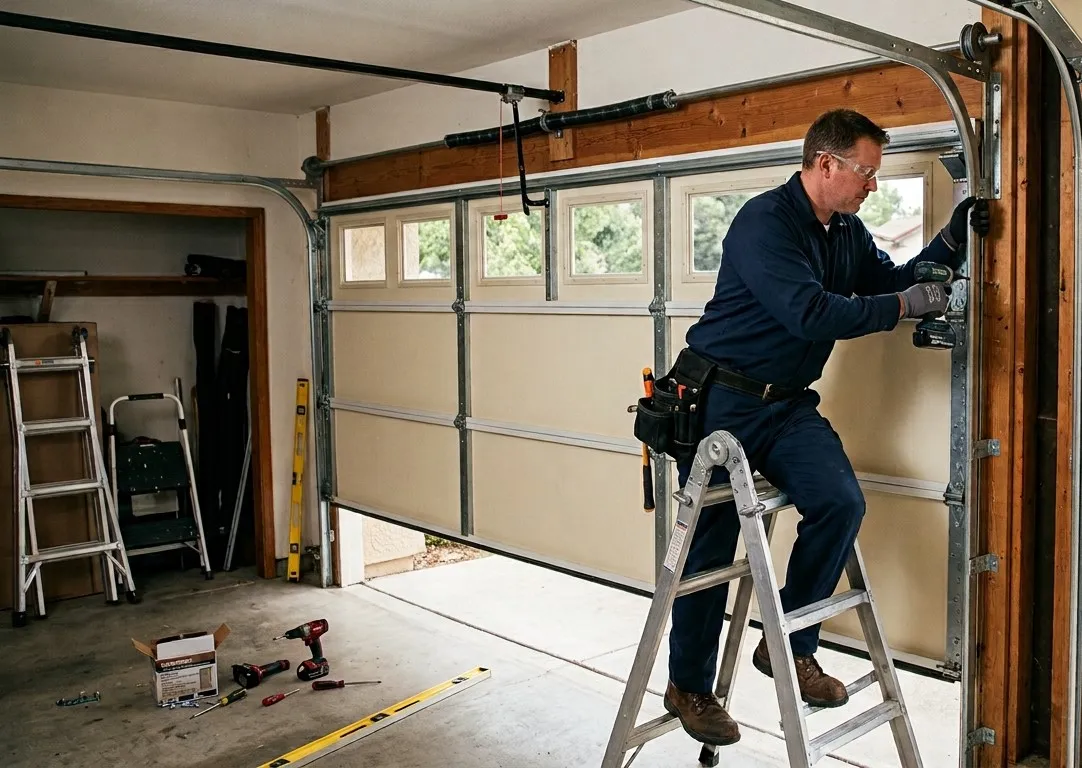
Improper Commercial Garage Door Installation
If the gap appeared shortly after installation, setup quality may be the issue.
Commercial garage door installation must account for:
- Floor grade
- Door weight
- Wind load requirements
- Usage frequency
- Building code compliance in Maryland
Improper installation often leads to early seal failure or alignment issues.
Building Settlement in Glen Burnie, MD
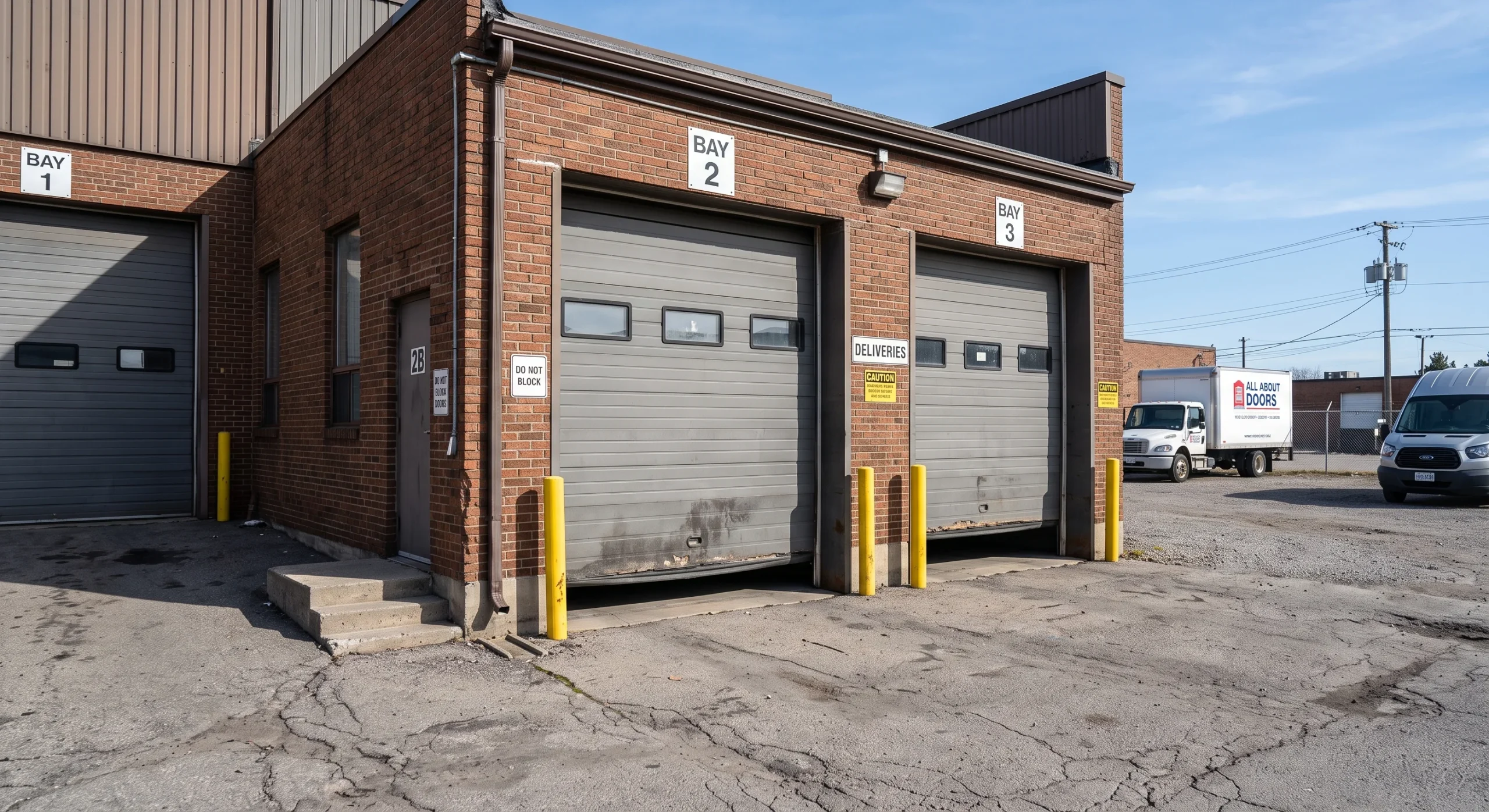
Commercial properties near the Chesapeake Bay region can experience soil movement due to moisture changes.
Gradual building settlement may affect:
- Door opening dimensions
- Track alignment
- Floor slope
If the gap worsens over time, structural shifting may be contributing to the issue.
What to Check Before Scheduling Commercial Garage Door Repair
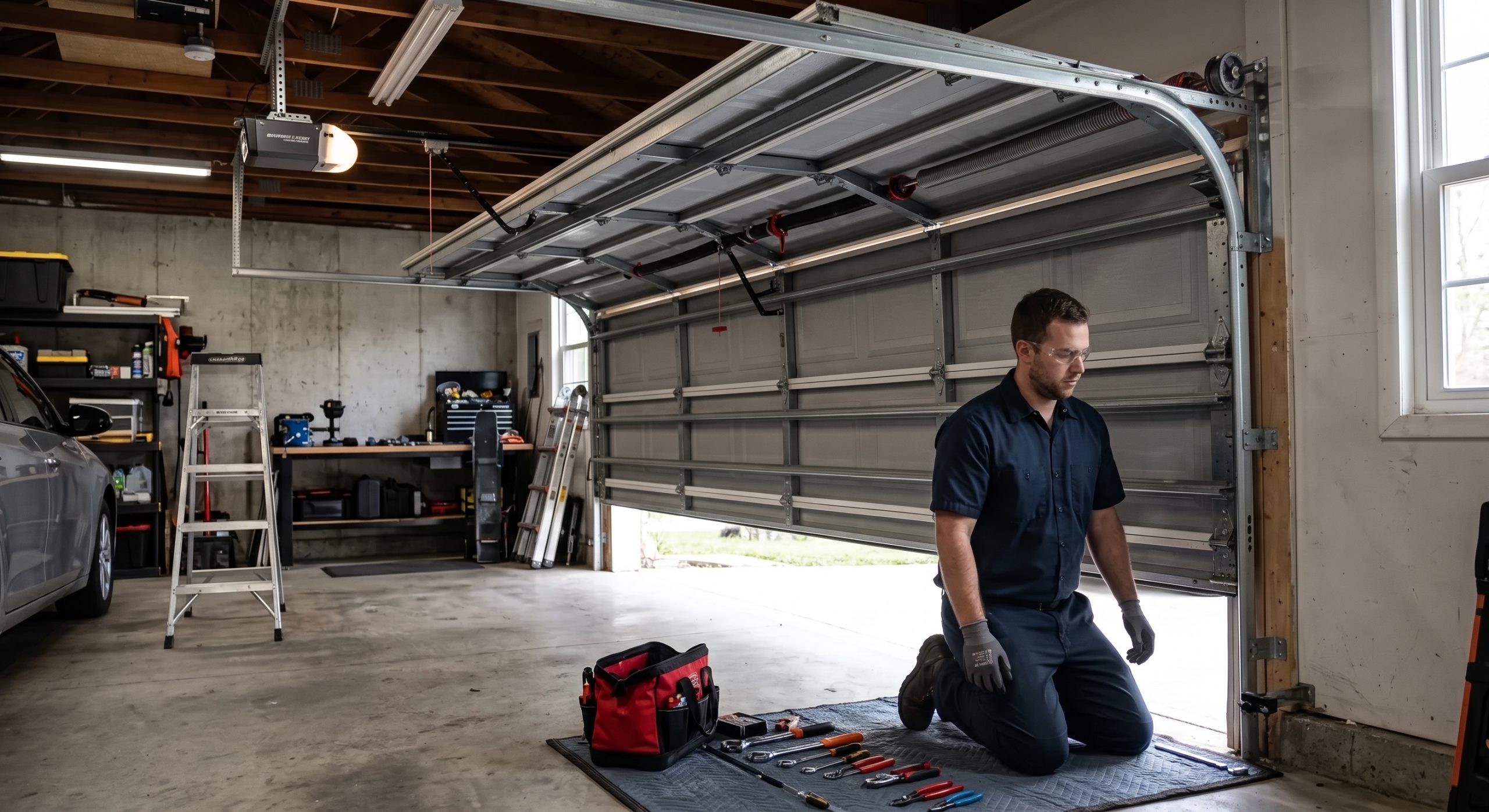
Safe visual inspection steps include:
- Inspect the bottom weather stripping
- Observe door alignment while closing
- Check for visible panel damage
- Look for floor unevenness
- Confirm opener’s power connection
Stop troubleshooting immediately if there are:
- Broken springs
- Frayed cables
- Loud snapping sounds
- Door off track
- Burning smell from the opener
Commercial overhead doors are the largest moving systems in most facilities, and like residential garage doors, they rely on high-tension components that can cause serious injury if handled improperly.
How to Prevent Gaps Under a Commercial Overhead Door
Schedule Annual Commercial Garage Door Maintenance
Preventive maintenance should include:
- Spring tension testing
- Track alignment inspection
- Cable evaluation
- Opener force adjustment
- Bottom seal inspection
- Lubrication of moving components
Routine service extends system lifespan, reduces unexpected downtime, and minimizes the need for emergency garage door repair.
Replace Weather Seals Early
Do not wait until daylight is visible. Replacing worn weather stripping protects against:
- Moisture intrusion
- Energy loss
- Pest entry
Proactive seal replacement is far less disruptive than scheduling urgent garage door repair after water damage or pest infestation occurs.
Inspect After Severe Maryland Storms
Heavy rain and wind can shift alignment or damage seals.
After major storms
- Check door balance
- Inspect for debris in tracks
- Examine the bottom seal condition
Early inspections help identify small issues before they require larger garage door repair services.
Reduce Impact Risk in High-Traffic Areas
Training forklift operators and installing protective bollards near door openings can reduce panel damage and alignment issues, lowering the likelihood of structural damage and costly garage door repair.
When to Call a Commercial Garage Door Specialist in Glen Burnie
Professional service is recommended if:
- The door closes unevenly
- Springs appear damaged
- Cables look loose or frayed
- The door feels heavy
- The gap continues to widen
Technicians familiar with Glen Burnie commercial properties understand local climate impact, industrial door systems, industrial railings, and Maryland building code requirements to ensure safe and compliant operation.
Fix Small Commercial Door Gaps Before They Become Major Problems
A gap under a commercial overhead door is not just cosmetic. In Glen Burnie’s humid and storm-prone environment, small openings quickly become larger problems.
Common causes include:
- Worn weather seals
- Uneven concrete floors
- Track misalignment
- Spring imbalance
- Impact damage
- Improper installation
Early inspection and routine commercial garage door maintenance remain the most effective ways to prevent costly downtime and structural damage.
Addressing minor gaps promptly protects inventory, improves energy efficiency, and maintains building security.
Schedule Professional Commercial Garage Door Service Today
For businesses in Glen Burnie, MD, All About Doors provides dependable commercial garage door repair, maintenance, and installation services tailored to high-traffic industrial and warehouse environments. With experienced technicians and a strong understanding of Maryland’s climate challenges, every inspection is handled with precision and safety in mind. Contact us today or give us a call and ensure your commercial overhead door operates securely, efficiently, and without gaps.