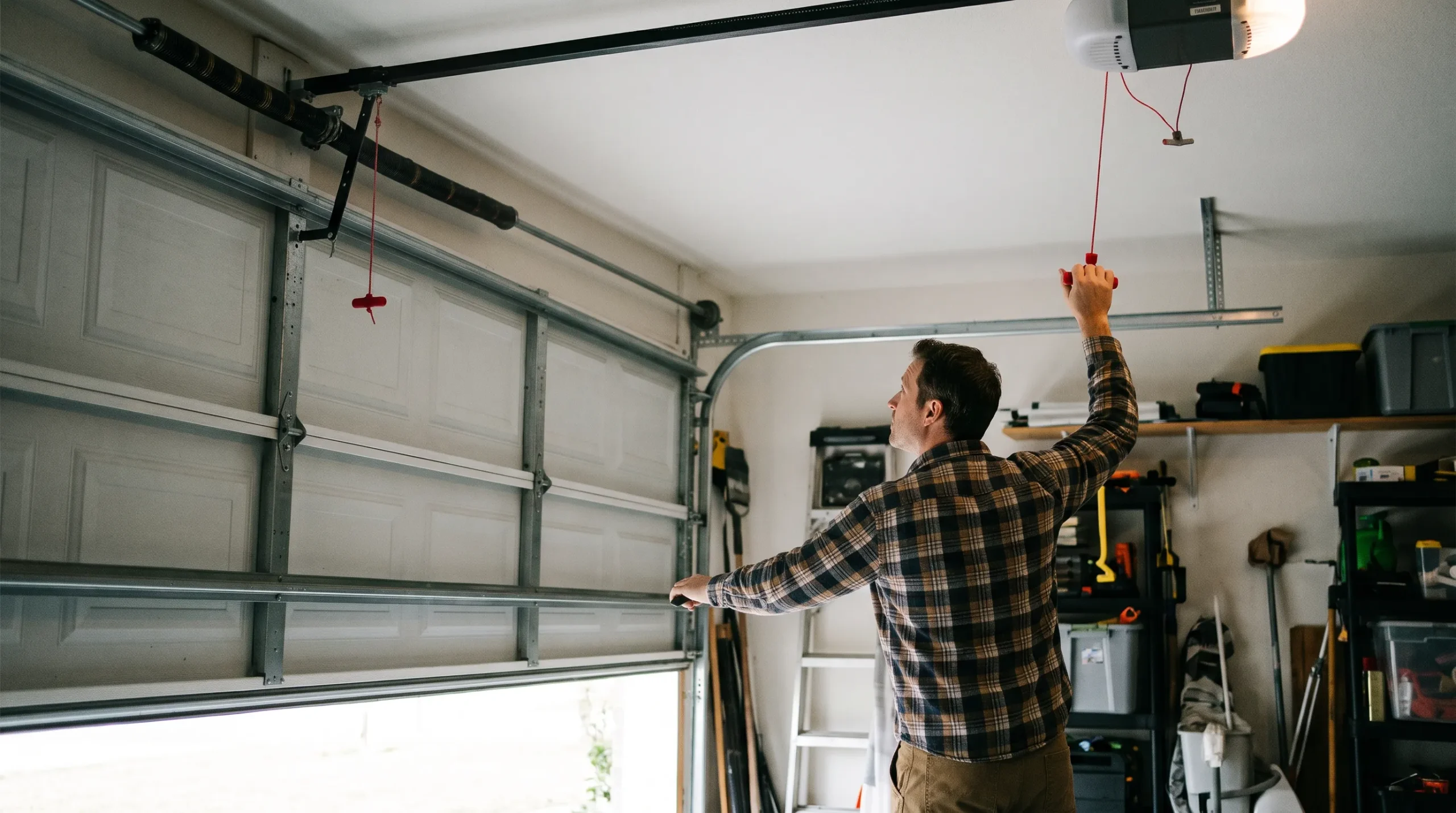
A single garage door typically measures 8 to 10 feet wide and 7 to 8 feet high, with 9 feet wide by 7 feet high being the most common size. This fits most cars, SUVs, and small trucks comfortably. The right width depends on your vehicle size, how you use the garage, and your home’s architectural style, and getting it wrong leads to scraped mirrors, jammed doors, and the kind of garage door repair that could have been avoided with accurate measuring upfront.
Key Takeaways
- The most common single garage door size is 9 feet wide by 7 feet high; 8-foot doors fit compact cars, and 10-foot doors better suit trucks and SUVs.
- Measure width, height, side room, headroom, and backroom, not just the door panel, before ordering a replacement.
- Wider doors need stronger springs and hardware, since more width means more weight to counterbalance.
- A door that’s the wrong width often rubs, drags, or jams, and puts extra long-term stress on tracks and springs.
- If your garage doubles as a workshop or gym, sizing up to 10 feet gives more usable space meaningfully.
- Custom widths exist for unique openings, but they come with a higher cost and longer lead time than standard sizes.
Single Garage Door Width Options Compared
| Width | Best Fit | Typical Vehicles | Relative Cost |
| 8 feet | Compact garages, tight lots | Sedans, compact cars | Lowest |
| 9 feet | Most homes (most common size) | Sedans, SUVs, small trucks | Standard |
| 9.5 to 10 feet | Larger vehicles, garage doubling as workshop | Trucks, vans, SUVs with roof racks | Moderate |
| 10+ feet (custom) | Oversized vehicles, accessibility needs, RVs | Full-size trucks, RVs, wheelchair-accessible entry | Highest |
Height pairs with width: 7 feet is standard, 8 feet adds clearance for taller vehicles or storage.
Why Garage Door Width Matters More Than You Think
The width of a garage door affects daily use, home value, and appearance. It determines how well your car fits and how useful your garage is overall, and it’s one of the few decisions that’s genuinely difficult to undo once a door is installed.
How Garage Door Width Affects Vehicle Clearance
A narrow door can cause scratches or make parking difficult, especially if you’re regularly adjusting your approach angle to avoid the frame. For SUVs or trucks, a 9-foot or wider door provides better clearance and easier daily access, and it removes the daily stress of threading a larger vehicle through a tight opening.
Curb appeal and value: A properly sized door that complements your home’s style enhances curb appeal, and buyers touring a home do notice when a garage door looks proportionate to the rest of the facade.
Storage and daily use: Wider doors free up side space for bikes, tools, or seasonal items without crowding your vehicle, which matters more than people expect once the garage becomes a catch-all storage space in addition to parking.
Standard Single Garage Door Widths Explained
What Is the Standard Width for a Single Garage Door
- Common widths: 8, 9, or 10 feet. The 9-foot option is the most popular because it fits most cars with room to spare.
- Regional variations: Some homes have 8.5 or 9.5-foot doors depending on local building practice, so measure before buying rather than assuming a round number.
- Height and size: Standard heights run 7 or 8 feet; taller doors help with trucks, roof racks, or overhead storage.
For double-car openings, read our guide on Avoid Costly Mistakes: What’s the Best Garage Door Width, which covers 16- and 18-foot double doors in depth.
How to Measure a Single Garage Door Accurately
What Tools You Need to Measure a Garage Door
Measuring tape (12 ft or longer), step ladder, pencil and notepad, and a flashlight for checking dark corners near the header.
Step-by-step:
- Measure door width (side to side) at the narrowest point.
- Measure door height (floor to top).
- Check side room (left and right of the opening).
- Measure headroom (top of the opening to ceiling).
- Measure backroom (door to back wall) for the track’s full travel.
Mistakes to avoid: Don’t measure just the door panel, avoid rounding numbers, don’t skip side, headroom, or backroom, double-check all measurements, and use a spotter whenever you’re on a ladder.
What Garage Door Width Works Best for Your Vehicle Type
How to Pick a Garage Door Width for an SUV or Truck
- Compact vs. large vehicles: An 8-foot door fits compact cars comfortably; SUVs and trucks need at least 9 to 10 feet for safe daily parking.
- Clearance for big vehicles: For trucks, vans, or RVs, aim for at least 10 feet, with a foot of space on each side for mirrors and doors.
- Extra garage uses: A 10-foot door adds real flexibility if the garage doubles as a gym, workshop, or storage area, since it leaves working room beyond just the vehicle itself.
As Bob Vila’s guide to choosing a garage door notes, matching the door width to your actual vehicle and garage use, not just the opening you already have, is one of the biggest factors in long-term satisfaction with the purchase.
If a taller two-car opening is more your situation, our Guide For The Best 16×8 Garage Door covers that size directly.
Custom Single Garage Door Widths: When You Should Consider Them
Custom widths help with unique structures where standard sizing doesn’t fit cleanly, better accessibility for wheelchairs, walkers, or oversized vehicles, and improved style matching for homes with distinctive architecture that a stock size would look out of place on.
Height is a separate consideration from width, and our guide What’s the Standard Garage Door Height covers that side of sizing.
What Materials Work Best for Wide Garage Doors
How Door Width Changes Which Material Makes Sense
- Steel: Strong, easy to maintain, and works well at all widths without added structural concerns.
- Wood: Attractive but heavy at wider sizes, which needs more upkeep and stronger hardware.
- Aluminum: Light and rust-resistant, easy to lift even at wider sizes, though it dents more readily.
A wider door is heavier and needs stronger springs and tracks, and wood doors in particular require openers rated for the added weight. For a full breakdown of material types, Family Handyman’s guide to types of garage doors is a useful side-by-side reference.
Cost by width and material: Steel is generally the most affordable across widths; wood costs more and needs regular care; aluminum sits in between on both price and upkeep.
For a full look at what’s behind the panel on any of these materials, our Garage Door Anatomy: A Complete Guide for Homeowners covers every part in detail.
Insulated vs. Non-Insulated Doors: Does Width Matter
Wider doors, especially 9 feet or more, lose more heat or cooled air when uninsulated, simply because there’s more surface area exposed to the outside. Insulated doors help hold a steady temperature, cut noise, and reduce energy costs, though they cost more upfront, especially at wider sizes where more material is involved.
Energy use: In hot summers and cold winters alike, an uninsulated door at 9 or 10 feet wide can make the garage feel like an extension of the outdoors, which matters more if the space is attached to living areas.
Noise and comfort: Insulated doors reduce street noise noticeably, especially useful if the garage faces a busy road or sits near a bedroom above it.
Cost and setup: The wider the door, the more insulation material is required, so the price gap between insulated and non-insulated options grows as width increases. Glen Burnie homeowners choosing a specific size can see real numbers in our 9×8 Garage Door Buying Guide in Glen Burnie, MD: Everything You Need to Know.
What Problems Happen When Garage Door Widths Are Wrong
- Doors that rub, drag, or jam: The door scrapes the frame or drags on the floor, and this only gets worse with repeated cycles.
- Reduced safety and security: Gaps or uneven closing increase risk for pets and children and give intruders an easier point of entry.
- Long-term wear and mechanical failure: Improper width stresses springs, tracks, and the opener over time, shortening the life of the whole system.
If you’re weighing a two-car replacement instead of a single door, our breakdown of How Much is a 16×7 Garage Door Installed is a useful next read.
How to Choose the Best Contractor for Garage Door Sizing
Ask if they’re licensed and insured, review past work and reviews, and ask what widths they install most often in homes like yours. A well-done job means the door moves smoothly, closes tightly, has no gaps, and runs on straight, secure tracks from day one.
Which Width Is Right for Your Garage?
Getting the width right the first time saves you from scraped mirrors, a door that drags on the floor, and hardware that wears out faster than it should. The measurements matter more than the material or style you eventually pick, since a beautifully finished door in the wrong size still causes the same daily friction a plain one would.
All About Doors has helped homeowners across the area measure, size, and install garage doors that actually fit their vehicles and their homes. Our licensed technicians handle everything from a straightforward width replacement to a custom-sized opening. We back every installation with a clear labor warranty, so you know what’s covered if anything needs adjustment later. Contact us or give us a call to get a free measurement and quote today.
Frequently Asked Questions
What is the standard width for a single garage door?
The standard width is usually 8 to 9 feet, which fits most cars and small trucks while keeping the door easy to open and close.
Is a 9-foot garage door wide enough for an SUV?
Yes, in most cases. A 9-foot door gives an SUV comfortable side clearance; if you regularly drive a larger truck or van, 10 feet is safer.
What is the narrowest single garage door size?
8 feet is the narrowest common size, suited to compact cars with limited side clearance needs.
Can you widen an existing garage door opening?
Yes, but it involves structural framing work and should be handled by a licensed contractor rather than attempted as a DIY project.
How much clearance should be on each side of a garage door?
We generally recommend at least a few inches on each side at minimum, with a full foot preferred for larger vehicles like trucks or vans.
Does a wider garage door cost more to install?
Generally yes. Wider doors need more material and stronger springs and hardware, which raises both the door cost and the installation labor.
How do I know if my garage door is too narrow for my car?
If you're regularly adjusting your mirrors or creeping in slowly to avoid the frame, that's a sign from the field that the door is undersized for the vehicle.
What's the difference between a rough opening and the actual door size?
The rough opening is slightly larger than the finished door size to allow room for the frame and shims; your installer accounts for this automatically.
Can I install a wider door in an existing frame without any structural changes?
Only if the current opening already matches the new door's width. Otherwise, framing changes are required, which is a job for a professional.
How often should I recheck my garage door's clearance and alignment?
In our experience, an annual check catches most issues, especially after seasonal temperature swings that can shift framing slightly.